Japan Beginner’s Guide: Things to Know Before Visiting Japan
From futuristic cities to ancient temples, Japan is a country that blends the ultra-modern with deep-rooted tradition in a very unique way. But navigating all of the cultural nuances, high-speed trains, and endless amount of things to see can be a lot.
For this reason, planning your first trip to Japan can feel extremely overwhelming!
Maybe you’ve traveled out of the country before, but for some reason, Japan feels like a whole other level. Trust me, I get it!
So, after visiting Japan 3 times, I’ve put together this detailed beginner’s guide to visiting Japan, which covers everything you need to know before your first trip!
We’ll cover things to do before you leave and what to know once you’re there, everything from transportation options to culture do’s and don’ts to what food to eat and more!
Top Places to Visit in Japan
If it’s your first trip to Japan, narrowing down where to go can feel a bit challenging. There are so many iconic places (and hidden gems!) that it’s hard to know where to begin.
The good news is, you don’t need to visit all of Japan on your first trip – you can always go back!! I actually recommend not packing in 5 different cities in your first 10-day trip to Japan. That’s not going to be enjoyable.
Instead, pick a few destinations where you can explore thoroughly and soak in all Japan has to offer without changing hotels every other night! If you only have a week or less, I’d stick to two major destinations.
Most first-time visitors to Japan visit the 3 iconic cities of Osaka, Kyoto, and Tokyo. That’s exactly what we did on our trip to see the cherry blossoms last March! There’s a reason this route is so popular, and I do believe it’s the perfect introduction to Japan.
Below, I’ll give you a quick overview of these 3 spots (plus 3 more bonus spots to consider in case you have more time!) based on my experience from my last few trips to Japan. I’ve also included links to my other relevant blog posts on each city to help you further with planning 🙂
➡️ If you want help putting it all together, make sure to check out my detailed 10 Day Japan Itinerary!
Tokyo – The Futuristic Megacity
Did you really go to Japan if you didn’t go to Tokyo? (Just kidding, sort of!).
Tokyo is the capital of Japan and is usually where people start or end their trip. Being one of the most populated cities in the entire world, Tokyo can feel overwhelming in the best way, especially if you’ve never been to Asia before!
You could spend a month in Tokyo and not even scratch the surface of everything to do there. However, for most first-time travelers to Japan, I recommend at least 3-4 days to really get a feel for the city and see the major sights.
Here are the top things to do in Tokyo:
- Shibuya Crossing – Cross the world’s busiest pedestrian scramble (and see it from above at Shibuya Sky)
- Shinjuku bar hopping – Experience the chaos of Shinjuku and have drinks in a cozy izakaya
- TeamLab Planets – An immersive digital art experience that sells out quickly (book in advance)
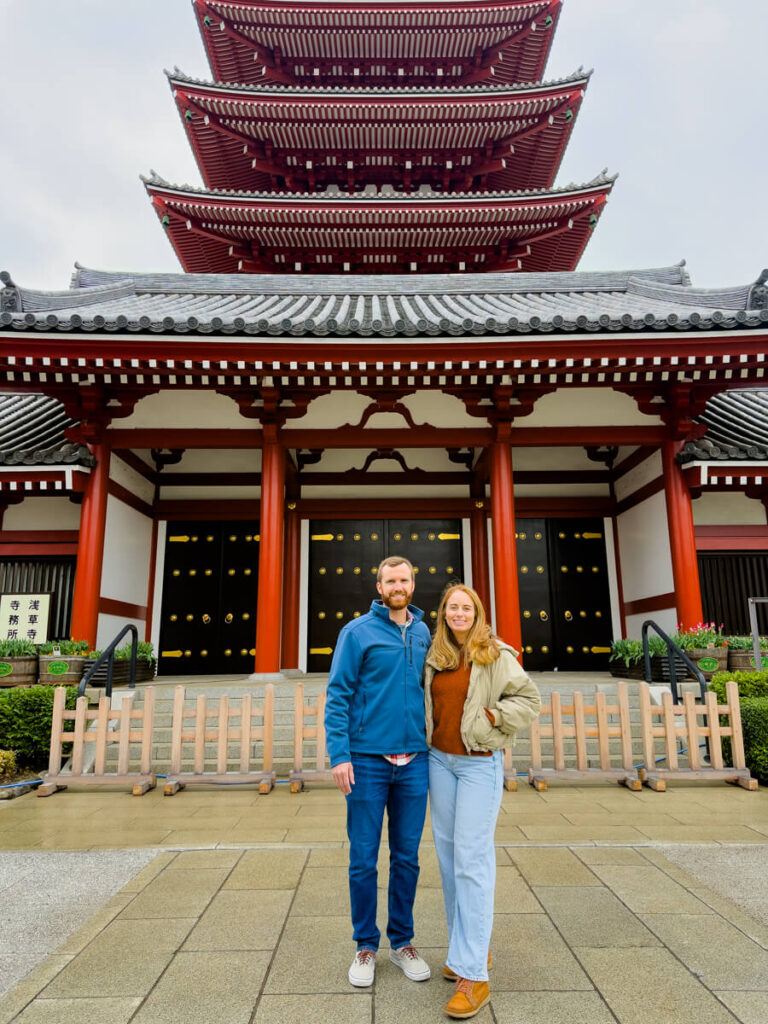
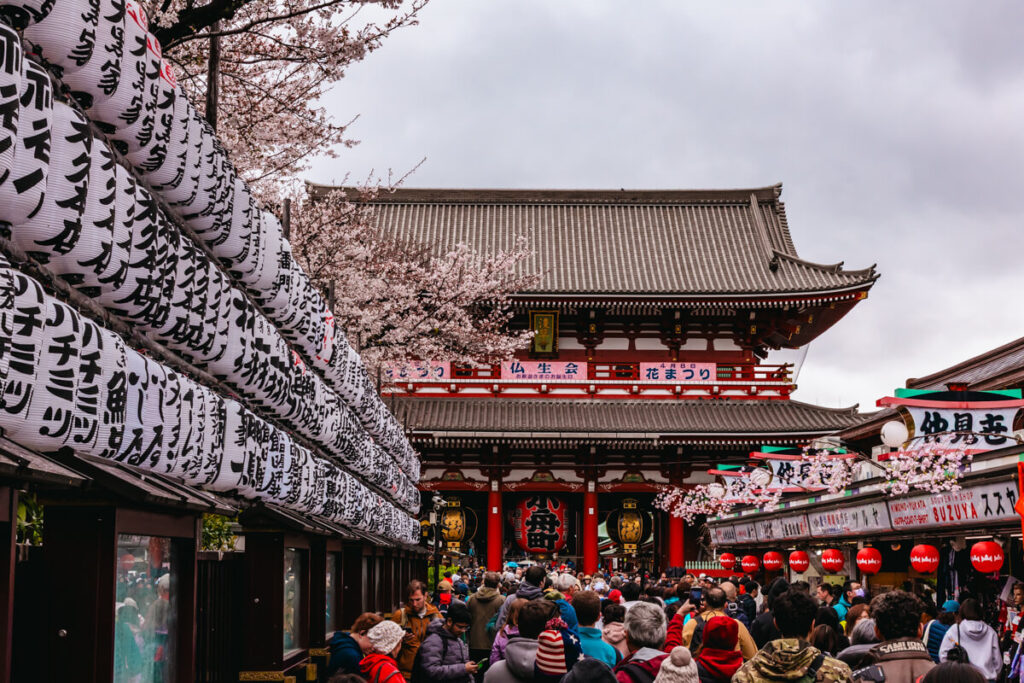
- Asakusa & Senso-ji Temple – Tokyo’s oldest temple surrounded by cute souvenir shops
- Takeshita Street in Harajuku – Perfect for people-watching, crepes, and kawaii culture
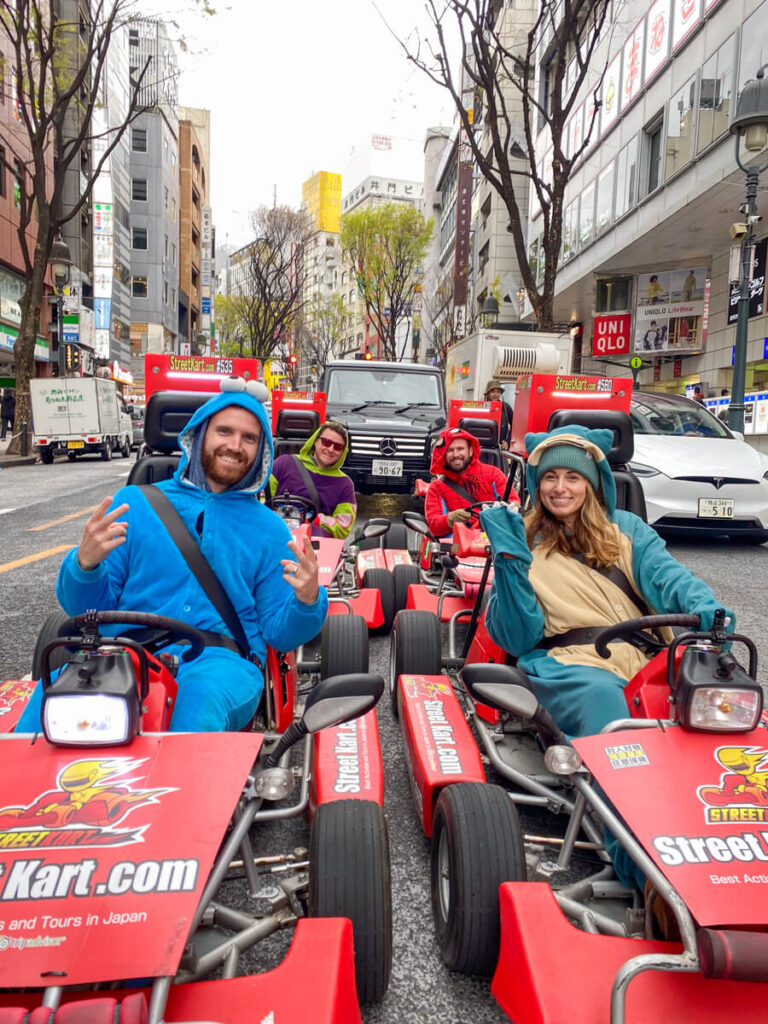
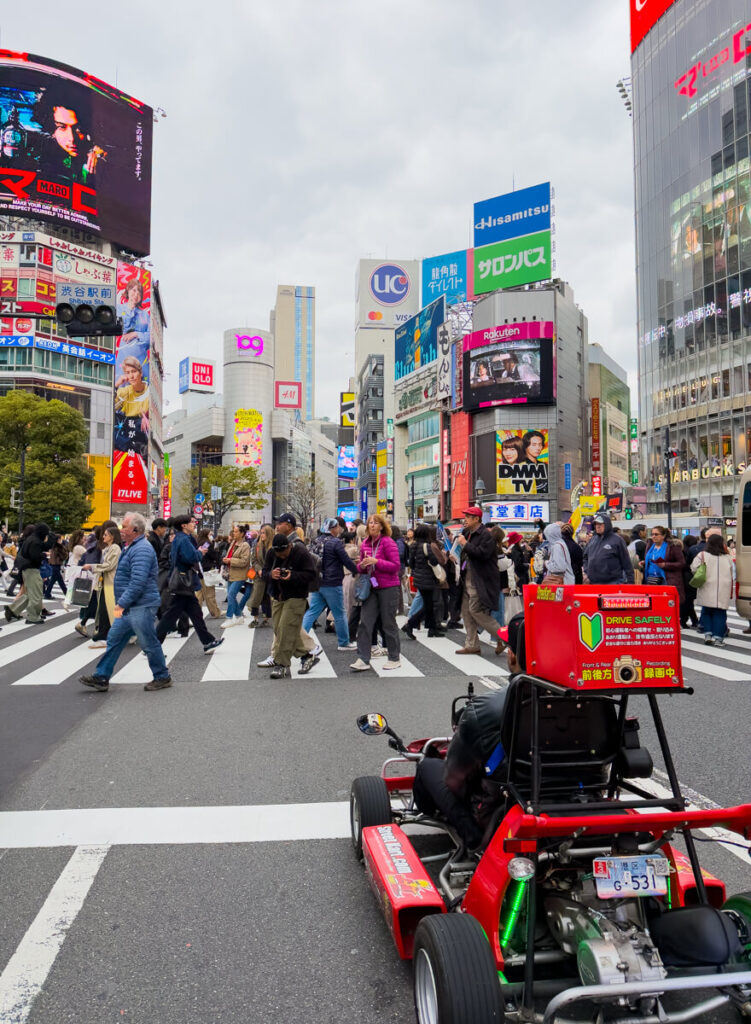
- Mario Kart Street Racing – One of the most fun experiences we did in Tokyo (don’t forget your IDP!).
- Sumo Experience – Watch a real sumo competition or book this sumo show experience!
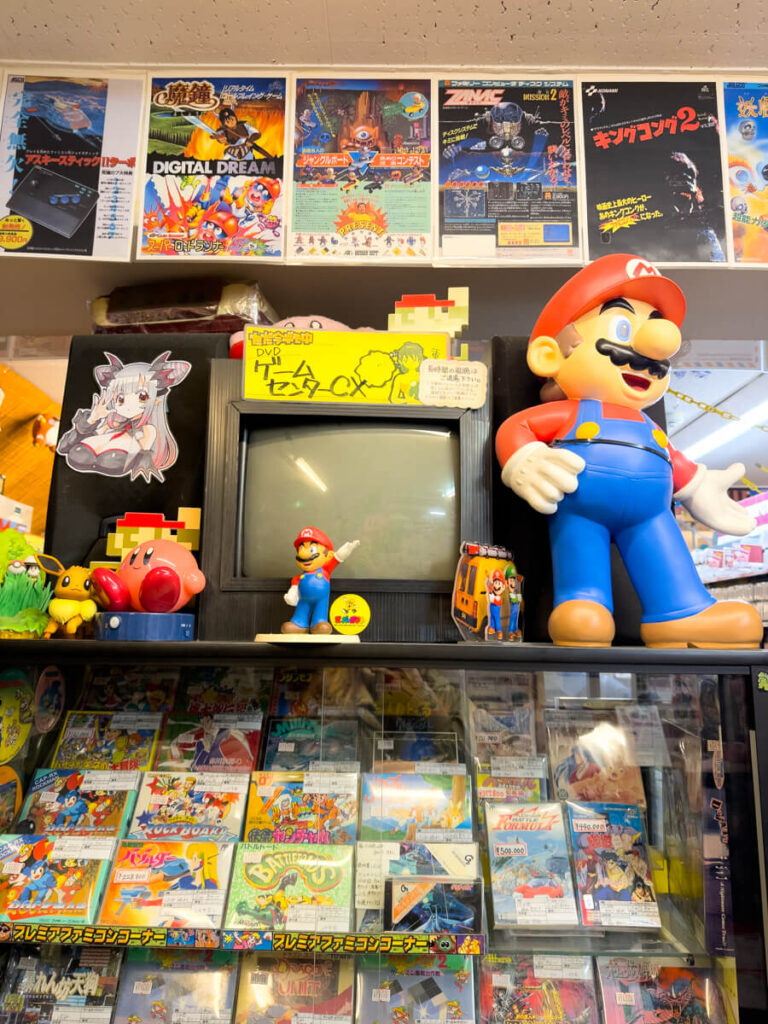
- Akihabara – Nerd out on otaku culture by visiting retro game shops and electronic stores
- Tsukiji Fish Market – See huge tuna and try a variety of fresh seafood and street food!
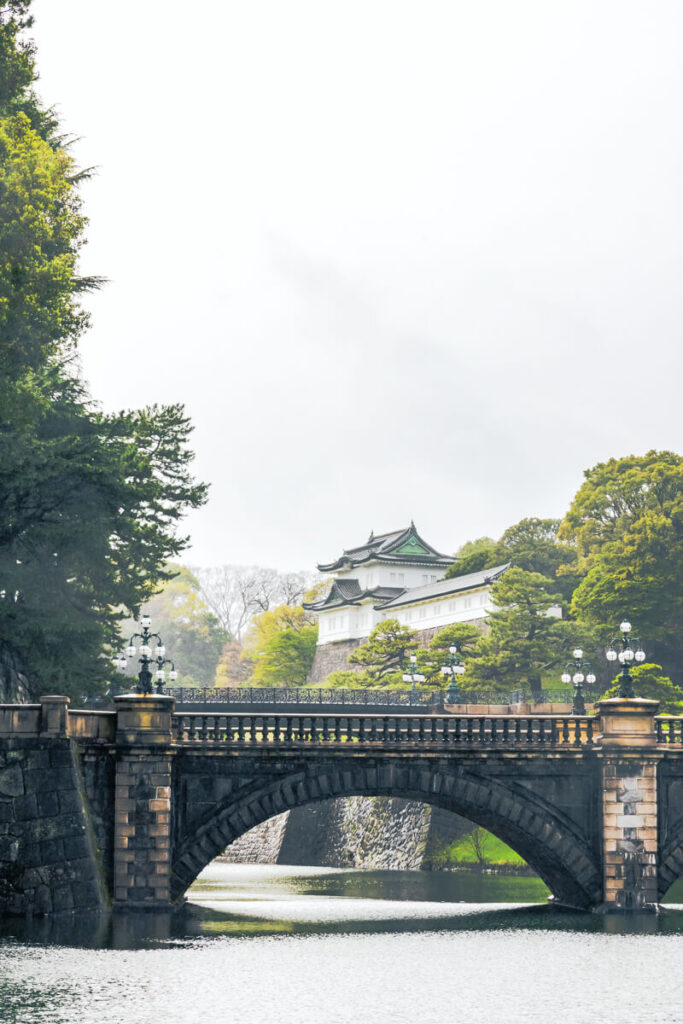
- Imperial Palace – See the official residence of the emperor of Japan and the beautiful park that surrounds it


Kyoto – The Cultural Heart of Japan
I finally was able to spend a few days in Kyoto on our last trip to Japan, and it did not disappoint!
There are several areas of Kyoto, including the more modern side near Kyoto Station and the historic geisha district of Gion on the west side.
Kyoto used to be the capital of Japan and is known for its many temples, shrines, and gardens. It feels completely different from Tokyo and is the perfect balance for a shorter trip.
We spent 3 full days in Kyoto but could definitely have stayed longer, as our stay was action-packed!
Here are the top things to do in Kyoto:
- Fushimi Inari Shrine – Hike through 10,000+ red torii gates (go early to avoid crowds!).
- Arashiyama Bamboo Grove – A surreal photo spot surrounded by beautiful temples
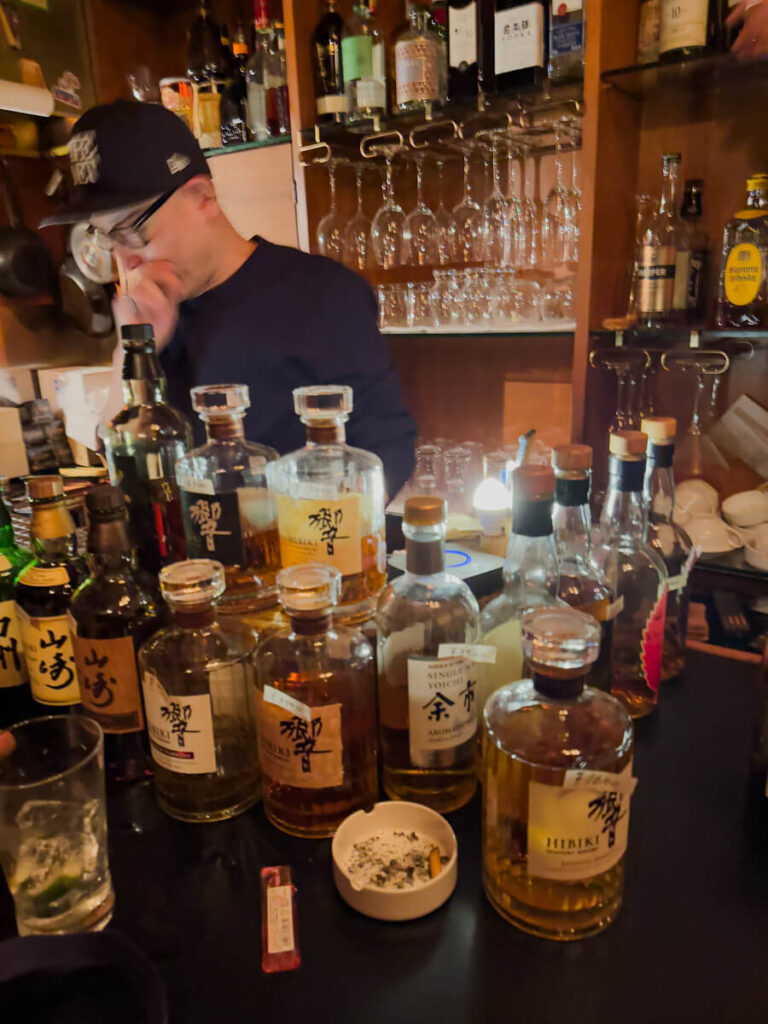
- Izakaya bar crawl – Learn about Japan’s bar culture and try sake, Japanese whiskey, and more!
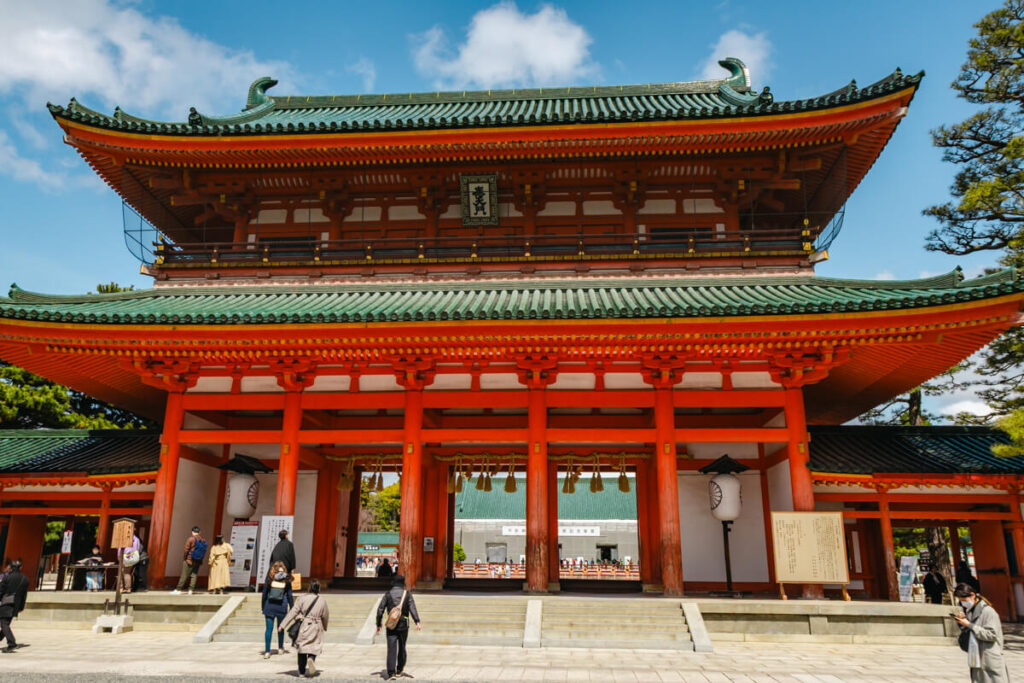
- Kiyomizu-dera – One of Kyoto’s most stunning temples, with panoramic views of the city
- Tea Ceremony – Learn the art and history of matcha making from a tea master!
- Nishiki Market – Try local Kyoto specialties like yuba (tofu skin), matcha treats, and candied strawberries
- Philosopher’s Path – A tranquil stroll along the canal lined with cherry blossoms in spring
- Biking temple tour – The perfect way to experience some off-the-beaten-path temples




Osaka – The Foodie Capital
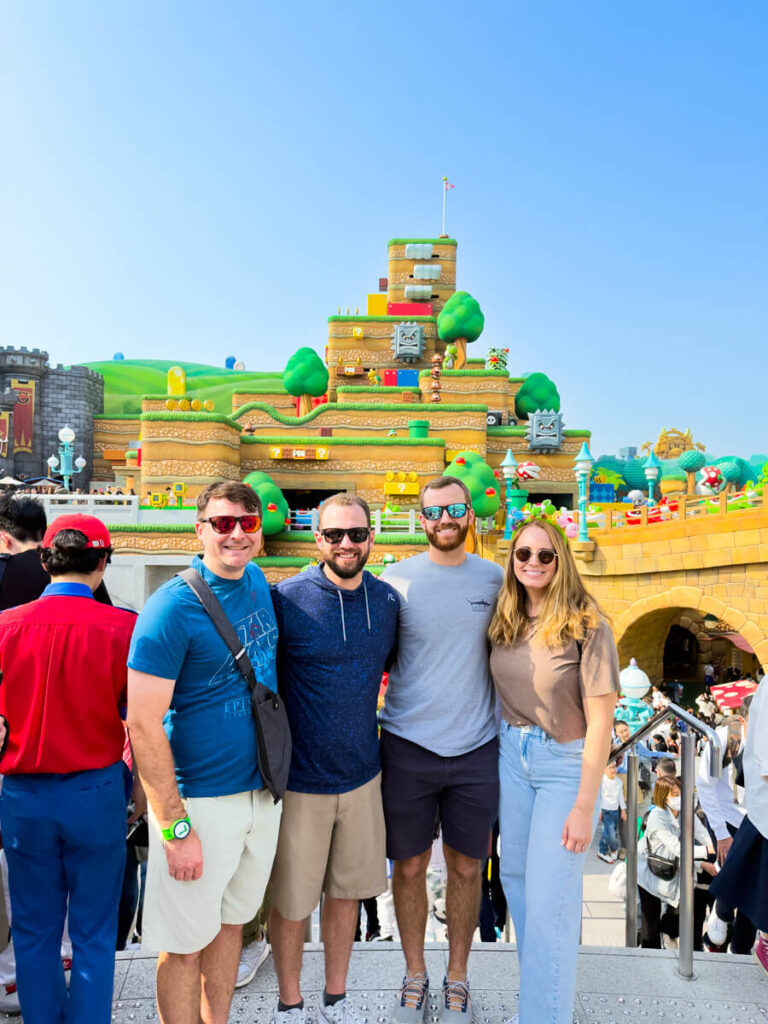
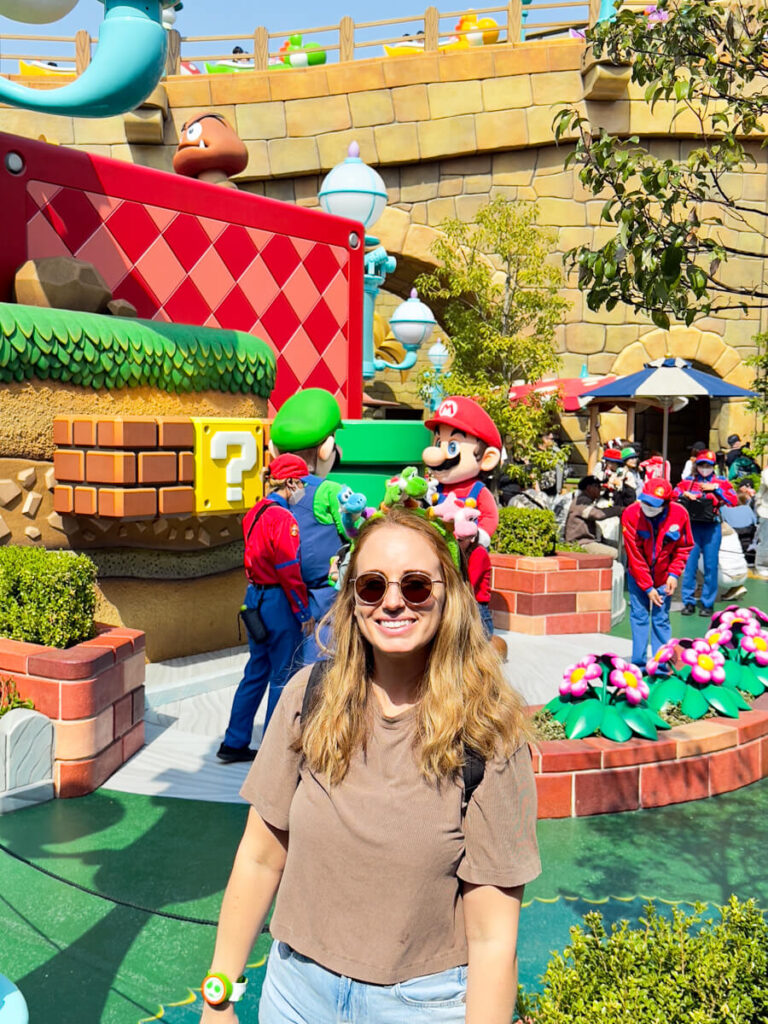
Osaka will always have a special place in my heart, as I lived here for 6 weeks on my first two trips to Japan! I was an engineer at Universal Studios and got to work on the opening of Super Nintendo World – a total dream! (Read my full guide to Universal Studios Japan and SNW here!)
A lot of people skip Osaka on their first trip to Japan, which I think is a huge mistake! Compared to Tokyo, Osaka feels more laid-back and local – it’s the perfect place to start a trip to Japan.
On our last trip, we spent 3 full days in Osaka; however, if you’re really crunched for time, you could see the major highlights in 24 hours as a day trip from Kyoto!
Here are the top things to do in Osaka:
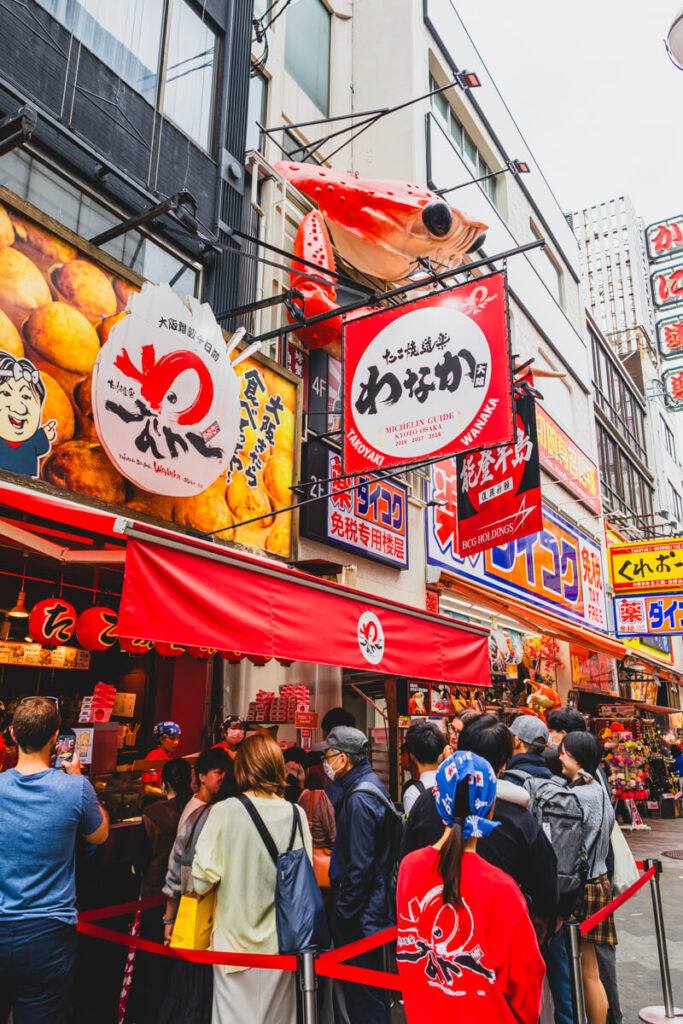
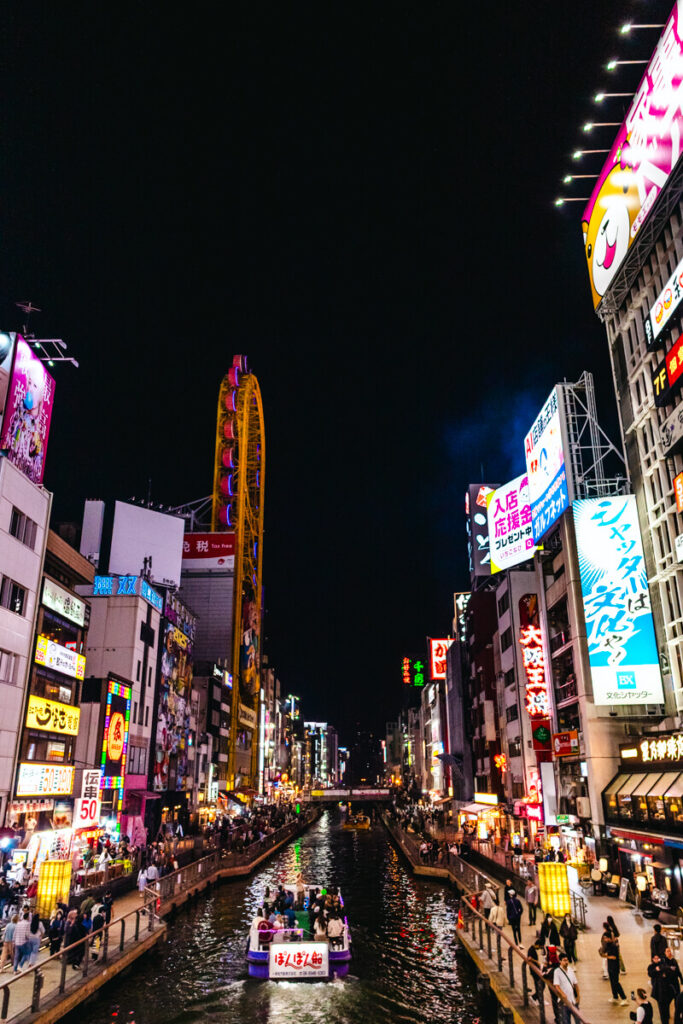
- Dotonbori – Soak in the neon madness, eat all the street food, and snap a pic with the Glico Man
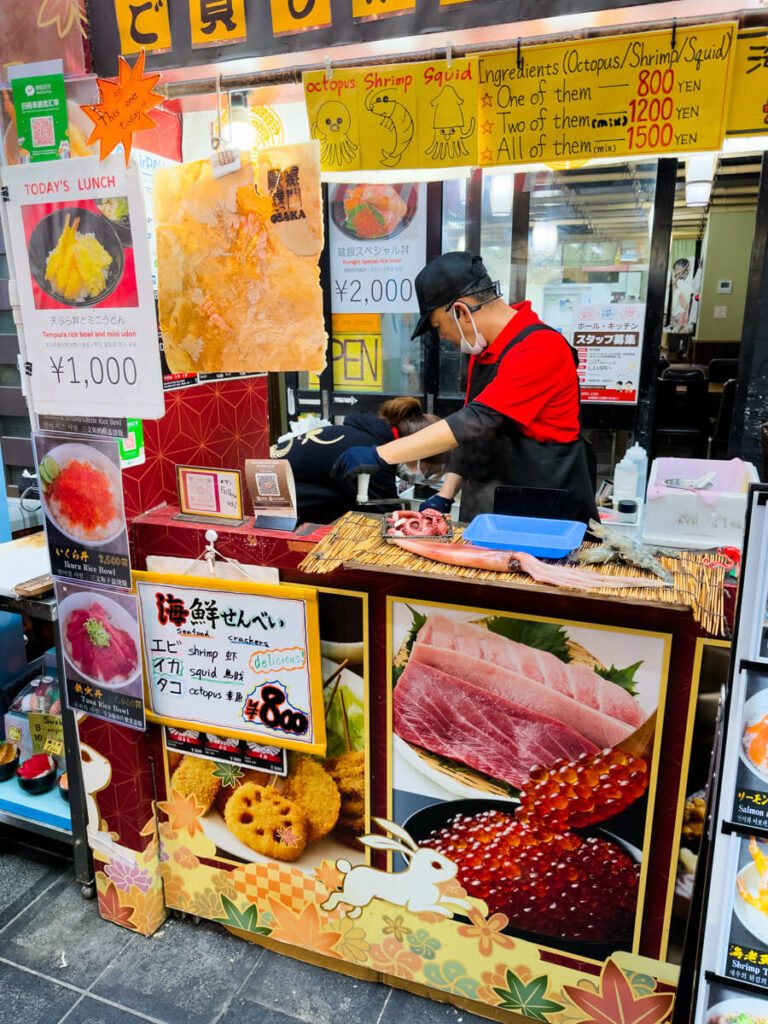
- Kuromon Market – A must for food lovers! Try unique specialities like sea urchin, seafood crackers, and even pufferfish. Visit on an organized tour like we did here!
- Osaka Castle – A beautiful castle and surrounding park where you can learn about the history of Osaka (and see tons of cherry blossoms in the spring!). Book your tickets in advance to skip the line
- Umeda Sky Building – Ride the escalator through the sky and take in panoramic city views
- Kitashinchi neighborhood – Explore cozy ramen shops and cocktail bars in lantern-lit alleyways in this off-the-beaten-path street in Osaka!
- Universal Studios Japan – Home to Super Nintendo World, Harry Potter, and many other iconic attractions! Book your park tickets and express passes in advance!
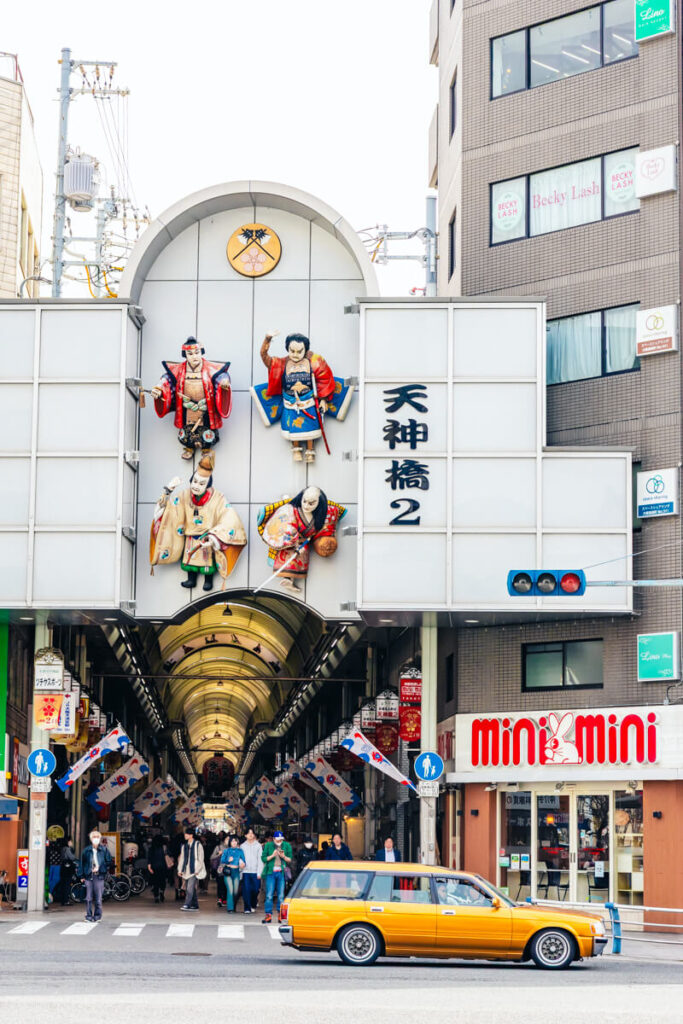
- Tenjinbashi-suji – Wander down Japan’s longest shopping street, which goes on for over a mile and is packed with fun shops, restaurants, book stores, candy stores, and more.
For more ideas, check out my full guide on the Top 20 Things to Do in Osaka. And if you want access to my favorite spots in Osaka (including a bunch of secret spots I don’t share anywhere else) check out my custom Osaka Google Map! 🇯🇵


OSAKA MAP
Discover my top Osaka hidden gems!
$6.99
Save time and energy researching and get access to my private list of 50+ bars, restaurants, parks, shopping spots, and more! Most of which I don’t mention on my blog😉
Bonus Stops
If you have extra time in Japan, or just want to switch up the classic Osaka -> Kyoto -> Tokyo route, here are 3 other places to consider adding to your itinerary!
- Mount Fuji – Visit on a day trip from Tokyo or stay overnight in the nearby towns of Hakone or Kawaguchiko! See the Chureito Pagoda, bike around Lake Kawaguchiko, and soak in the views!
- Hiroshima – A deeply moving destination with important WWII history and a message of peace. Don’t miss the Peace Memorial Park and a ferry ride to nearby Miyajima Island, home to the iconic floating torii gate.
- Kanazawa – A hidden gem with well-preserved samurai districts, stunning Kenrokuen Garden (one of Japan’s top 3 gardens!), and an amazing modern art museum.
Things to Know Before Arriving in Japan
There’s no better feeling than booking your dream trip to Japan! But before you take off, there are a few key things you’ll want to prepare to make your arrival smooth and stress-free.
Passport & Visa Requirements
If you’re coming from the United States, Canada, the UK, Australia, or most EU countries, you do not need a tourist visa for short-term stays of up to 90 days in Japan. You can check Japan’s Ministry of Foreign Affairs website to check other countries’ requirements.
That said, make sure your passport is valid for your entire stay. Personally, I make sure mine is valid for 3-6 months after my stay, although that is not a requirement of Japan (it is for other countries!). Your passport should also have at least 1 blank page per entry stamp.
It’s also recommended to have proof of onward journey – like a plane ticket that shows you will be leaving the country within 90 days.
💡 Lana’s Tip: If you do need to renew your passport before your trip, make sure to give yourself plenty of time before your trip! I recommend at least 8 weeks.
There is no required paperwork you have to complete before you arrive in Japan.
Once you land, you’ll need to fill out the custom and immigration forms; however, Japan no longer uses paper customs forms upon arrival – it is done virtually now.
You can complete these forms in advance through the Visit Japan Web portal, which will give you a QR code to scan at the immigration counter and potentially shorten your time in line!

Travel Insurance
Japan is one of the safest countries in the world, but that doesn’t mean things can’t go wrong!
Whether it’s lost luggage, food poisoning, a missed train, or a sudden trip to the hospital, travel insurance is 100% worth it for peace of mind. Trust me, I’ve learned this lesson the hard way!
While Japan has state-of-the-art medical facilities, medical treatments are not free for tourists and can be quite expensive.
And while some travel credit cards like the Chase Sapphire Preferred and the Venture X offer some trip delay protection, I recommend full travel insurance that also covers medical expenses for this reason.
I personally use SafetyWing’s Nomad Insurance for trips abroad, which covers trip delays, lost luggage, medical treatments, and more!
International Driving Permit
Most travelers visiting Japan will stick to the world-renowned train network (including the famous bullet trains!) to get around the country. However, if you do want to rent a car, you’ll need an International Driving Permit (IDP) to do so.
If you are visiting from the United States, this is different from your state-issued driver’s license. I repeat: your state-issued driver’s license will not be accepted in Japan.
The easiest way to get an IDP in the USA is through AAA, either online or in-person at one of their local offices. You do not need to be a member of AAA to obtain an IDP through them!
It only costs $20, and if you go in person, you’ll have the IDP the same day. Super easy!
🪪 Read more about obtaining an IDP through AAA here!
An IDP is not only needed for renting a car in Japan, but it’s also required if you plan to do the famous go-karting in Tokyo (or another city like Osaka).
We personally booked this go-karting tour through Shibuya and had an absolute blast! 🏎️
Before we even arrived in Japan, we had to submit photos of our passports and IDPs to the tour company. We also had to bring them in-person and keep the IDP with us on the go-kart to abide by local Japanese driving laws!

Getting to Japan
Japan is extremely well-connected internationally, with multiple major airports offering direct flights from the U.S., Europe, Australia, and beyond. If it’s your first trip to Japan, you’ll most likely be flying into Tokyo or Osaka, depending on your itinerary!
We personally flew into Osaka and out of Tokyo on our 10 day trip to Japan last March, which meant we didn’t have to double back at the end of our trip! We booked one way flights because we were using credit card points to fly business class (a dream!!).
However, booking one way instead of round-trip can often be more expensive if you’re not using points. To get around this, try using Google Flights “Multi-City” option, which allows you to take advantage of round-trip pricing but still fly in and out of different airports.
Another option is to book round-trip flights and double-back on the front or back half of the trip (I recommend the front). For example, you can fly into Tokyo and then immediately take a bullet train (or another flight) to Osaka to kick off the trip, and then end the trip in Tokyo.
P.S. Want more tips like these? I cover my exact international trip planning process in my Passport to Confidence E-Book. This $7 guide is packed full of money-saving and trip planning tips to help you travel internationally with confidence! ✈️✨
Major Airports to Know
Tokyo is served by two international airports:
- Haneda Airport (HND) – Located closer to central Tokyo (about 30 minutes by train), this is the preferred airport if you can find a good flight. It’s newer, cleaner, and significantly easier to access.
- Narita Airport (NRT) – Located farther outside of the city (about 1–1.5 hours into Tokyo), but often has more international flight options and better deals. Still totally manageable, just a longer transfer into the city.
Osaka and Kyoto are served by:
- Kansai International Airport (KIX) – Located on a manmade island in Osaka Bay, this is the main international airport for both Osaka and Kyoto. If you’re starting your trip in the Kansai region (Osaka, Kyoto, Nara), this is the airport to look for!
Getting into the City Center
All of Japan’s international airports are well-connected by public transport. You’ll typically have four main options: train, airport bus, taxi, or private transfer.
🚆 Train
This is usually the fastest and cheapest option for getting from the airport to the city center.
- From Haneda: The Tokyo Monorail connects the airport to Hamamatsucho Station, which is well connected to the rest of Tokyo via the green Yamanote Line. Or take the Keikyu Line directly from the airport to Shinagawa or Asakusa Stations.
- From Narita: The Narita Express (N’EX) goes directly to Tokyo Station, Shinjuku, and other major hubs in about 1 hour. You can also take the Keisei Skyliner to Ueno if that’s closer to where you’re staying.
- From KIX: The Haruka Express goes directly to Tennoji, Nara, Osaka, and Kyoto Stations. We used this on our last trip and it was seamless!

🚌 Airport Limousine Bus
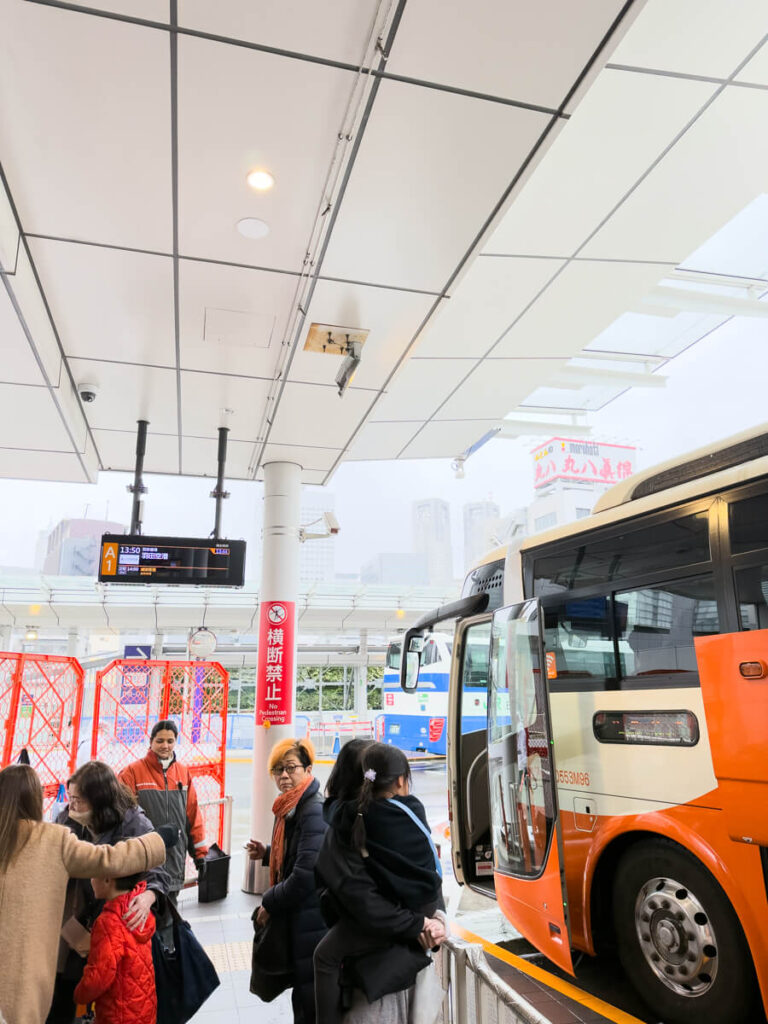
This a more relaxed option if you don’t want to deal with your luggage on trains. These buses run directly from the airport to many major hotels and stations in Tokyo and Osaka.
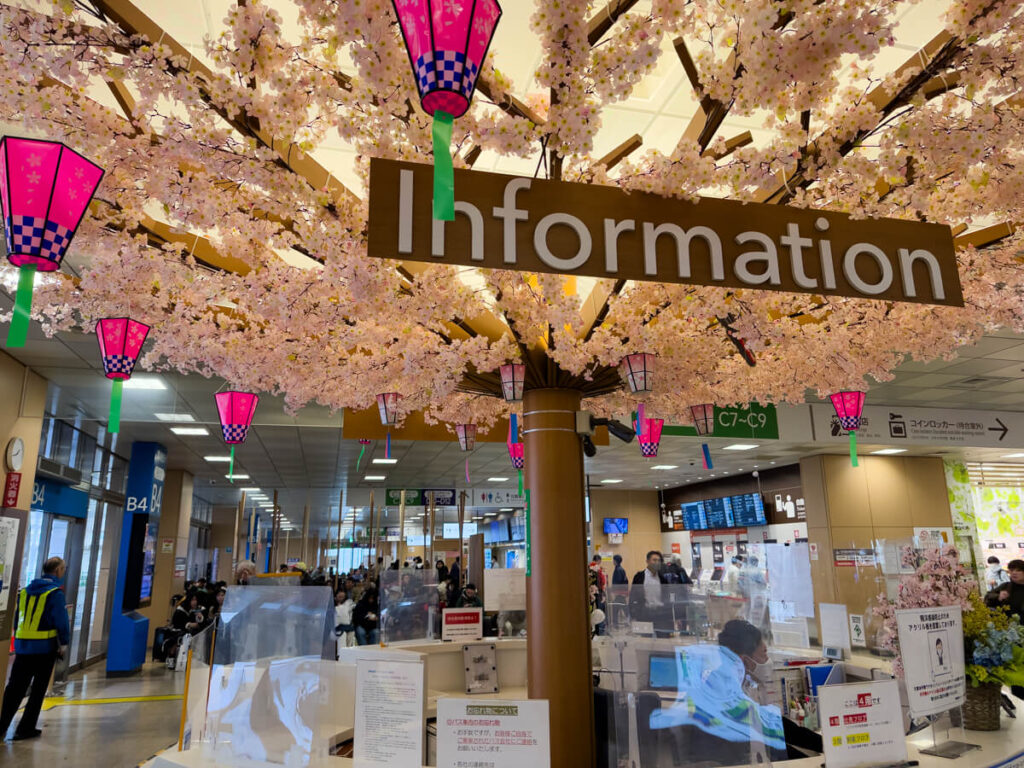
I’ve used this option in both Osaka and Tokyo and can highly recommend it! The Osaka Limousine Buses travel to a variety of different areas through Osaka – I took it directly to the Hilton Osaka on my first trip to Japan.
And on our last trip, we decided to take the Tokyo Airport Limousine bus from Shinjuku station directly to the airport because we were over trains by that point! You can buy tickets in advance through Klook or at the bus station on the day of. It was a seamless process!
🚖 Private Transfers or Taxis
If you’re arriving late at night or just want door-to-door service, private transfers are available, but they are much more expensive (especially in Tokyo).
Not recommended unless you’re traveling with kids or a group or have lots of luggage!
For example, a taxi ride from KIX into Osaka city costs around $100 (for 2 people with luggage). A private transfer may be a little more or less than that, depending on who you book through!
This private transfer option through Klook is only $80, which seems like a good deal!
➡️ Read Next: I have a full guide breaking down how to get into the city center from the Osaka airport (KIX)! It covers trains, buses, and more options!
Getting around Japan
Japan is famous for having one of the most efficient, punctual, and clean transportation systems in the world, and it absolutely lives up to the hype!
That said, it can be a little overwhelming at first, especially if you don’t have a lot of experience navigating trains in foreign countries. Don’t worry though, it’s completely doable!
In this section, we’ll walk through how to travel between cities (bullet trains, rail passes, and luggage shipping) as well as how to get around within cities (metro systems, IC cards, and local tips).
Traveling Between Cities
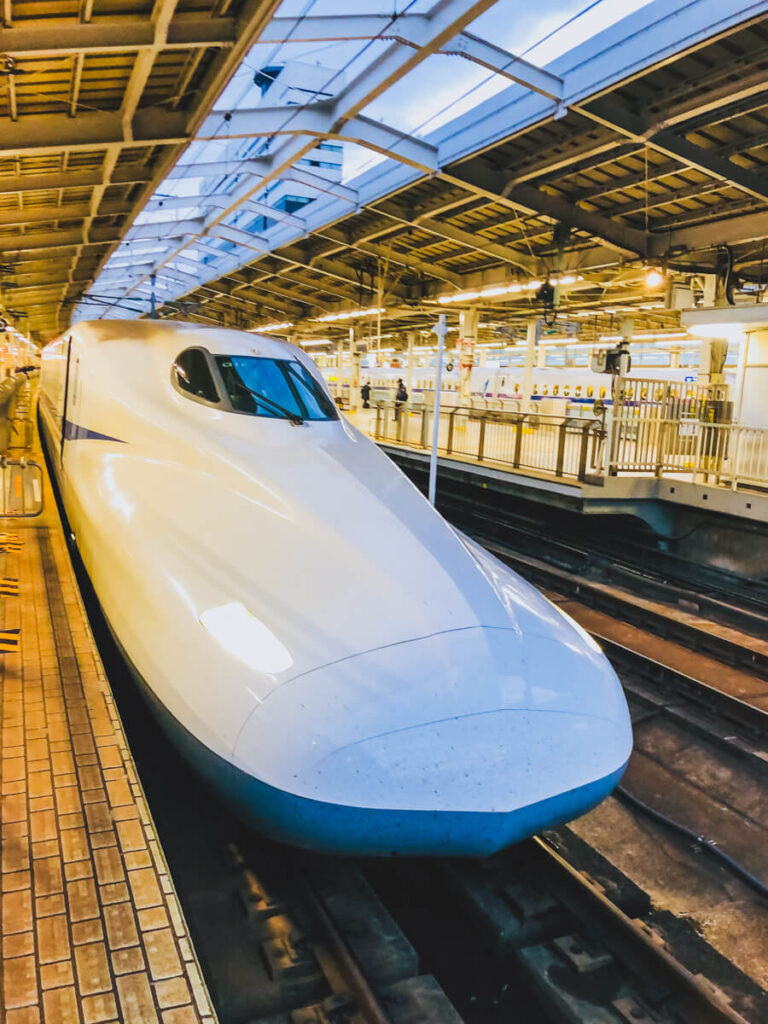
If you’re planning to visit multiple cities while in Japan, like Kyoto, Osaka, and Tokyo, the easiest way to get between them in the famous Shinkansen, aka the bullet train!
These trains have become synonymous with Japan. They zoom between major cities at speeds up to 200 mph (322 kph). They’re also extremely safe, punctual, and have modern amenities liker reclining seats, power outlets, free Wifi, and snacks!
There are 9 different Shinkansen lines that service Japan, and each line has several different types of trains. All trains are operated by Japan Railways (JR), and you can view the different routes and maps on the Japan Rail Pass website here.
I’ve ridden the bullet train between Osaka and Tokyo and Kyoto and Tokyo (both on the Tokaido line) on my trips to Japan and had incredible experiences both times!

You typically do not need to buy your Shinkansen in advance of your trip, as the most popular routes have many trains per hour, so it is unlikely they fill up. But you can if you want to!
On our trip, we booked our tickets on the bullet train through Klook 1-2 days in advance!
You can also buy them at the station, but if you do, I recommend doing so through an attendant so you make sure you are getting the right ticket. We tried to book through a machine and ended up only getting half the ticket (whoops!).
Klook makes it easy to get your tickets for a specific route on a specific date, and they’ll give you a QR code to scan to board the train – no paper tickets needed!
A Note on Luggage
If you are traveling with large suitcases on the Shinkansen, you have the option of reserving a seat (for an extra cost) with designated oversized luggage space.
This is typically the last row of seats in each compartment, which have a small gap behind them for bags. If your bags are larger than 160 cm (62 inches), you are technically supposed to reserve these seats.
However, they are starting to let people place bags there without a reserved seat on a trial basis, and if there is room.
If your bag is a standard checked size bag or smaller, you can place it in the overhead bin above the seats free of charge.
Or, another option to consider for your luggage is to use Japan’s luggage shipping services. I had no idea this existed until our last trip to Japan, but there are several companies that will ship your bags from one city to another, so you don’t have to worry about lugging them on trains!
The most popular company in Japan for this service is Yamato. However, it is easiest to just arrange at your hotel concierge when you arrive. We did this between Osaka and Kyoto and it worked out perfectly! Our bags were waiting for us when we arrived in Kyoto.
Japan Rail Pass
As mentioned above, Japan Railways (JR) runs all bullet trains, as well as several other smaller train lines throughout Japan!
Because of that, they also offer a special ticket for international visitors called the Japan Rail Pass (JR Pass).
The JR Pass is essentially an all-you-can-ride train pass that gives foreign tourists unlimited access to most JR-operated trains for a set number of consecutive days (7, 14, or 21).
This includes the majority of Shinkansen trains (except Nozomi and Mizuho), as well as JR regional trains, local commuter lines, and even some JR buses and ferries.
It was designed to make long-distance travel between cities like Tokyo, Kyoto, Osaka, and Hiroshima easier and more affordable for travelers who plan to move around frequently.
However, with recent price increases, the JR Pass isn’t automatically the best deal for everyone anymore. Whether it’s worth it depends entirely on how many long-distance train rides you’re planning to take within a short window of time.
⚠️ In general, if you are only planning to visit Osaka, Kyoto, and Tokyo, the JR Pass is typically not worth it.
The cost of a 7-day JR pass for adults is $334, and a 14-day pass costs $550.
When purchased individually, Shinkansen tickets between Tokyo and Osaka/Kyoto cost around $100. So, you’d have to take 3+ bullet trains to really make the trip worth it, which is unlikely on a 7-10 day trip unless you are visiting other areas of Japan.
You can confirm whether purchasing the JR pass makes sense for you using this JR Pass calculator!
If you do decide to purchase the JR pass, you can do so on Klook or directly on the JR Pass website.


Traveling in Cities
Once you’re in Japan’s cities, getting around is remarkably easy thanks to Japan’s reliable and extensive public transportation systems. Whether you’re in Tokyo, Kyoto, or Osaka, you’ll primarily be using subway lines, local trains, and maybe buses!
The easiest way to use these is with an IC card.
What is an IC Card?
IC cards are rechargeable smart cards you can use to pay for trains, subways, buses, vending machines, lockers, and even convenience stores. They make life way easier because you don’t need to fumble with coins or buy a ticket every time you ride the train.
There are different IC card brands depending on which region you’re in (Suica or PASMO in Tokyo, ICOCA in Osaka/Kyoto, etc.), but they’re all interchangeable across most major cities in Japan.


Save this post for later!
We personally used ICOCA during our most recent trip to Japan since we started in Osaka, and then it worked seamlessly when we got to Kyoto and Tokyo too.
You can purchase a physical IC card at any major train station (either from a machine or a service counter), or you can even buy one in advance on Klook and pick it up when you land.
You’ll load yen onto the card and then simply tap in and out at ticket gates – super easy! If your balance gets low, you can reload at any train station.
💡 Lana’s Tip: If you have an iPhone, you can also add Suica or PASMO to your Apple Wallet and use Apple Pay to recharge it—no physical card needed! Check out the video below to see how.
City Transit: Subways, Trains & Buses
Each major city has its own public transportation system, but from my experience, they are all easy to navigate!
Especially with the help of Google Maps, which works beautifully in Japan. It gives real-time train schedules, platform numbers, and even exit info for train stations.
I highly recommend having cell data while in Japan so you can navigate in real time with the help of Google Maps!
Here’s a quick look at the main transport methods in Osaka, Kyoto, and Tokyo:
- Tokyo has the most complex network, with a mix of JR lines, Tokyo Metro, and Toei Subway. You’ll also use private rail lines if you head out to places like Hakone or Nikko. We used the green JR Yamanote Line most, which loops through all of the main stations of Tokyo like Shibuya, Shinjuku, Akihabara, Ueno, and Tokyo Station.
- Kyoto has two subway lines, four JR lines, and many other private rail lines. Our most used was the Keihan Main Line, which runs north/south through Gion and down to Fushimi Inari, as well as the Hankyu Line to Arashiyama.
- Osaka is served by the Osaka Metro, local trains, and the JR Loop Line, which circles the city and connects key neighborhoods. We preferred staying near Osaka station so we could hop on and off the Loop Line easily, but the Osaka Metro also connects the main area of Namba to other parts of the city.
Note: Your IC card will work for all trains except the bullet train in these 3 cities!


Can You Walk Everywhere?
In some neighborhoods, yes! Japan’s cities are very walkable, especially areas like Gion in Kyoto, Dotonbori in Osaka, and Shibuya or Asakusa in Tokyo. But for bigger jumps, trains will save you time and energy.
We found ourselves walking 8–10 miles a day even with trains, just because there’s so much to see in between stations. Wear comfortable shoes!
Cultural Considerations
One of the things that makes Japan so special is how deeply respectful and polite the culture is. For this reason, it’s very important to understand some cultural norms and faux pas before you arrive.
Quiet & Respectful Behavior
Japan is a very quiet country, especially in public places. I actually had reverse culture shock when we returned back in the USA after our 2 weeks in Japan! The Chicago O’Hare airport felt SO loud.
In Japan, trains, buses, restaurants, and even busy streets tend to be remarkably calm and hushed. You’ll rarely hear people speaking loudly in public, and phone calls or music on trains are a big no-no.
I used to love riding the train to work every day in Osaka and enjoying the quiet!
This reflects the broader Japanese value of not disturbing others. Things like speaking softly, not blasting music, and being mindful of personal space are all part of this unspoken etiquette.
Food & Drink Etiquette
Japanese food is a huge part of the travel experience, and with it comes a few important customs to know!
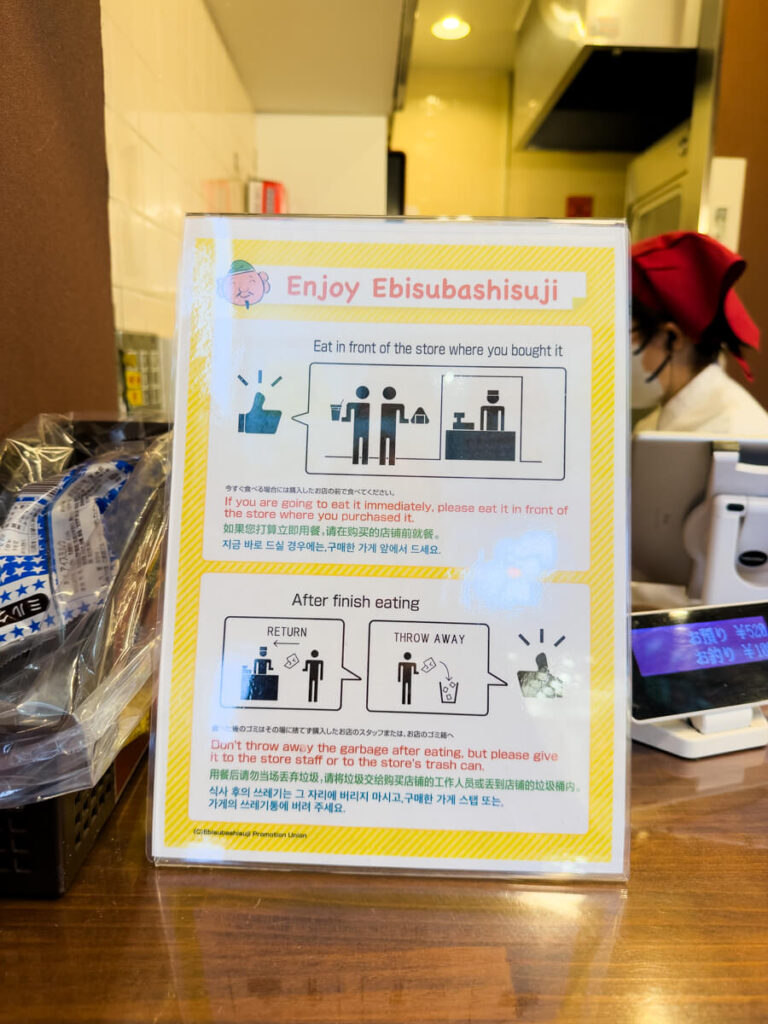
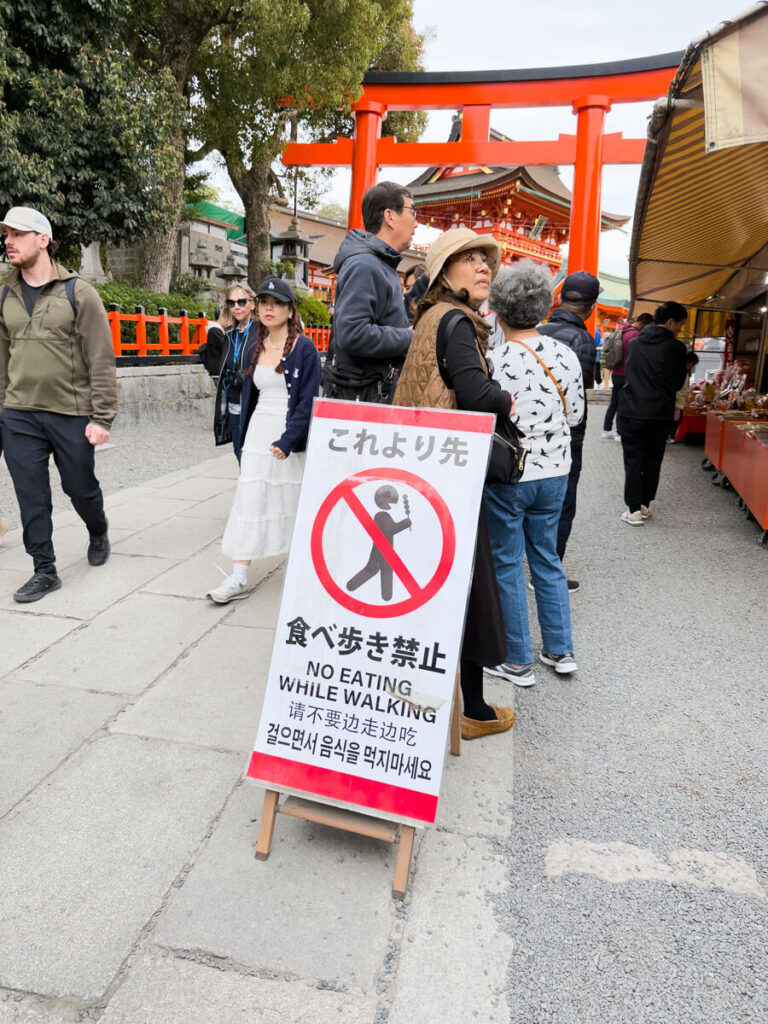
- No eating or drinking while walking: This one surprises a lot of travelers. It’s generally considered rude to eat on the go unless you’re in a designated eating area (like a park bench or food stall with tables). Finish your food before moving on!
- Dining in restaurants: Many places will hand you a hot towel (oshibori) to clean your hands before the meal. It’s polite to say itadakimasu (“I humbly receive”) before eating and gochisosama deshita (“thank you for the meal”) afterward.
- Trash cans are rare: You’ll quickly notice how clean Japan is, but how few trash bins there are! Most people carry their trash with them until they find a bin (usually at convenience stores or train stations). Be prepared to hold onto your waste for a while. Please do not litter.
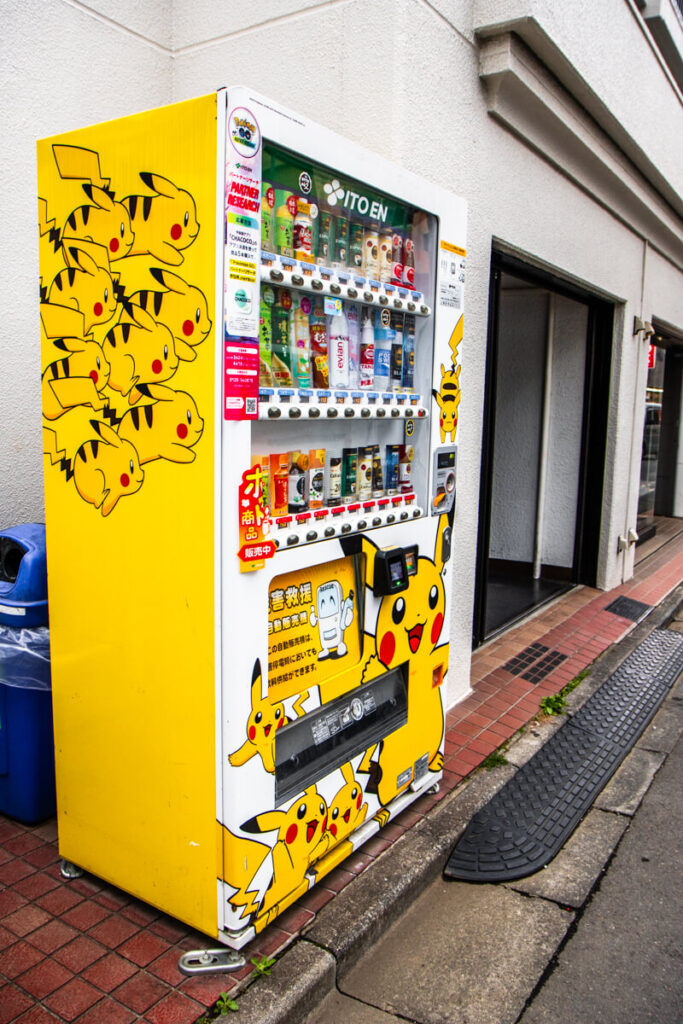
- Vending machines: Japan’s vending machines are iconic and everywhere! In fact, there are over 5.5 million in the country. There are even some with alcohol! My favorite are the hot green teas (or coffees) from the vending machines, especially if you are visiting when it’s cold outside.
- Convenience Stores: You may not think much of convenience stores in the USA, but they are a cultural staple in Japan. Stores like 7/11 and Lawson can be found on every corner and have surprisingly fresh food options, everything from bento boxes and onigiri to ramen and more!

Money & Tipping Etiquette
Japan is still a cash-heavy society, even though cards are slowly becoming more common!
Some places we visited were cash-only, but it was rare. Still, I recommend always carrying some yen for smaller restaurants, market stalls, and temple donations.
Also, when paying at restaurants, convenience stores, and other shops, the cashier may put out a small tray. Place your cash and coins on the tray instead of handing it directly to the cashier. This is another way that Japanese people show respect for personal space and hygiene.
And when it comes to tipping, the answer is always do not tip. Tipping is not expected in Japan. In fact, it can even be seen as rude and may lead to some awkward interactions (like them trying to return the money!).

Language Expectations
You don’t need to speak or read Japanese to visit Japan, but knowing a few basic words will go a long way to show respect.
Most signs in major airports and train stations are in English and Japanese, and public transit systems are very easy to follow (thanks in part to Google Maps!).
That said, not everyone speaks English, especially in smaller towns. Even in large cities like Osaka and Tokyo, you are unlikely to encounter people who speak fluent English. Don’t expect to have full conversations with Japanese people, unless you are on an English tour.
When conversing with Japanese people, be patient, speak slowly, and use translation apps like Google Translate when needed. A little politeness and effort go a long way! Please remember you are in their country.
🇯🇵 Lana’s Tip: Make sure to download Japanese “offline” in your Google Translate app so you can use it even if you don’t have cell service. Also, the image translation feature really comes in handy in Japan, especially for menus!
🗣️ Here are some basic Japanese phrases to know:
- Do you speak English? – Eigo o hanasemasu ka?
- Hello – Konnichiwa
- Good morning – Ohayo gozaimasu
- Thank you – Arigatou gozaimasu
- Excuse me / I’m sorry – Sumimasen
- Yes – Hai
- No thank you – Kekkou desu


Food And Drinks to Try in Japan
For most people (myself included!), food is one of the absolute highlights of visiting Japan. Whether you’re a sushi lover, ramen enthusiast, or just curious about the incredible variety of flavors Japan has to offer, I promise your taste buds will be happy here.
After three trips to Japan, food is still one of the things I get most excited about every time I go back. I love trying new things in Japan, and the best part is you can just stroll into any restaurant and have an incredible meal.
Here are some of the top foods and food experiences to try on your first trip to Japan:
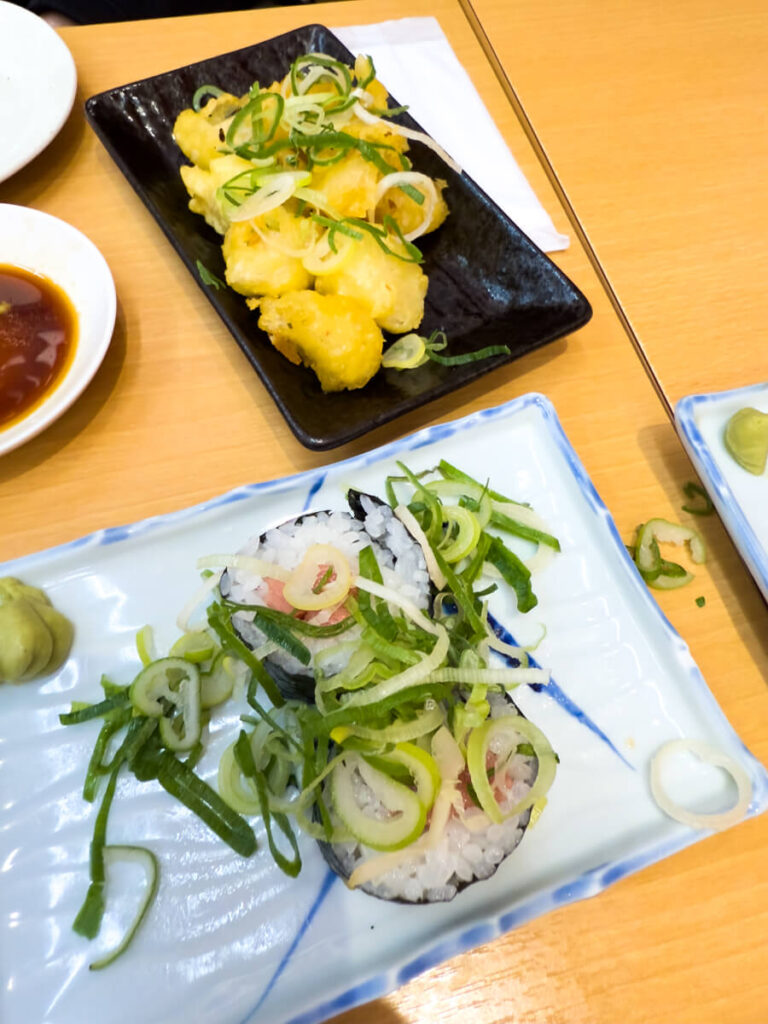
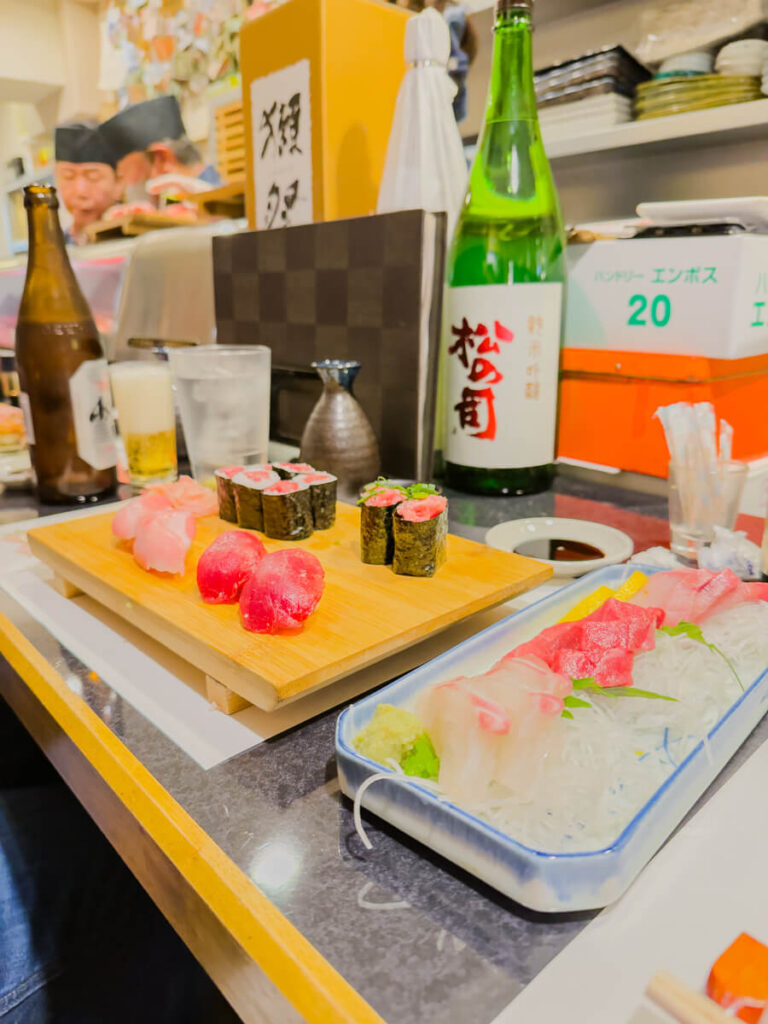
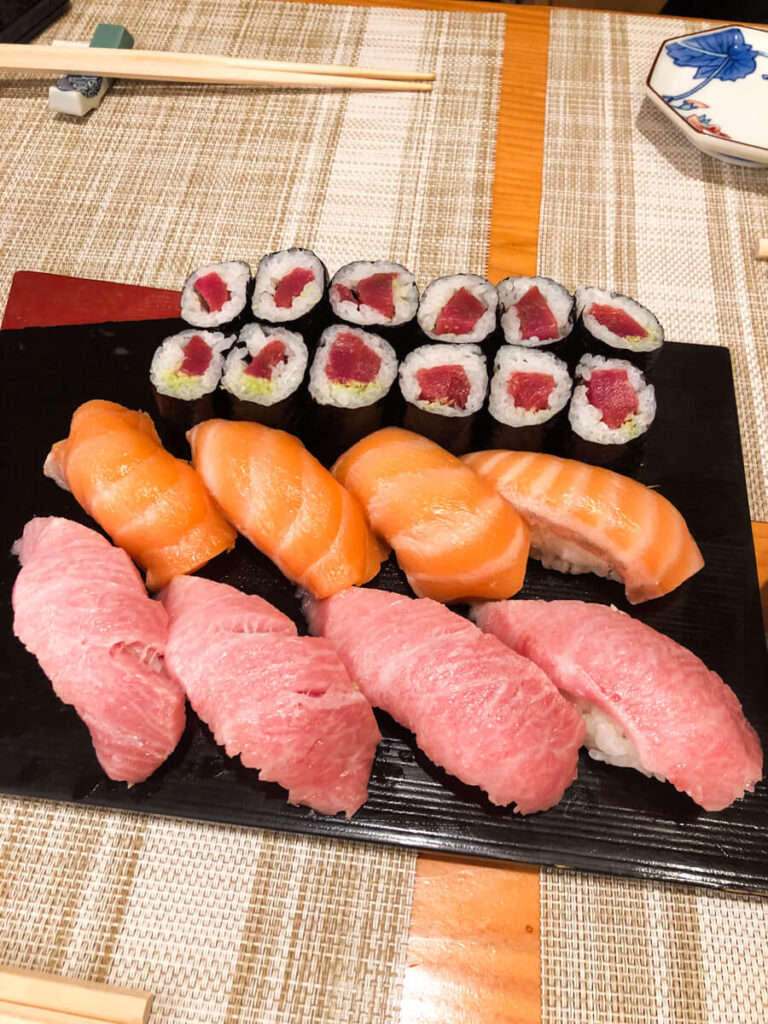
- Sushi: Sushi in Japan is on a whole different level! Whether you’re trying budget-friendly conveyor belt sushi or splurging on a high-end omakase experience, the freshness and presentation are unbeatable. Sushi back home in the States just doesn’t taste the same anymore.
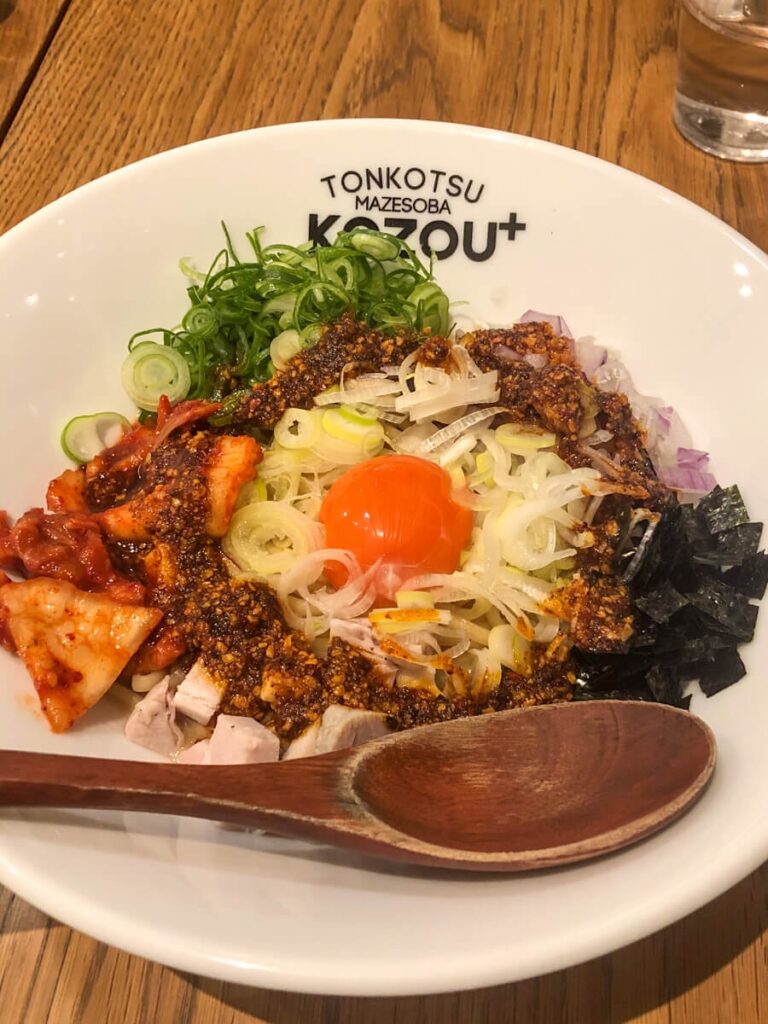
- Ramen: Ramen is a staple of Japanese comfort food, and you’ll find it everywhere! The best ramen spots are the ones you just stumbl into in hidden alleyways. My personal favorite is dry ramen (also called Mazesoba), which has no broth but is tossed in a savory sauce.
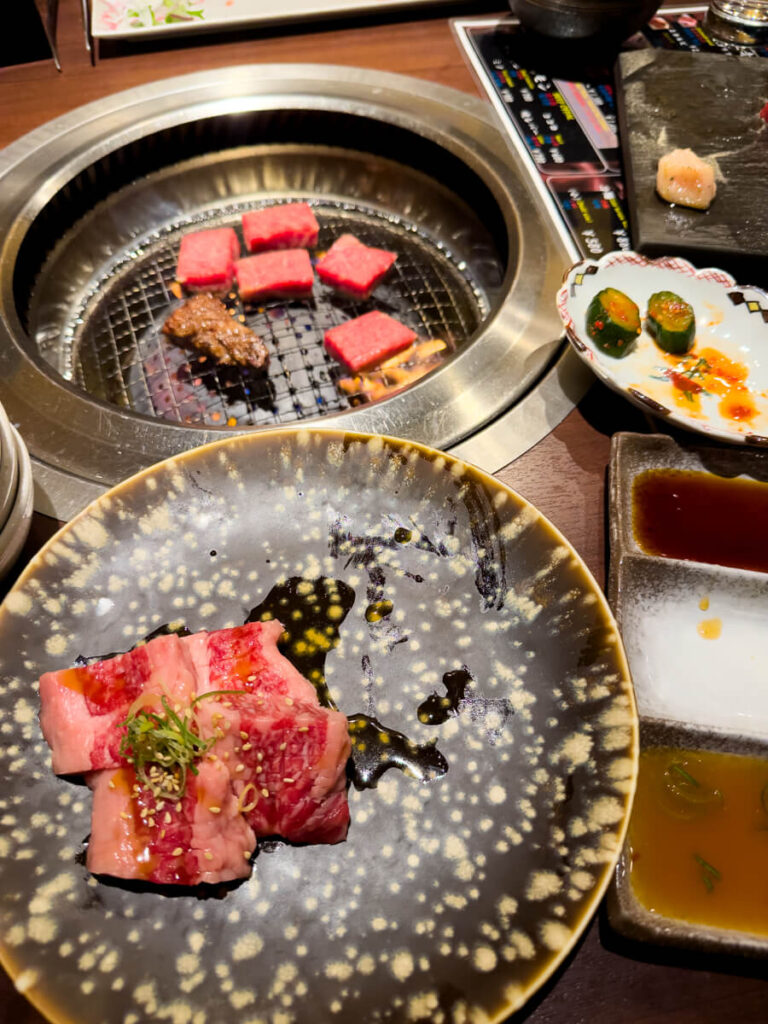
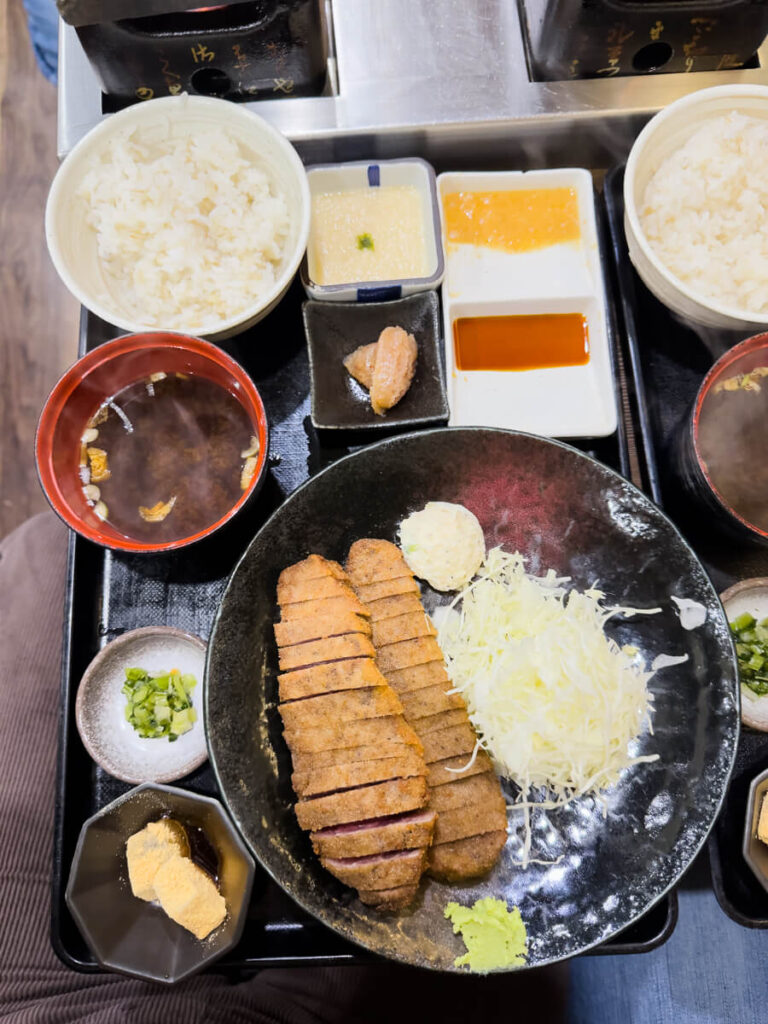
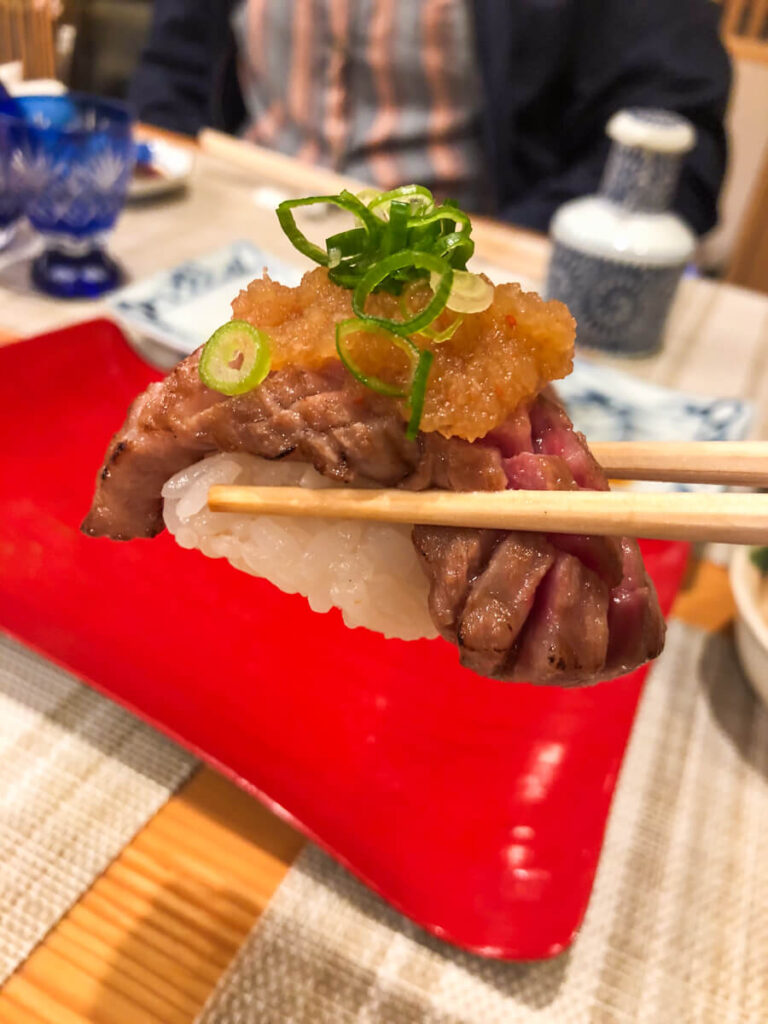
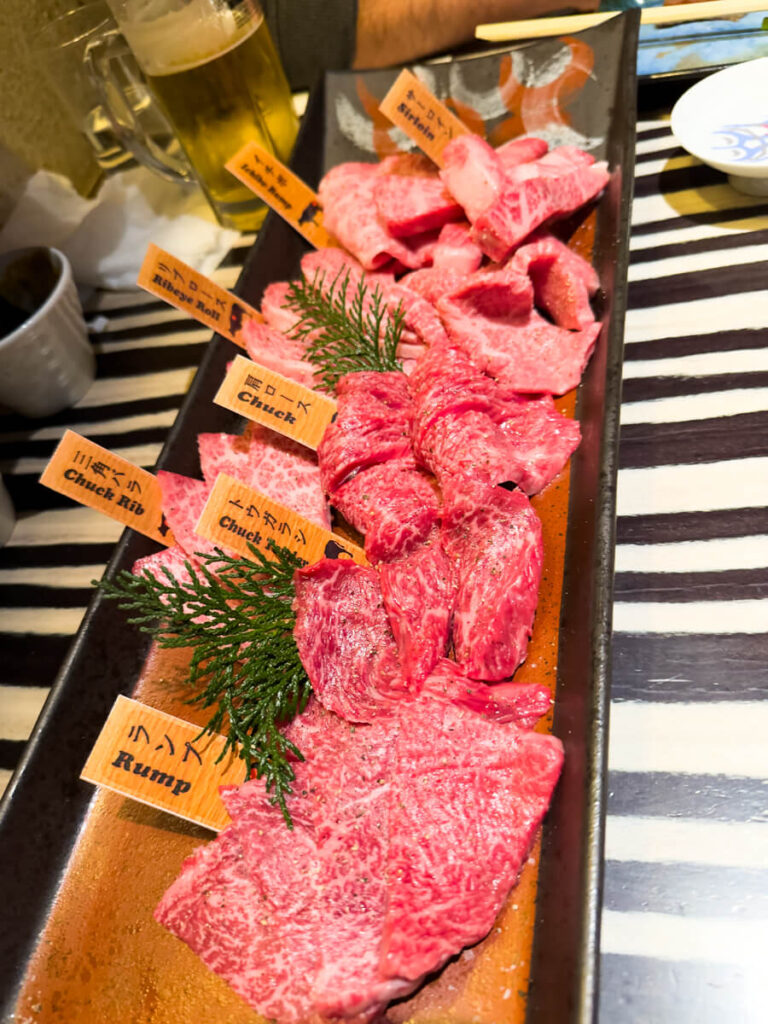
- Wagyu Beef: A must-try in Japan! Wagyu is a specific type of Japanese beef, known for its marbling, tenderness, and melt-in-your-mouth, buttery texture. The highest grade is A5, but any type will be good!
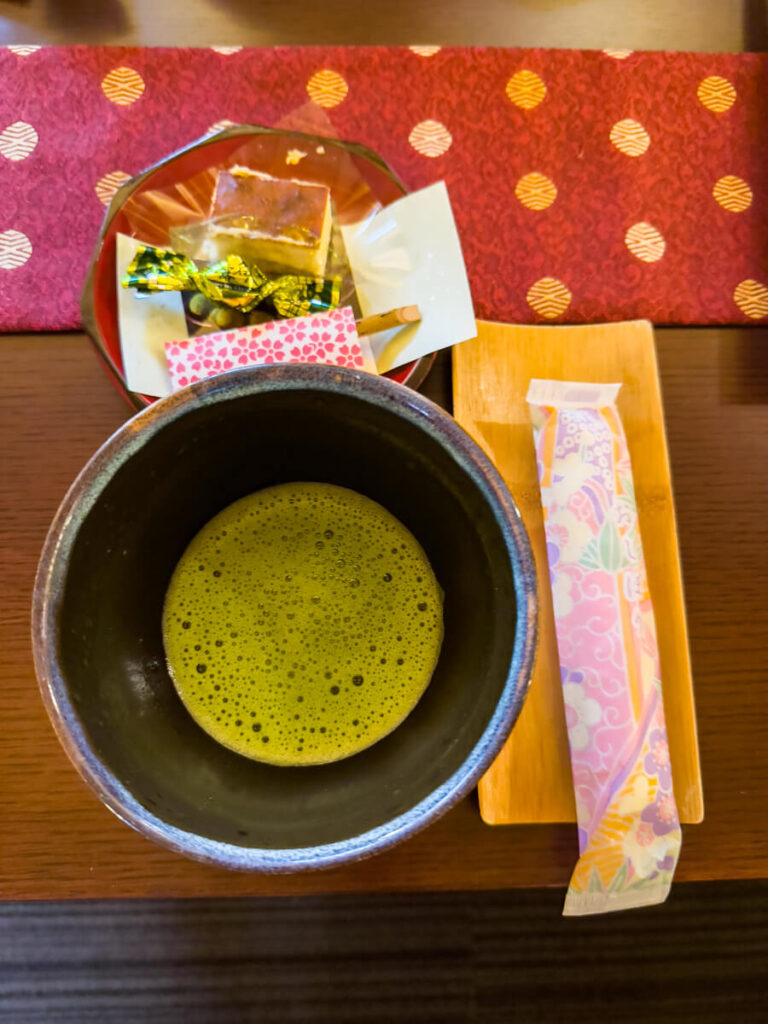
- Matcha: Matcha is powdered green tea that is deeply embedded in Japanese culture. You’ll find it in everything from traditional tea ceremonies to lattes, ice cream, mochi, and even Kit-Kats! Don’t miss trying a matcha dessert during your trip!
- Sake – Japan’s iconic rice wine, sake can be served hot or cold and varies widely in flavor. Try it at a local izakaya or as part of a sake tasting experience for the full effect!
Food Experiences in Japan
Beyond just eating individual dishes, Japan offers incredible food experiences that will help you truly immerse in the culture!
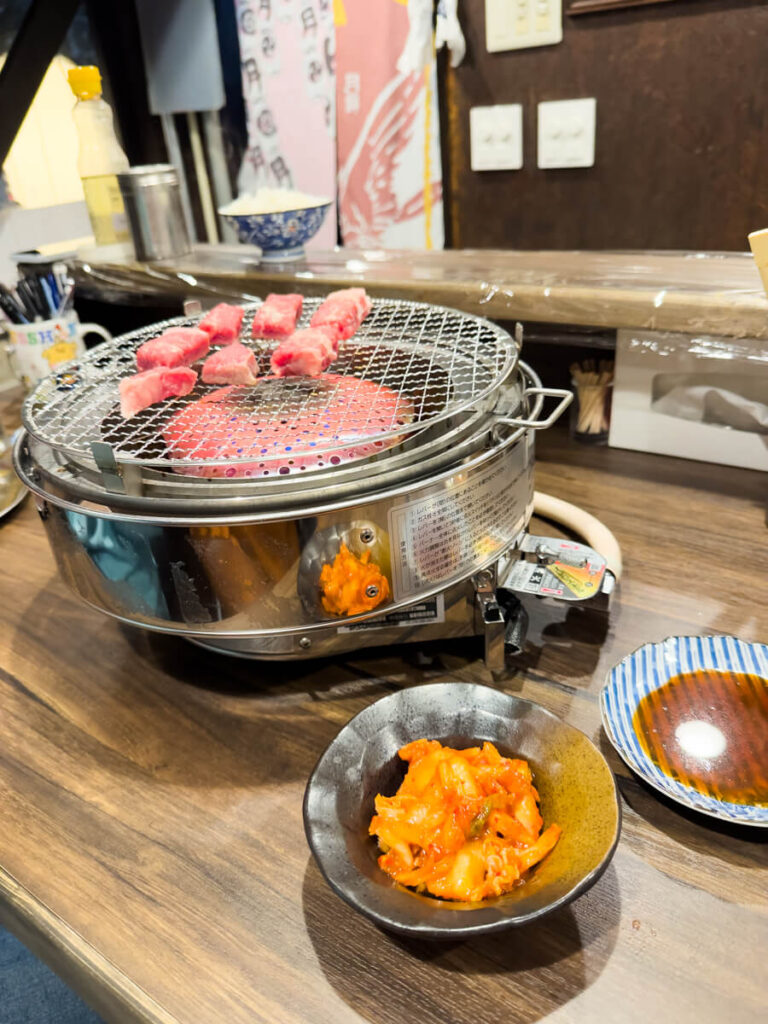
The first one you must try (and it would be hard not to) is yakiniku. Yakiniku is basically a Japanese-style BBQ where you grill meat at your table.
We had yakiniku almost every night when we were in Japan because we couldn’t get enough of the delicious wagyu! Most yakiniku restaurants will have a variety of meat choices (chicken, beef, etc) as well as plenty of sides like steamed rice, kimchi, edamame, and more.
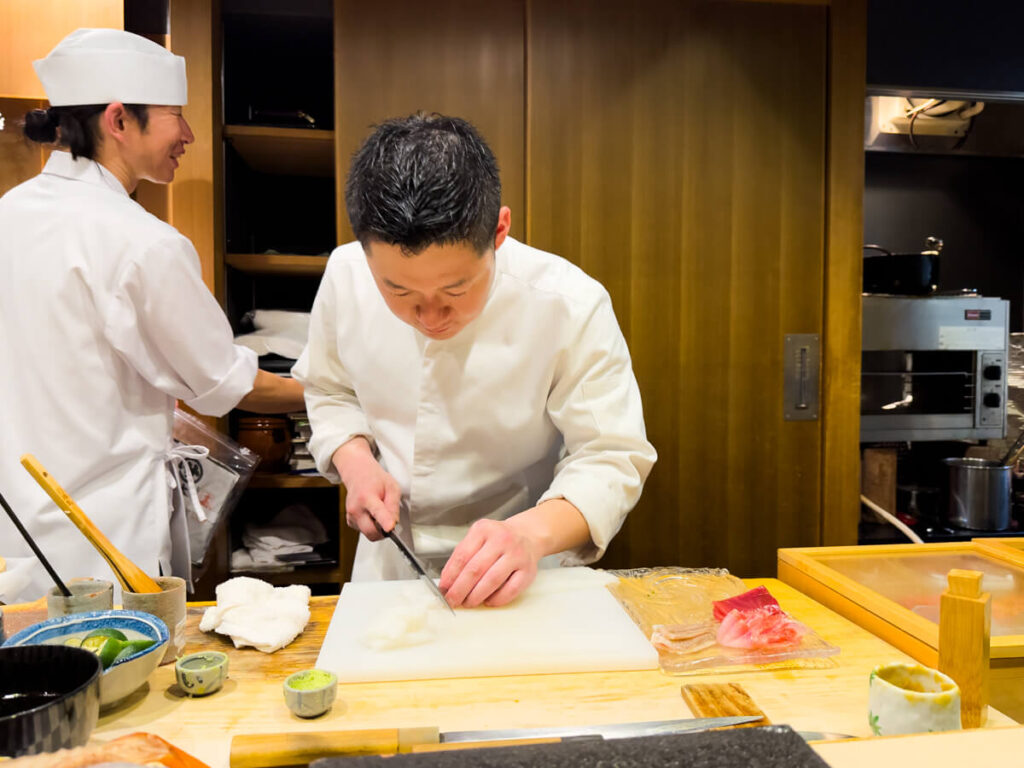
Another must-do experience in Japan is omakase. Omakase means “I’ll leave it up to you,” and it’s a style of sushi dining where the chef chooses each course for you based on what’s fresh and in season.
This splurge-worthy experience really showcases the artistry of Japanese cuisine, as most omakase experiences are very intimate (6-8 people), and the chef prepares all of the food right in front of you. We did ours at Sushi Kazuma in Osaka! Make sure to make a reservation in advance.
For another traditional, intimate experience, consider joining a Japanese tea ceremony. These ceremonies are performed by skilled tea master, usually in traditional tea houses.
You’ll learn about the origins and cultural significant of tea ceremonies in Japan and its ties to Zen Buddhism. And of course, get to try the matcha tea you hand-whisk yourself! We did this tea ceremony in Kyoto, which included getting fitted in traditional Japanese kimonos for the day! So fun.


Lastly, don’t forget to try out the street food in Japan! In my opinion, the best place for street food is in Osaka, which is affectionately known as Japan’s kitchen!
We personally did a street food tour at Kuromon Market in Osaka to learn more about the different types of food from a local, and I’m so glad we did!
We got to try so many different types of food we wouldn’t normally be brave enough to order on our own, like seafood crackers, pufferfish sashimi, and more!
And you can’t go to Osaka without trying the famous takoyaki: a fried octopus ball!
Make sure to head to the Dotonbori area of Osaka with an empty stomach and try as much as possible.
There’s also plenty of markets throughout the rest of Japan, like Nishiki market in Kyoto (where we tried candied strawberries) and Tsukiji market (where we tried rolled egg omelettes, aka tamagoyaki).
Staying in Hotels vs Ryokans
When visiting Japan, you have the option of staying in standard hotel rooms, apartment rentals, or a traditional Japanese ryokan.
If you’ve never heard of a ryokan before, you’re not alone! Before my first trip to Japan, I didn’t really know what one was either!
A ryokan is a traditional Japanese inn that offers a more cultural and immersive stay than a standard hotel. Instead of beds, you’ll sleep on futons laid out on tatami (woven straw) mats.
The rooms are minimalist and serene, often with sliding doors, low tables, and complimentary tea. Some ryokan stays also include a traditional Japanese dinner in your room.
On our recent trip, we mostly stayed in hotels (see my top Osaka hotel recs here!), but we decided to book one night at a ryokan while we were in Kyoto, and I’m so glad we did. We stayed at Matsui Honkan, which was just a five-minute walk from Nishiki Market, and it was such a peaceful escape!
After that, we checked into a more modern hotel in Kyoto’s Gion district, which gave us the comfort and convenience we wanted for the rest of our stay.
If you’re thinking of trying a ryokan for the experience, Kyoto is the perfect place to do it. It feels more intimate and traditional than staying in a big city like Tokyo. Or, another great option is booking one near Mount Fuji.


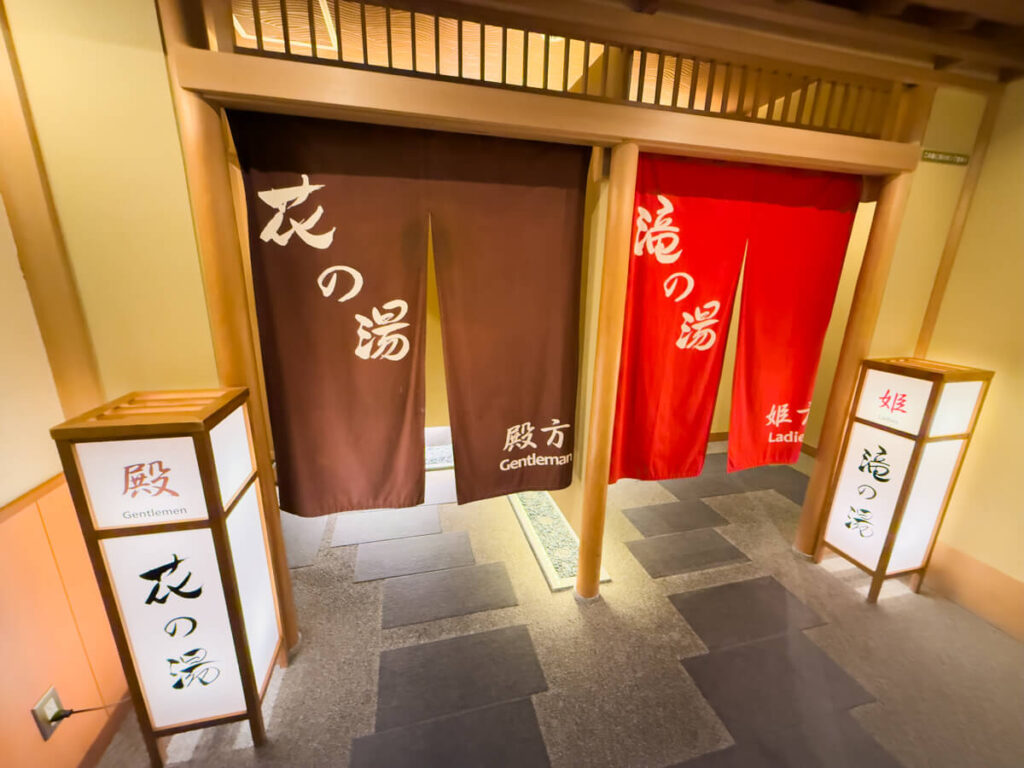

One of the best parts about staying in ryokans is they come with an onsen—a Japanese hot spring bath.
Onsens are communal hot bath (separated by gender), and you’re expected to shower and wash thoroughly before getting in.
You also bathe completely nude (seriously, no clothing is allowed), which was definitely outside my comfort zone at first, but luckily, there was no one else there! The experience was incredibly relaxing and surprisingly peaceful.
If you can, I definitely recommend booking at least one night in a ryokan while you’re in Japan. It’s such a unique experience and gives you a whole new appreciation for Japanese hospitality and tradition!
Final Thoughts
If you’ve made it this far, first of all… thank you for reading! And I’m so excited for you.
Japan is one of those destinations that truly lives up to the hype, and the balance of futuristic and traditional really makes it special. After three trips (and living in Osaka for six weeks!), I can confidently say it’s one of my favorite places I’ve ever traveled to.
My biggest advice for planning a trip to Japan? Don’t overcomplicate it.
Stick to 2–3 major cities, give yourself time to explore without rushing, build in flexibility, and say yes to new experiences, whether that’s trying dry ramen in a tiny alleyway, grilling wagyu at a yakiniku restaurant, or getting slightly lost in the Tokyo subway your first day.
If you want help putting everything together into a realistic, easy-to-follow plan, I’ve mapped out exactly how I’d spend 10 days in Japan, including where to stay, how to structure your travel days, and the exact order I recommend visiting Osaka, Kyoto, and Tokyo.
Read my detailed 10 Day Japan Itinerary here to see how it all fits together step-by-step!
Or check out some of my other Japan travel guides below⬇️⛩️🇯🇵
Japan Beginner’s Guide: Things To Know Before Visiting Japan
A Magical 10 Day Japan Cherry Blossom Itinerary
Guide To Visiting Japan During Cherry Blossom Season🌸
Detailed 3 Day Osaka, Japan Itinerary For First-Timers!
Don’t forget to pin this post for future planning!