A Magical 10 Day Japan Cherry Blossom Itinerary
Are you planning a trip to Japan in the springtime hoping to see the magical cherry blossoms?
I can relate! Last year, my husband and I (along with our two friends) spent 10 magical days in the Land of the Rising Sun in the middle of sakura (aka cherry blossom) season!
We conquered the classic Osaka + Kyoto + Tokyo loop at the end of March/early April, with a focus on the classic landmarks, local food and experiences, and of course, the beautiful pink blooms.
In this detailed 10-day Japan itinerary, I’ll cover all the details of our trip to Japan during cherry blossom season, including where we stayed, everything we did, and my top locations for the best blooms! Of course, this itinerary also works for anytime of year in Japan, not just spring.
There’s a reason why the Japanese sakura is splattered on postcards, travel magazines, and Pinterest boards. It really is one of the most beautiful things I’ve ever seen!
But what makes this trip truly special is getting to experience the culture of Japan, which is one of the most unique in the world.
Things to Know Before Your Trip to Japan
Itinerary Overview & Getting to Japan
This is a 10 day itinerary for Japan, which means 10 full days of exploring! Here is a quick overview of how this itinerary will be broken up:
DAYS 1-3: Osaka
DAYS 4-6: Kyoto
DAYS 7-10: Tokyo (+ Mount Fuji day trip)
With that said, to use this itinerary exactly, the trip ends up being around 11-13 days, including travel time (and depending on where you are flying from).
For example, if you are traveling from the East coast of the USA, your travel day to Japan will likely be 20+ hours! With the time change, that means you may arrive two days later than you left – how crazy is that?!
On the way home, however, you’ll likely leave Japan and arrive back in the USA around the same time (thanks to the -12 hr time difference and shorter flight time).
Make sure to account for travel time when planning your trip and days off work! And definitely give yourself a day or two to recover from the jet lag when you get home before returning to work. It can be brutal!
Arrival and Departure Cities
This itinerary starts in Osaka and ends in Tokyo. We were able to fly into Osaka and out of Tokyo easily because we booked one-way flights with credit card points.
However, booking one way instead of round-trip can often be more expensive. To get around this, try using Google Flights “Multi-City” option, which allows you to take advantage of round-trip pricing but still fly in and out of different airports.
Another option is to book round-trip flights and double-back on the front or back half of the trip (I recommend the front). For example, to follow this itinerary, you can fly into Tokyo and then immediately take a bullet train (or another flight) to Osaka to kick off the trip.
The last option is to fly round trip to/from Tokyo and just break up the Tokyo section of this trip into two. Conquer one portion on the front half and one portion on the back half.
Do whatever makes the most sense for you based on your travel preferences, budget, and flight options!
P.S. For more advice on getting to and around Japan, plus tips on train tickets and more, check out my Beginner’s Guide to Visiting Japan for the First Time!
Trip Timing to See the Cherry Blossoms
As mentioned in the intro, we conquered this 10 day Japan itinerary at the end of March/early April to see the cherry blossoms! (However, you can absolutely use this itinerary for any time of year!).
But, if you are wanting to see the cherry blossoms in Japan, you’ll need to plan your trip timing accordingly!
In general, sakura season runs from March to May in Japan. Sakura is the Japanese word for cherry blossom!). The bloom season starts in the south and slowly makes it way north across the country.
Full bloom in popular areas like Kyoto, Osaka, and Tokyo (which we cover in this itinerary) typically occurs at the end of March into early April.


However, the exact time changes year over year, depending on a variety of factors like temperature, precipitation, and sunshine!
You can track the progression of the blossoms and estimated “full bloom” dates on a variety of websites. This one is a great resource for updated reports!
Overall, I know it’s hard to be flexible with an itinerary based on the blooms, so don’t stress too much about that! You can try to time your trip to line up with the full-bloom in each city, but it doesn’t always work out that way.
For our trip, we were a little early in Osaka and Kyoto, but then arrived to Tokyo bursting with colors!
Tokyo typically blooms a few days earlier than Osaka/Kyoto, so depending on when you are visiting, you may want to do Tokyo first and then head to Osaka and Kyoto afterwards!
🌸 For more details on chasing the sakura in Japan, check out my full Japan Cherry Blossom Guide here 🌸
Japan Activities – Booking in Advance
If this is your first trip to Japan, you might be overwhelmed thinking about the language barrier and cultural differences, especially when it comes to booking transportation and going on local tours.
Personally, booking local tours is one of my favorite ways to experience a new country, and Japan is no different!
While I love using GetYourGuide for trips abroad (and still did in Japan!), another booking platform to be aware of for your trip to Japan is Klook.
Klook is a travel company and tour aggregator (similar to GYG) that is very prominent in Asia. It makes booking tickets and activities in Japan much much easier, as everything is in English and typically simplified with just a barcode.
Throughout this itinerary, I’ll include links to different tours, train tickets, etc. either through GetYourGuide or Klook, depending on what we booked ourselves!
In addition, there are some tickets I recommend booking in advance of your trip, either because they sell out or having an advance ticket will allow you to skip the line.
Here are the activities we booked in advance of our trip to Japan!
OVERALL:
🚅 Bullet train tickets – book a few days in advance
OSAKA:
🚆 Airport to city train tickets
🏯 Osaka Castle – book in advance to skip the line
🎢 Universal Studios Japan – book in advance for entry to Super Nintendo World
🐟 Kuromon Market food tour – book a few days in advance
KYOTO:
🍵 Tea ceremony – book far in advance, sells out quickly
⛩️ Bike temple tour – book a few weeks in advance
🍶 Izakaya Tour – book a few weeks in advance
TOKYO:
🏎️ Shibuya go-karting – book far in advance, sells out quickly
🚅 Express train to Mount Fuji – book far in advance, sells out quickly
🗻 OR day trip to Mount Fuji – book a few weeks in advance
🤼 Sumo show experience – book far in advance, nighttime show sells out quickly
🏙️ Shibuya Sky – book far in advance for evening spots (sunset sells out immediately)
Detailed 10 Day Japan Itinerary for First-Timers
Welcome to Japan! The Land of the Rising Sun, and one my favorite countries in the entire world.
This itinerary may be based on our most recent cherry blossom-chasing trip to Japan, but I’ve actually been to Japan two other times before that!
I used to work for Universal Studios in Orlando and had the opportunity to visit Japan for 6 weeks while installing the Super Nintendo World in Universal Studios Japan. It was epic!
But enough about me, let’s get into this 10 day Japan itinerary!
🌸 Want more tips for planning this big international trip? My Passport to Confidence guide is a $7 month-by-month planning roadmap that tells you exactly what to book and when. Download it instantly!
Arriving in Osaka & Where to Stay
This itinerary assumes you’re arriving in the evening on day 0!
If you are flying into Osaka, you will most likely be arriving at the Kansai International Airport (KIX), which is located about 30 miles (50 km) outside of the city center.
There are several options for getting from KIX to the city center, but the easiest option is to book the JR Haruka Airport Express in advance through Klook.
For $11, you can get from the airport to Osaka Station in 45 minutes. And by booking on Klook, all you have to do is scan the QR code to board the train. The train runs from 6:00am to 10:00pm!
Or, if you are staying in the Namba area, I recommend the Nankai Limited Express Rapi:t train, which gets you to Namba station in just 35 minutes.
When it comes to where to stay in Osaka, I recommend choosing a hotel either in the Namba area or near Osaka station. I personally think staying near Osaka station is the most convenient option!
We stayed at the Hotel Monterey Le Frere on this trip, which was perfectly located and extremely well-priced!
🏨 For more info on the different neighborhood and hotel options in Osaka, check out my full guide on Where to Stay in Osaka!
Day 1: Osaka Castle, Tenjinbashisuji Street, and Omakase
Morning: Explore Osaka Castle
Welcome to your first full day in Japan! Time to start exploring, and there’s no better way to kick things off than a visit to Osaka Castle, one of the city’s most iconic landmarks. Whether you have one day in Osaka or several, this is the top activity to do!
If you’re staying near Osaka Station like we did, getting there is easy. From Osaka Station, hop on the Osaka Loop Line from Platform 2 and ride to Ōsakajōkōen Station.
P.S. If you need a full breakdown of navigating Osaka, head over to my 3 Day Osaka Itinerary!
You’ll see the castle as soon as you exit, just follow the path through the park toward the entrance.
You can walk the outer castle grounds for free, but I definitely recommend going inside!
Tickets cost around ¥1200 JPY (about $8 USD) and can be purchased in-person or in advance online through Klook.
I didn’t think to buy our tickets online for the castle, so we ended up waiting about 20 minutes in line. When we got to the front, I saw the advance booking line that was completely empty!
🏯 Learn from my mistake and buy your Osaka Castle tickets in advance here!


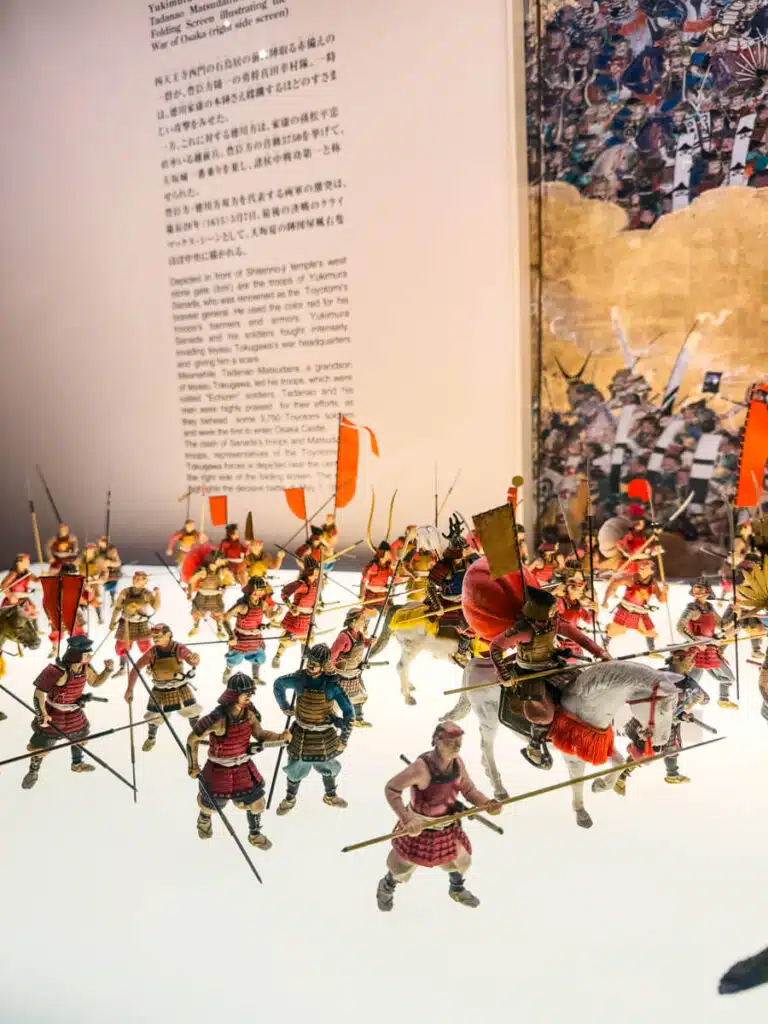
Inside the castle, you’ll find a multi-floor museum filled with samurai armor, historical artifacts, and stories about Toyotomi Hideyoshi and the Siege of Osaka. It’s all translated into English, which was a huge plus.
Pro tip: Take the elevator to the top floor first so you can enjoy the 360° panoramic views, then walk your way down through the museum floors. We did the opposite because the elevator line was long, but regretted it after climbing all the stairs!
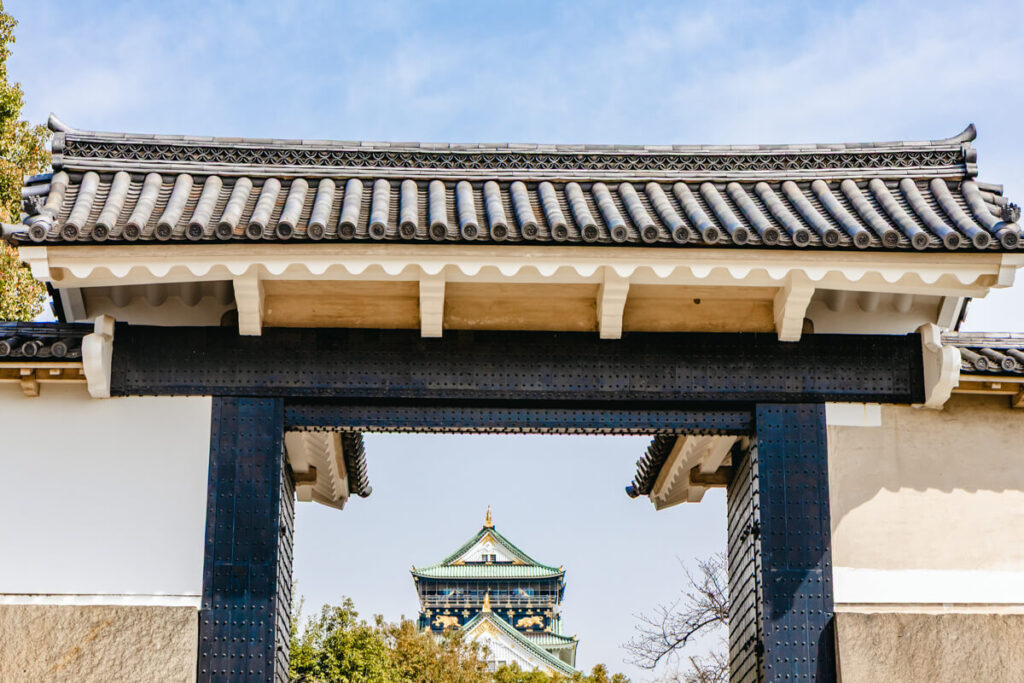
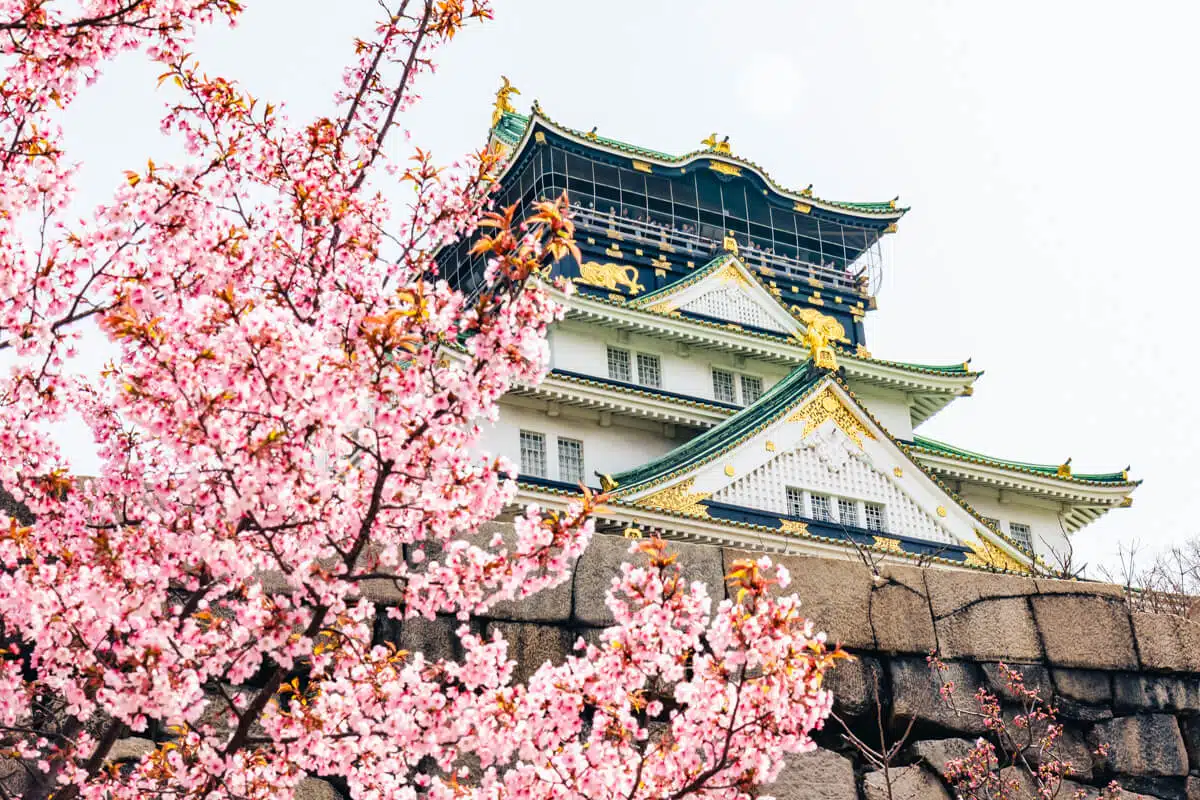
If you’re visiting in late March or early April, Osaka Castle is a fabulous place to experience the sakura, as there are tons of cherry trees around the castle gardens.
We were a little early for full bloom here, but luckily a few trees were blooming early, and I was able to capture that iconic shot of the sakura blooms with the castle in the background!
Afternoon and Evening: Kema Sakuranomiya Park, Tenjinbashisuji Street, & Omakase Dinner
Once you’re done at Osaka Castle, it’s time to head a bit north for lunch and shopping.
If the cherry blossoms are blooming during your visit, consider making a quick stop at Kema Sakuranomiya Park before lunch. The park stretches along the river and is lined with hundreds of cherry trees, making it one of the best (and most peaceful) spots to see the sakura in Osaka.
To get here, just hop back on the Osaka Loop Line from Ōsakajōkōen Station and ride one stop to Sakurano-miya Station.
After your walk, cross the river and head over to Tenjinbashisuji Shopping Street in the nearby Tenma area. It’s the longest covered shopping street in Japan (more than 1.5 miles long!!) and filled with local shops, street snacks, and small restaurants, one of my favorite things to do in Osaka!
We stopped into a casual ramen spot for lunch, then spent the afternoon slowly browsing the shops. You’ll find everything from home goods to souvenirs to fresh taiyaki (a sweet fish-shaped pastry filled with red bean or custard).
Once the jet lag starts to set in, head back to your hotel for a quick rest!
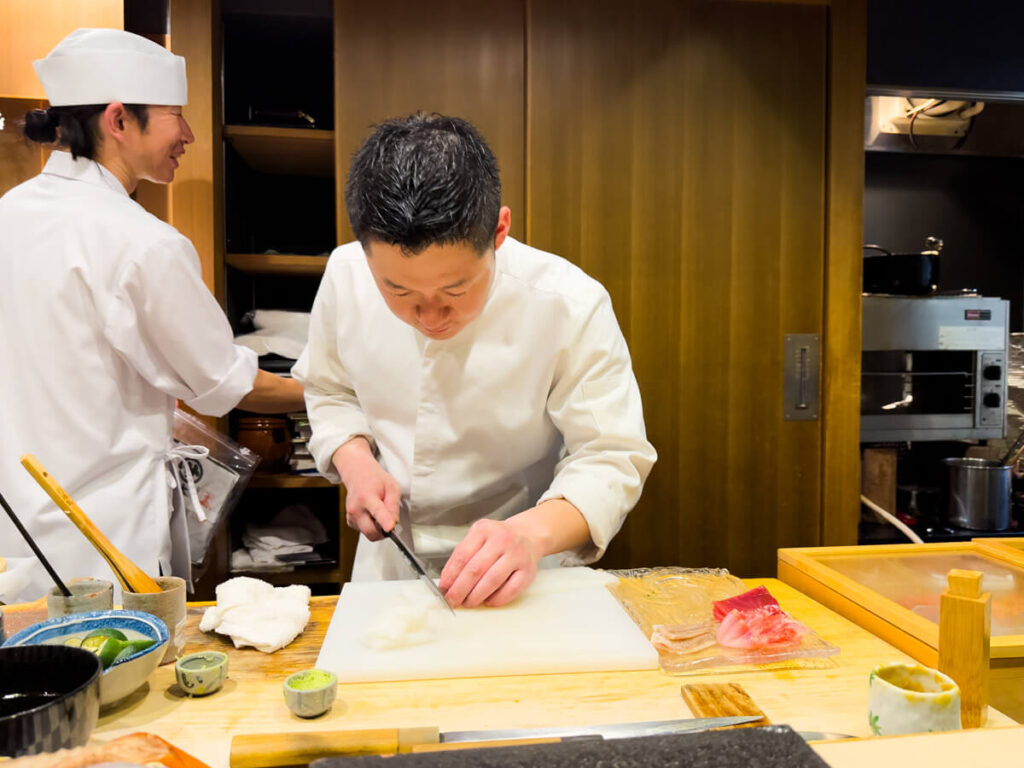
Then, to end your first night in Japan, I highly recommend booking an omakase dinner near your hotel.
Omakase literally means “I’ll leave it up to you,” and it’s a traditional Japanese dining style where the chef serves you a hand-picked lineup of seasonal dishes – usually sushi, but also small plates or appetizers too.
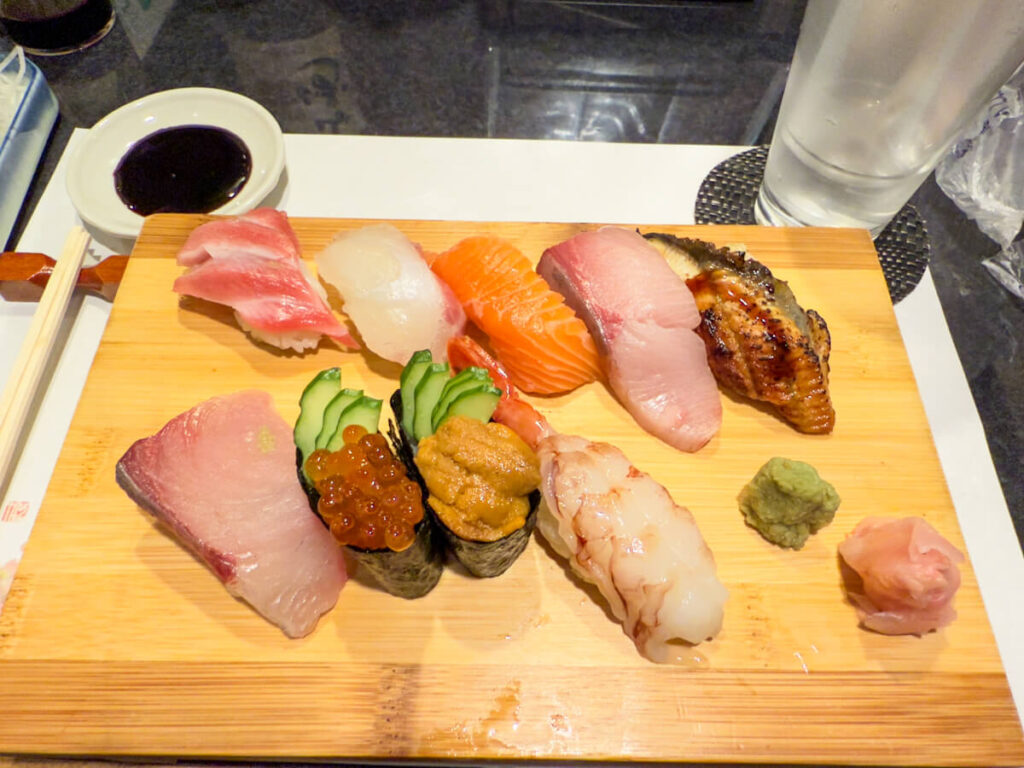
We booked our Omakase at Sushi Kazuma, and it was absolutely incredible!! Reservations are required as there are only 6 seats at the table!

Day 2: Universal Studios Japan (or Day Trip to Nara)
Option 1: Universal Studios Japan
If you’re a theme park fan, or a Nintendo/Harry Potter fan, today’s the day to head to Universal Studios Japan!
As I mentioned, I actually spent 6 weeks in 2019/2020 working on the Super Nintendo World land at USJ, so going back to see the finished product was a must-do while we were in Japan!!
Getting to USJ is super straightforward from Osaka Station. Just hop on the JR Osaka Loop Line and transfer at Nishikujo Station to the Yumesaki Line toward Universal-City Station. (Or some trains go straight to Universal-City Station without needing to transfer, if you’re lucky!)
You’ll know when to get off the train because almost everybody else will!
We booked both our USJ entry tickets and Express Passes through Klook, and I highly recommend doing the same to make your life easier, as the Universal website is not super user-friendly.
Express Passes not only help you skip long lines, but they’re also the easiest way to access Super Nintendo World without stress.
Here’s how it works: even once you’re inside the park, Super Nintendo World requires a timed-entry ticket to get in. This is free, but spots are limited. You can try reserving a time via the USJ app when you get inside the park, but those book up fast.
The more reliable option is booking an Express Pass through Klook (there are several different ones available) that includes timed entry access to Super Nintendo World. That’s what we did, and it worked perfectly!
🌍 For more details on how to book your Universal Studios Japan tickets, check out my full USJ guide here!
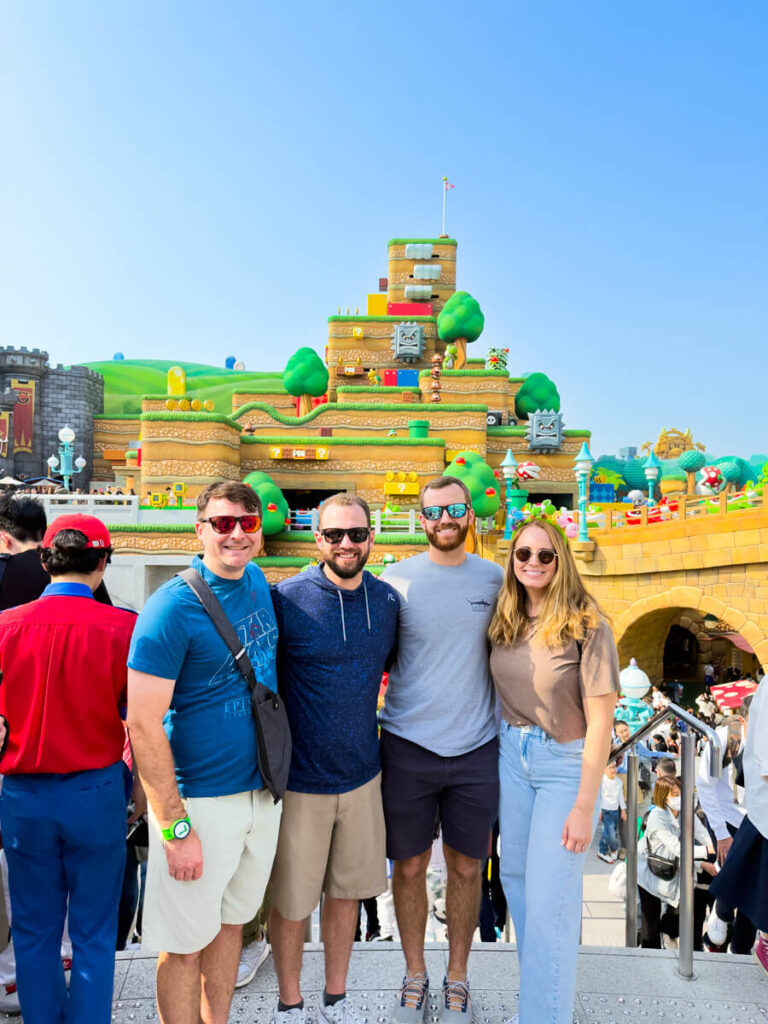
Walking into Super Nintendo World truly felt like stepping inside the video game. There are giant spinning coins, mushrooms, and Koopa shells everywhere (all of which I worked on!!!!).
We played around with the Power-Up Bands, which unlock interactive mini-games throughout the land, and got to ride all three rides (Mario Kart, Donkey Kong, and Yoshi’s Adventure).
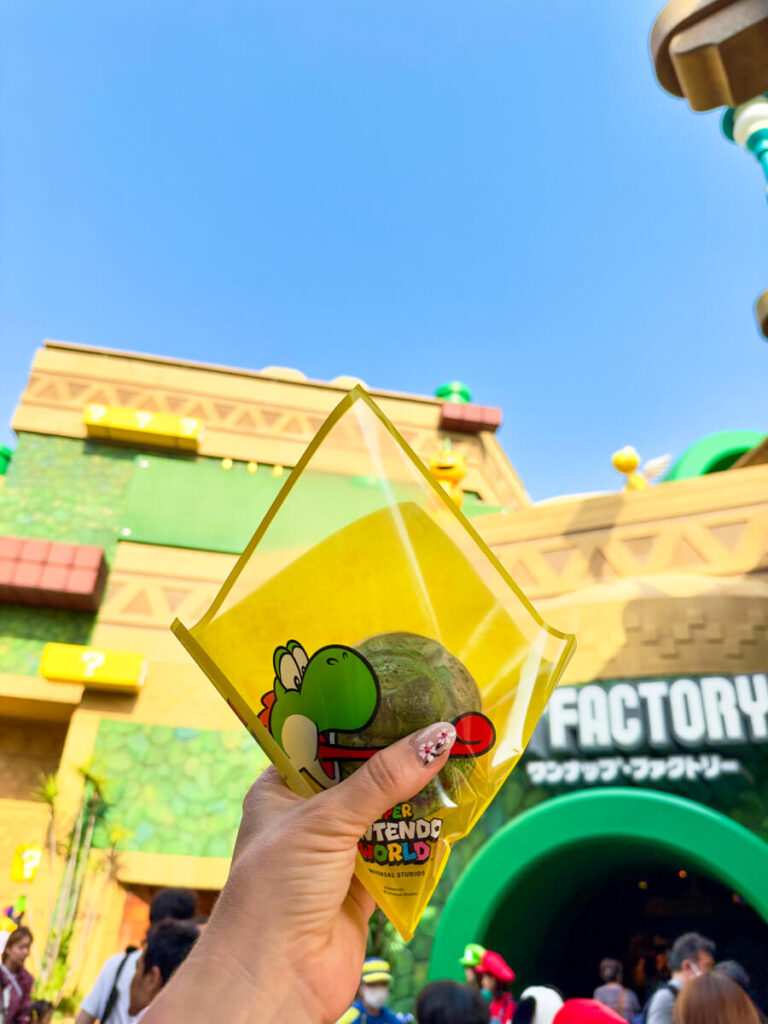

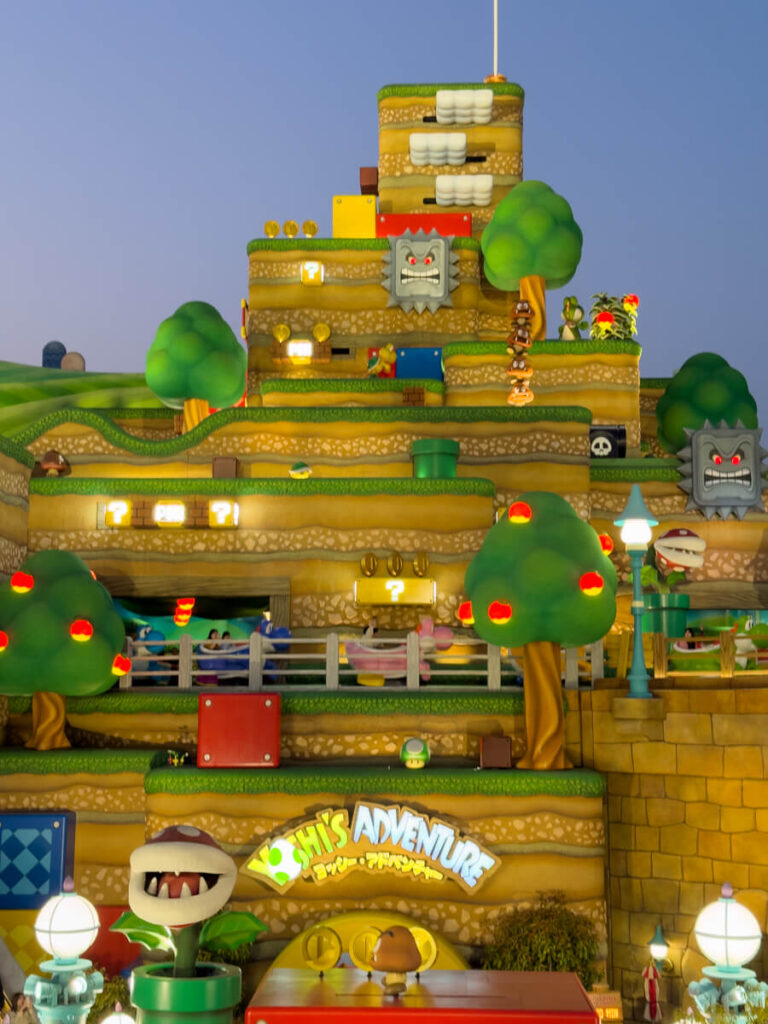
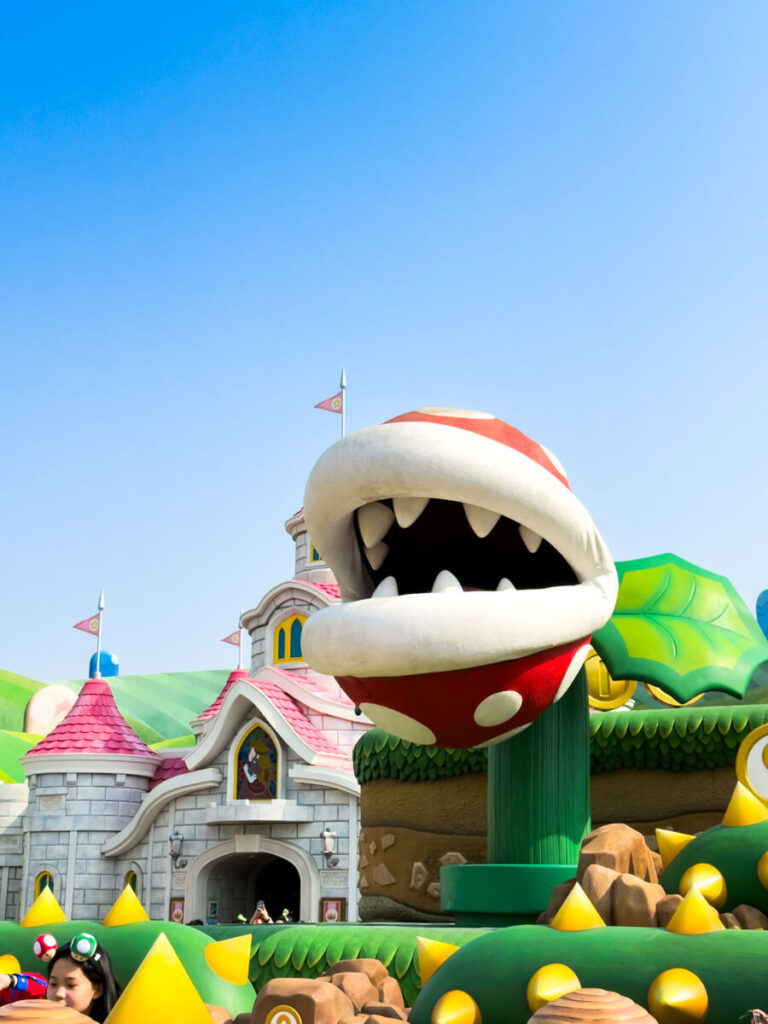

Beyond Nintendo, there is so much more to experience at USJ, including The Wizarding World of Harry Potter (similar but smaller than Orlando’s version), as well as roller coasters and rides you can’t experience in the USA!
We stayed at the park until early evening (and didn’t ride even close to everything in the park!!). For dinner, I recommend heading to a yakiniku restaurant near your hotel! (If you need some special recommendations, make sure to grab my Osaka map!!)
Yakiniku just means you cook the meat in front of you on a small grill – one of my favorite ways to eat in Japan!

OSAKA MAP
Discover my top Osaka hidden gems!
$6.99
Save time and energy researching and get access to my private list of 50+ bars, restaurants, parks, shopping spots, and more! Most of which I don’t mention on my blog😉
Option 2: Day Trip to Nara
If theme parks aren’t really your thing, today’s a great day to take a day trip to Nara instead, especially if you’re interested in temples and nature and want to see the famous bowing deer!
Or, consider a visit to the Osaka Aquarium if that’s more your style.
🦌 For more details on how to take a day trip to Nara, make sure to check out my Detailed 3 Day Osaka Itinerary 🦌
Day 3: Shitenoji Temple, Food Tour, and Explore Dotonbori
Morning: Shitenoji Temple and Tennoji Park
Today’s your last full day in Osaka, so it’s time to slow things down a bit and dive into the city’s culture, food, and local neighborhoods!
Start your morning at Shitennoji Temple, one of the oldest temples in Japan. It’s not as flashy as Kyoto’s temples, but that’s part of what makes it so special!
If you arrive right at opening, you may have the place to yourself (or at least, it won’t be swarmed with people yet!). And if the cherry blossoms are blooming, there’s a gorgeous weeping sakura tree near the main hall that makes for a beautiful photo spot.
After exploring the temple grounds, take a short walk over to Tennoji Park, just 10 minutes away. The park is home to wide walking paths, small gardens, and some nice green space for a quick breather.
Make sure to visit the Kosoko pond in the center for a beautiful photo op of the red bridge and cherry blossoms!


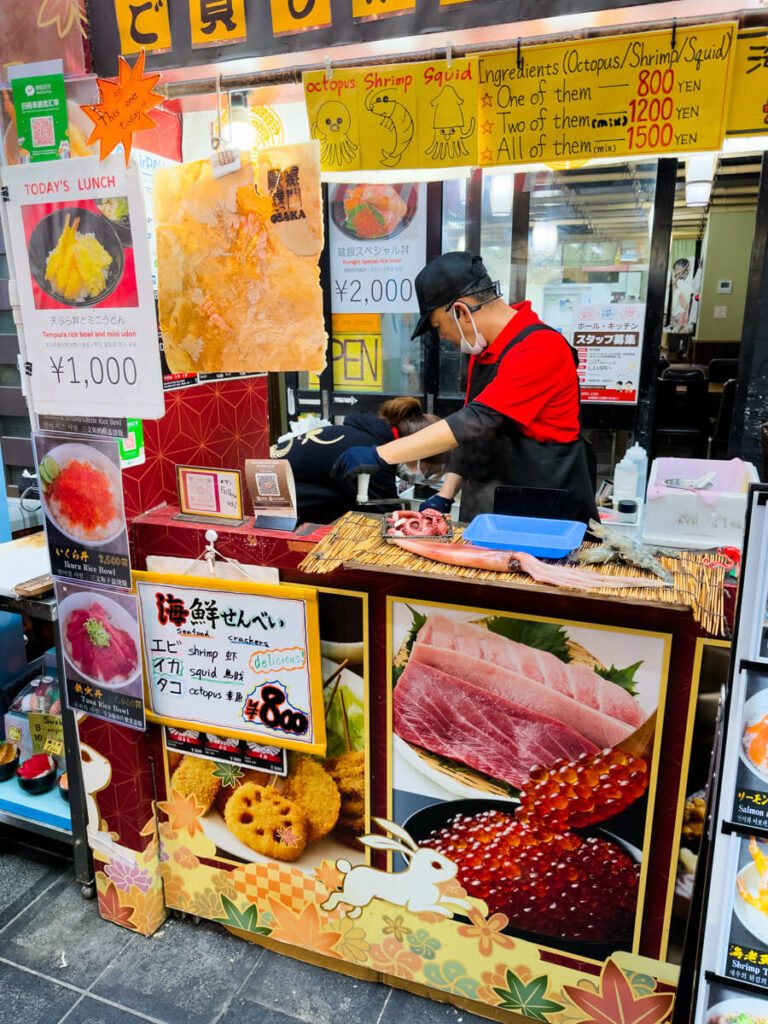
Afternoon: Food Tour at Kuromon Ichiba Market
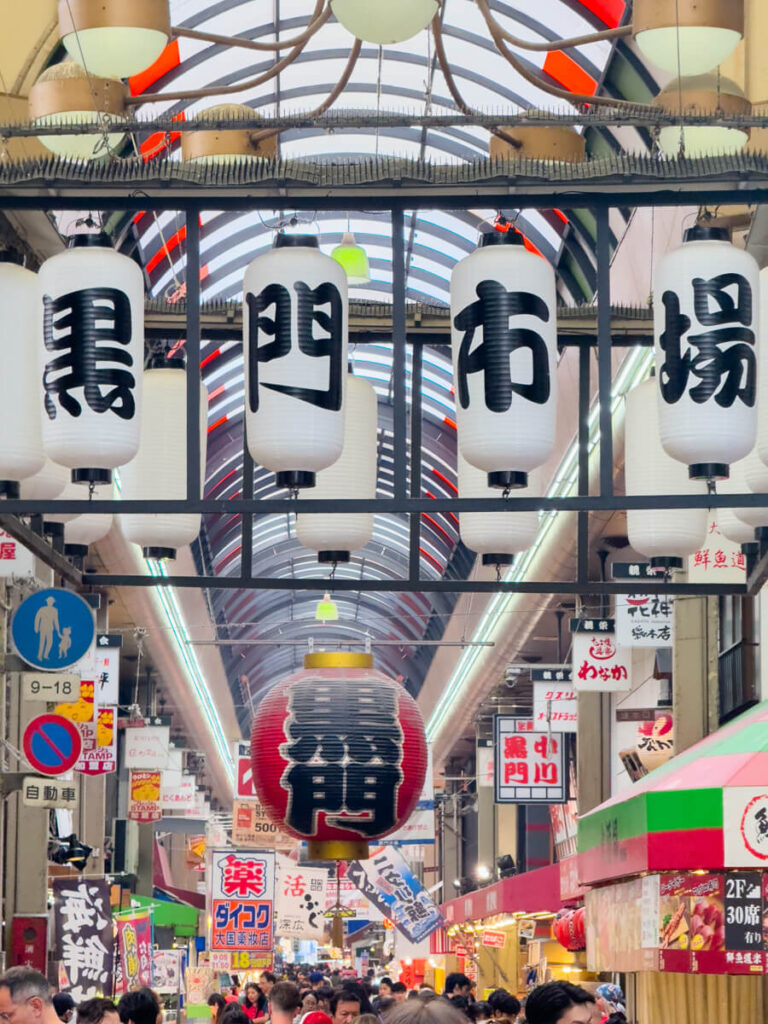
Around noon, it’s time to head over to Kuromon Ichiba Market for a walking street food tour!
To get to the market from Tennoji Park, take the Sakaisuji Line from Dobutsuen-Mae Station to Nippombashi Station.
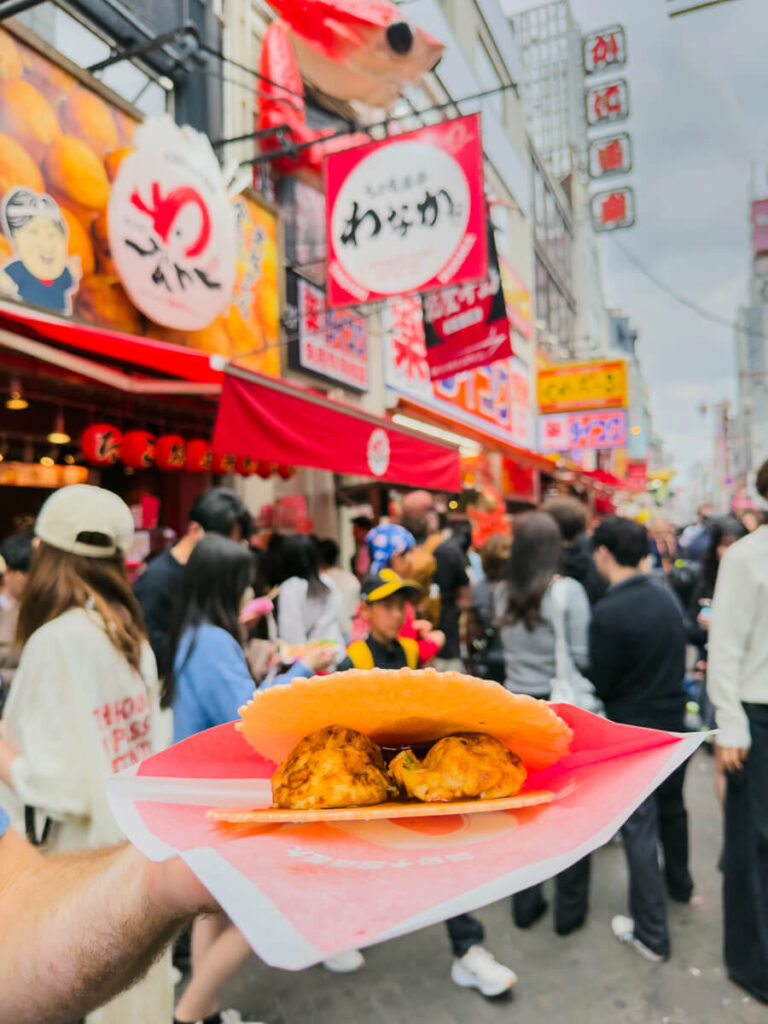
This tour is such a great way to experience Osaka’s street food scene without having to guess what to try (or what you are eating).
We sampled pufferfish, wagyu skewers, fresh scallops, takoyaki (the city’s famous octopus snack), and more on this tour, all while learning about the food culture of Osaka, which is affectionately called Japan’s Kitchen!
The market itself is covered, which makes it great even if the weather isn’t, and it’s packed with both locals and tourists grabbing snacks or groceries.
Book your walking food tour here! 🦀🐡

Evening: Experience Dotonbori
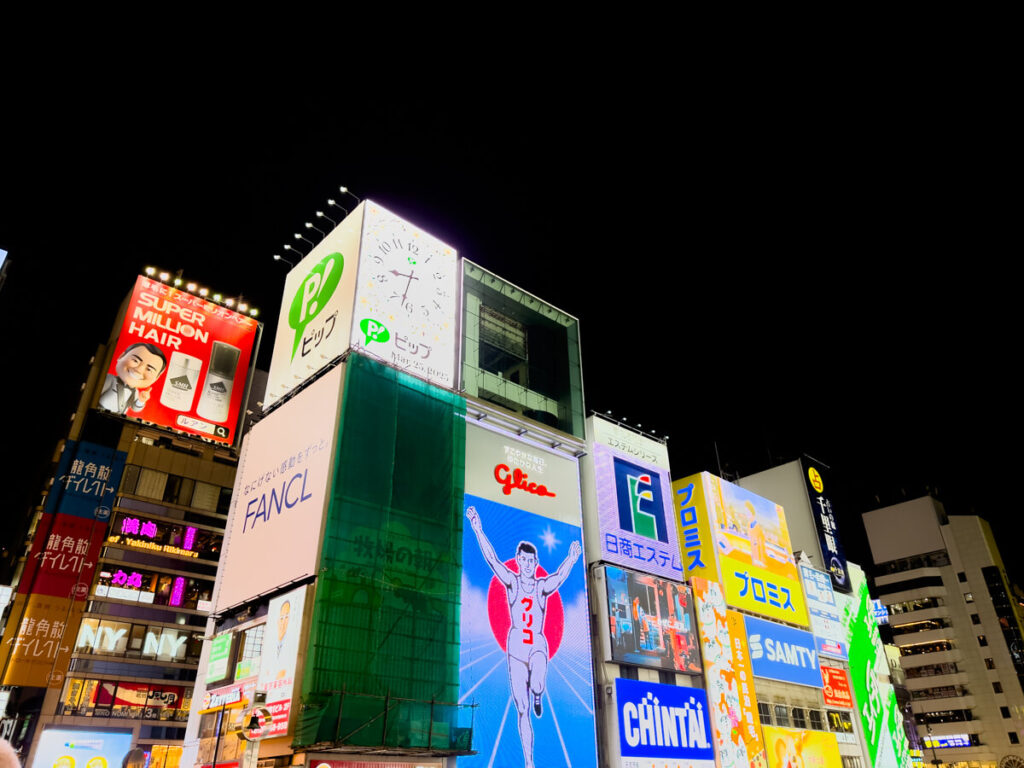
After the tour, spend the afternoon exploring Dotonbori, Osaka’s most iconic entertainment district.
You’ve probably seen photos of the neon Glico Running Man sign here! This sign is right next to the most famous, central spot of Dotonbori – the Ebisu Bridge.
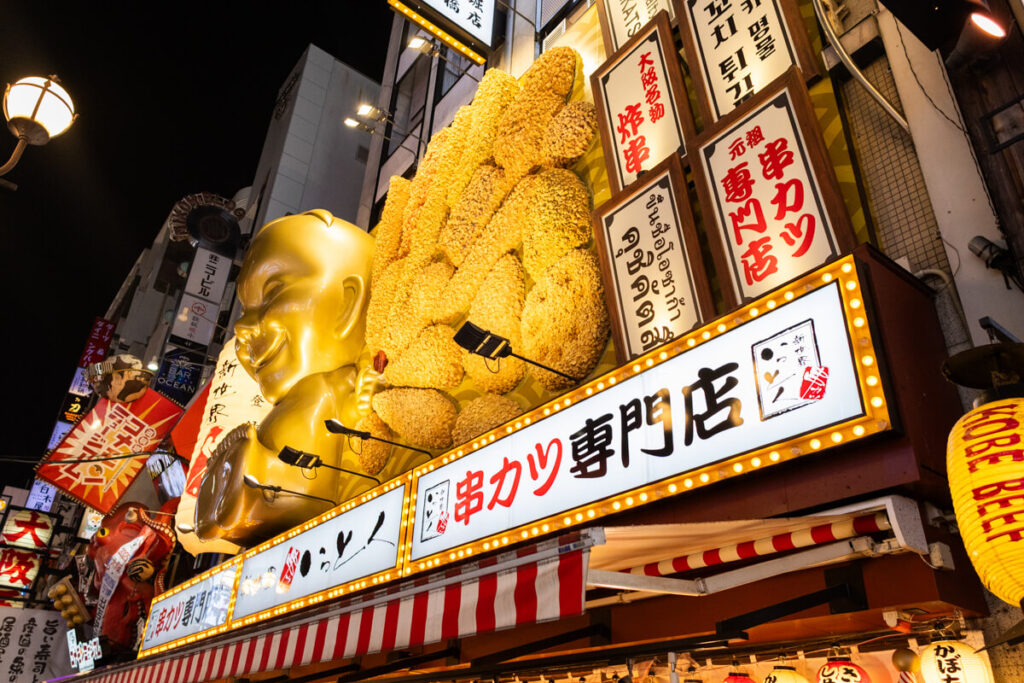
Spend your late afternoon and evening exploring all Dotonbori has to offer (which is A LOT). It’s chaotic in the best way possible and crowded with people – fair warning.
One of the most iconic parts of Dotonbori is the giant, food-inspired neon restaurant signs, everything from animated crabs, dragons, octopus, and more.
For dinner, you’ve got endless options in the area. We went to Kaminari Sushi, a tiny spot a few blocks off the river that had some of the best sushi I’ve ever had! You can go here, or simply walk around and let your nose guide you.
After dinner, stay out in Dotonbori as long as you want, maybe playing a few rounds in a multi-level arcade or grabbing a drink at a local izakaya before heading back to the hotel to pack up and get ready for the next stop: Kyoto!

Day 4: Travel to Kyoto, Arashiyama Bamboo Forest, and Izakaya Tour
Morning: Travel from Osaka to Kyoto
Today it’s time to leave Osaka behind and head to your next stop — Kyoto! I recommend getting an early start to your day today to give you as much time as possible in Kyoto & Arashiyama.
There are a few different ways to get to Kyoto depending on where you’re staying in Osaka and Kyoto!
The fastest and most frequent routes are between Osaka Station and Kyoto Station, taking about 30 minutes! From Kyoto Station, you can take other lines (or a cab or bus) to other areas of Kyoto.
However, we wanted to limit our transportation changes with our luggage, so we took the Hankyu Line from Osaka Umeda station to Kawaramachi Kyoto station (50 minutes), as this was the closest station to our first accommodation in Kyoto.
We spent our first night in Kyoto at Matsui Honkan, a traditional ryokan with tatami mats and futons on the floor in the heart of the city. Staying in a ryokan, even just for one night, really adds to the cultural experience, and the hospitality here was amazing!
For the next two nights, we moved to M’s Inn Higashiyama, right in the Gion area, which made getting around for the other 2 days in Kyoto super convenient. More on that tomorrow!
⛩️ For more details on our time in Kyoto, make sure to check out my 3 Day Kyoto Itinerary here! ⛩️
Late Morning and Afternoon: Explore Arashiyama
Once you’ve dropped off your bags at your Kyoto hotel, make your way over to the neighboring town of Arashiyama, home to the famous bamboo forest!
Again, depending on where you’re staying, there are several ways to get to Arashiyama from Kyoto (and there are 3 different train stations in Arashiyama!!). We personally took two different routes there and back, based on what Google Maps said was fastest.
If you’re staying near Kyoto Station, the San-In Line will be fastest for you (~30 minutes).
Once you arrive in Arashiyama, make your way towards the famous Togetsukyō Bridge, which has been a landmark for over 400 years!
From here, walk along the river towards Arashiyama Park Kameyama area. Make the short climb to the observation deck at the top for incredible cherry blossom views, both on the way and at the peak!
Next, descend back down into the famous Arashiyama Bamboo Forest, the reason so many people visit Arashiyama! Funny enough, I think most people end up disappointed by the bamboo forest, both due to crowds and its short length (less than 0.5 mile).
Of course, it’s absolutely beautiful to see! But don’t expect to have the place to yourself 🙂


Upon exiting on the east side of the bamboo grove, you’ll reach the entrance to Tenryu-ji Temple, a UNESCO World Heritage site that was my favorite part of Arashiyama (and we almost didn’t go in!).
There is a small entrance fee to visit, but it’s just ¥500 ($3 USD) for the gardens or an extra ¥300 ($2 USD) if you want to go inside the buildings.
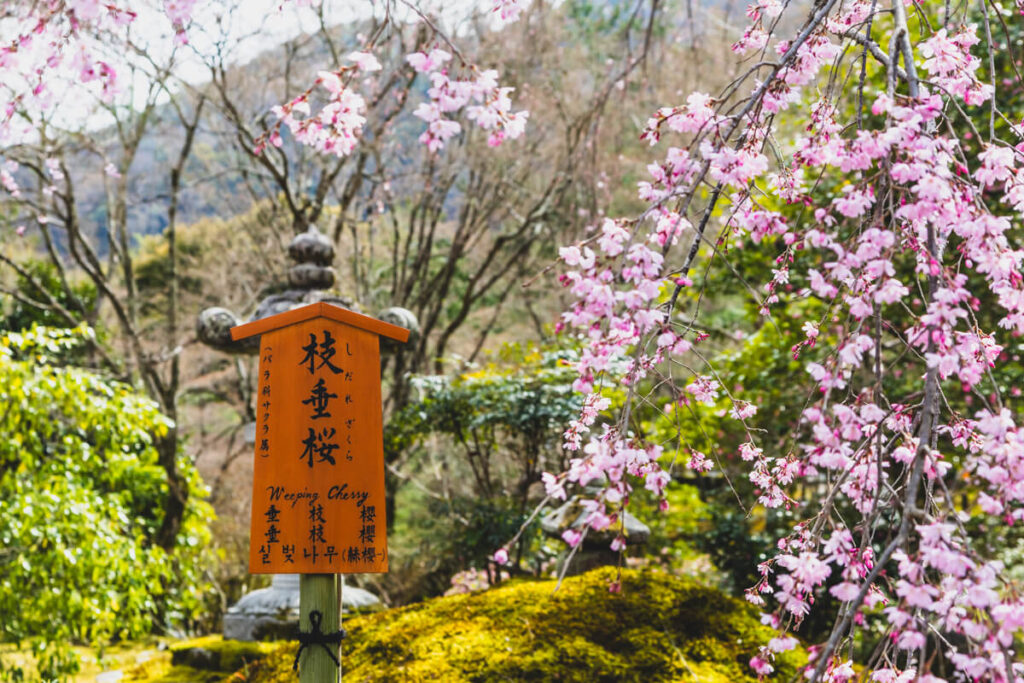
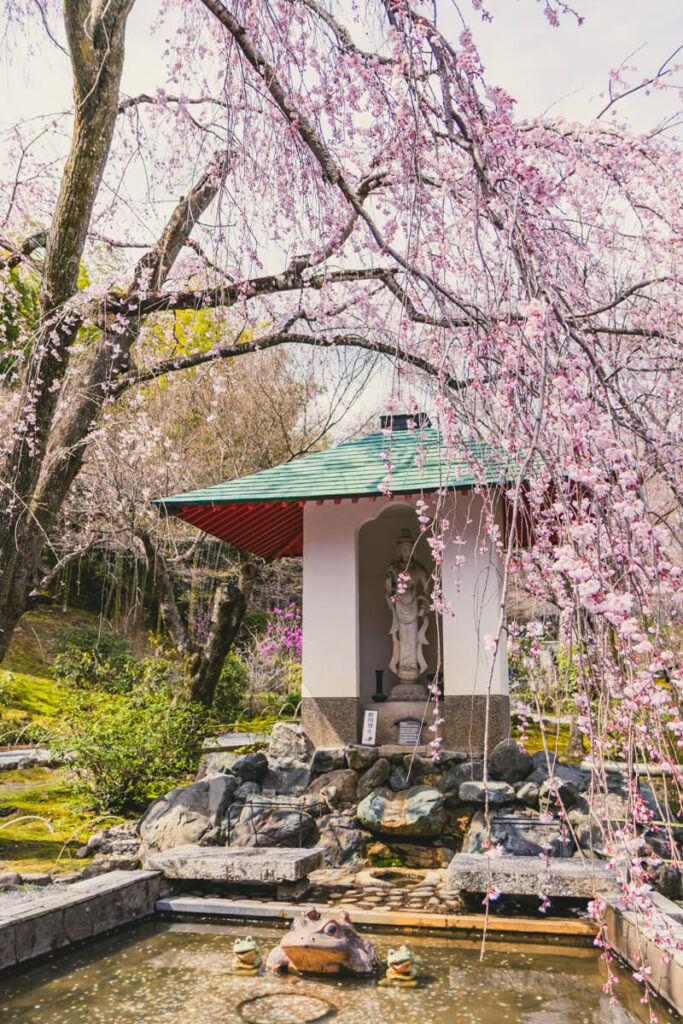
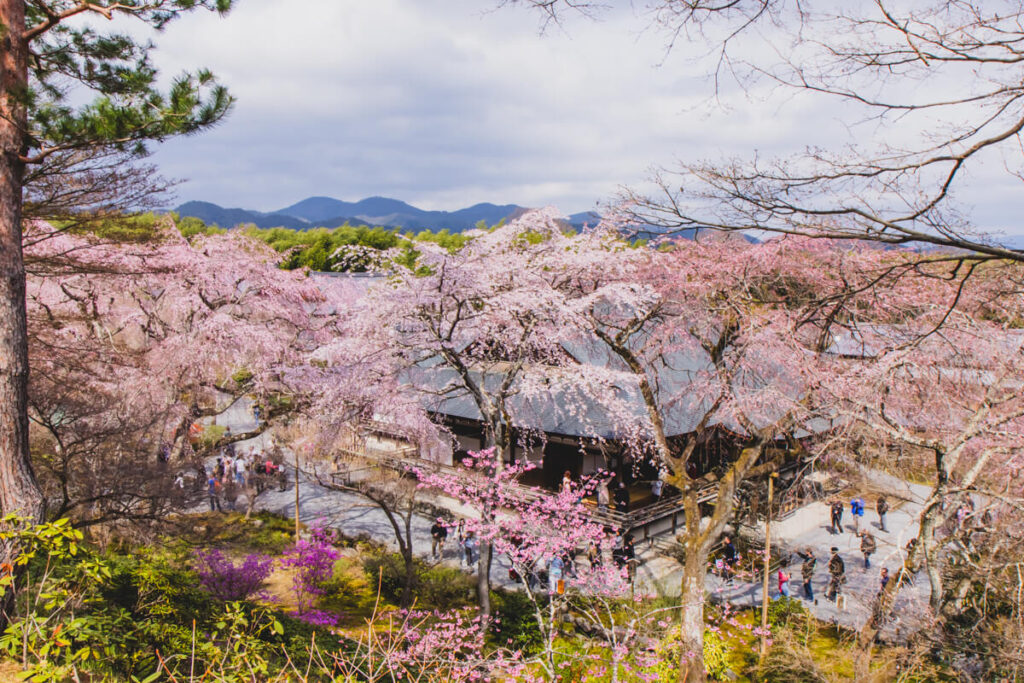
There is so much more than just the temple here! The Garden of Hundred Flowers was my favorite part, as everything seemed to be in bloom. Even though the rest of Arashiyama was not yet blooming much, the cherry blossoms at Tenryu-ji were absolutely stunning.
After you reach the temple itself, which has a beautiful pond and zen garden, there is an elevated path to catch even more views of the blossoms cascading down from above.

If you want a unique experience for lunch, Tenryu-ji offers a traditional Buddhist monk’s lunch from 11am–2pm, which you’ll need to reserve in advance! Or, head back onto the main streets of Arashiyama and stop wherever sounds good to you.
If you still have energy after lunch, you can visit the Iwatayama Monkey Park across the river. It’s a decent climb up to the top, but the views from the top are panoramic, and you get to see wild monkeys roaming around!
P.S. If you want to visit some other, more off-the-beaten-path temples while in Arashiyama, consider visiting Otagi Nenbutsuji Temple and Adashino Nenbutsuji Temple too!
Evening: Izakaya Tour
After you’re done exploring Arashiyama, head back to your hotel in Kyoto to rest before dinner! If you’re staying somewhere with an onsen (aka a Japanese hot spring bath) like our ryokan did, now is the perfect time to take a dip!
For dinner tonight, I highly recommend booking this Izakaya Bars Walking Tour, one of our favorite evening activities in Japan!
An izakaya is a casual Japanese bar that serves drinks alongside small plates — kind of like a Japanese version of a tapas bar. It’s where locals go after work to unwind, eat, drink, and hang out.
On our tour, we got to experience Japanese izakaya culture and learn about Kyoto’s food scene from a local guide! We sampled various Japanese sake and whiskey and ate a ton of amazing dishes, too.
Day 5: Nishiki Market, Tea Ceremony, Explore Gion, Fushi Inari
Morning: Explore Nishiki Market & Tea Ceremony
Start your morning with a stroll through Nishiki Market, often called “Kyoto’s Kitchen.” This covered street is lined with over 100 vendors selling everything from matcha mochi to soy-marinated cucumbers on a stick.
I recommend arriving early to beat the crowds (the storefronts usually open around 9-10am).
If you decided to stay one night in a ryokan like we did, it’s time to check out and drop your bags off at your second hotel in the Gion area of Kyoto. We stayed at M’s Inn Higashiyama, but there are many choices in Gion to choose from.
Gion is Kyoto’s geisha district, sprinkled with enchanting temples, gardens, and the traditional wooden machiya houses you’ve likely seen in photos. For this reason, Gion is the perfect place to take part in one of my favorite experiences from our trip – a traditional Japanese tea ceremony!
As Japan’s former capital and home to many historic temples, Kyoto is considered the spiritual heart of the tea ceremony. You’ll be guided step-by-step by a real tea master, enjoy a seasonal sweet, and sip freshly whisked matcha in a quiet tatami room as you learn about the traditional tea ceremony process.
We booked our private ceremony at Maikoya well in advance because spots fill up quickly, especially during cherry blossom season. However, this tea ceremony looks very similar and takes place in a teahouse with a beautiful garden!


Afternoon: Explore Gion
After your tea ceremony, take some time to wander through Gion, Kyoto’s most famous historical district. Many tea houses will let you stay in your kimono for a few hours so you can walk around and take photos in Gion, if that interests you!
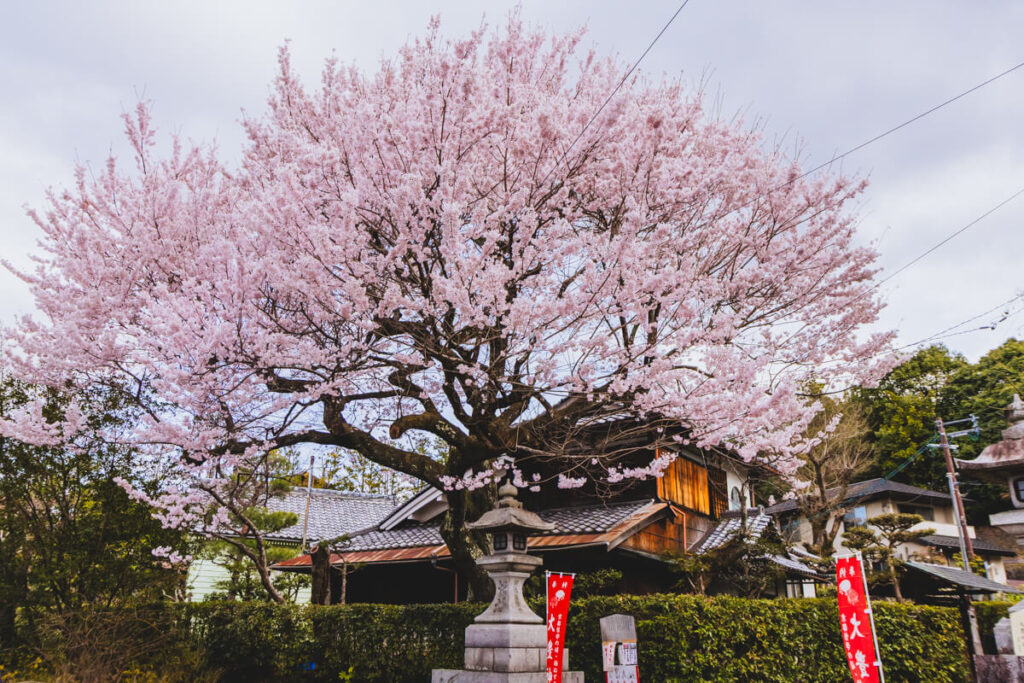
Make sure to check out the Yasaka Pagoda and Hanamikoji Street, two of the most iconic sights in Kyoto. During sakura season, a small cherry tree blooms just behind the pagoda, perfectly framing the pagoda for photos!
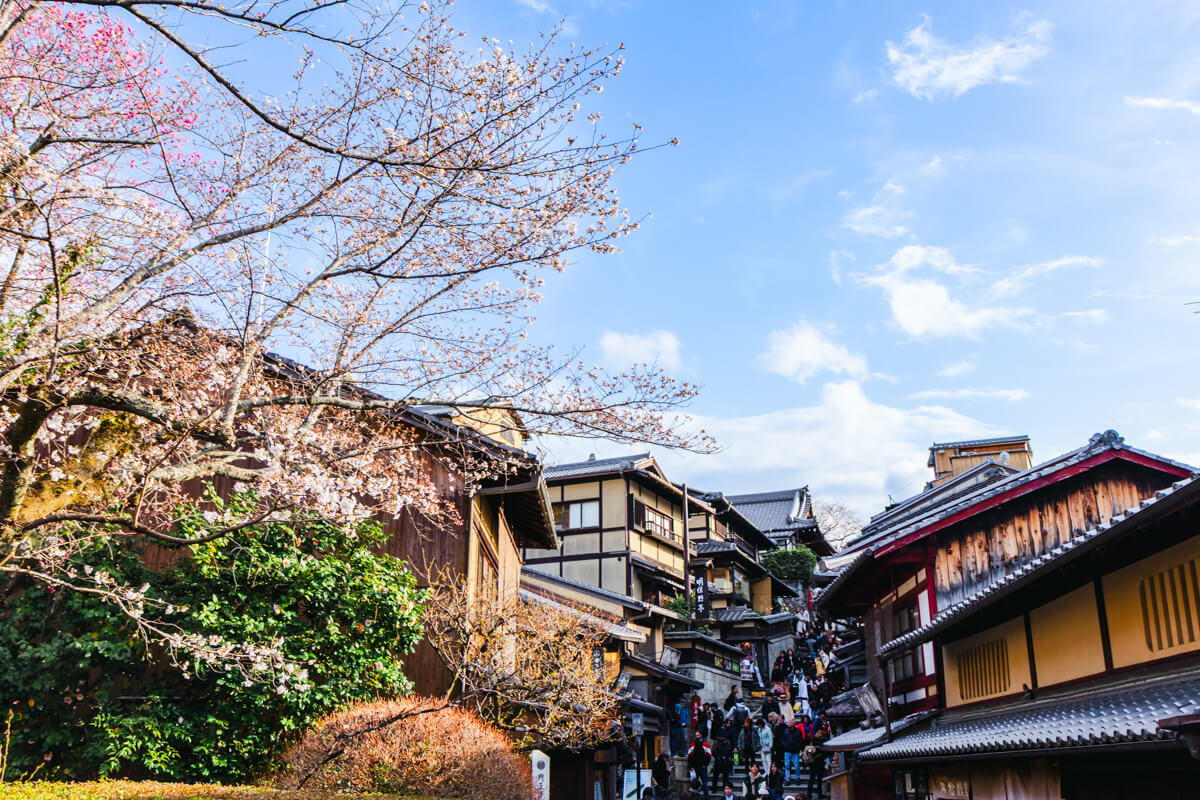
Just a heads up: this area, especially Hanamikoji Street, gets very crowded throughout the day (see photo below). The wooden buildings and lantern-lit walkways are gorgeous, but you’ll definitely be shoulder-to-shoulder with other visitors.
Grab a late lunch in Gion before heading to your next stop!


Evening: Fushimi Inari Shrine
A few hours before sunset, head to Fushimi Inari, home of the iconic red torii gates that line the mountain trails. Inari is the Shinto god of rice, fertility, and prosperity.
To get there, hop on the Keihan Main Line at Gion-Shijo Station and ride about 20 minutes to Fushimi-Inari Station.
Fushimi Inari is open 24/7 and free to enter, and late afternoon is the perfect time to visit. By this point in the day, the tour groups have mostly cleared out, but don’t expect to have the place to yourself.
The trail is made up of thousands of bright red torii gates, donated by individuals and businesses over the years.


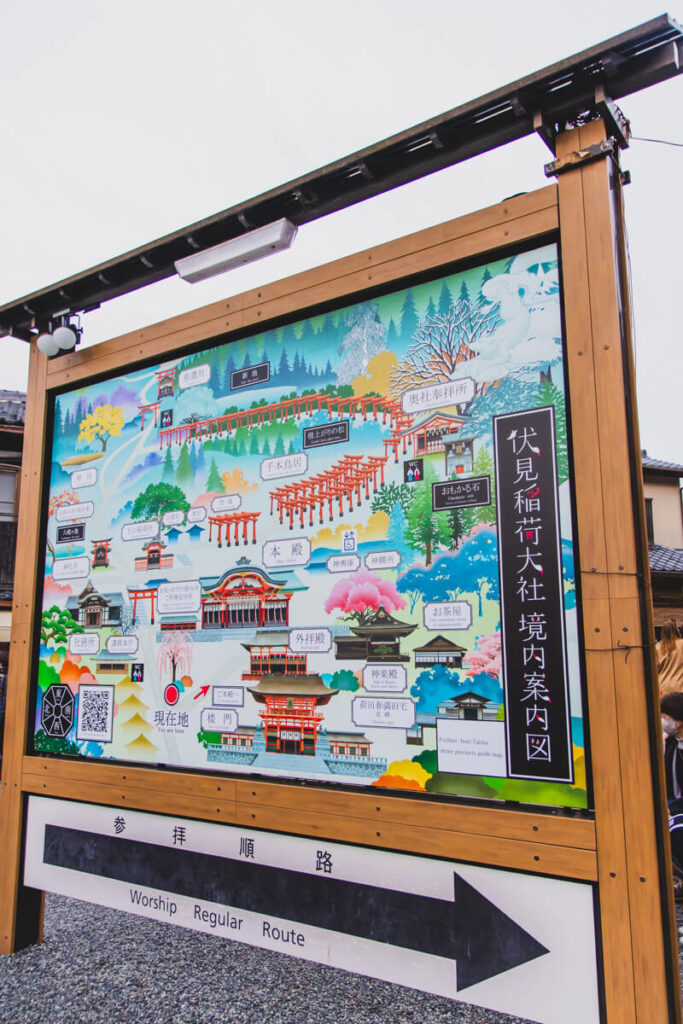
Expect some uphill walking and stairs! As you walk, the gates gradually thin out the higher you climb, and the crowds do too. The full loop takes about two hours round-trip, but you can turn back whenever you’re ready.
There are a few small shrines and lookout points along the way too. We made it about halfway before turning back down!
After you’ve finished your hike, head back to Gion for dinner and rest up before tomorrow!
⛩️ Lana’s Tip: This was one part of our itinerary that I felt like we rushed through and didn’t get to fully experience on our own. When I go back to Kyoto, I’ll definitely be booking this evening tour of Fushimi Inari with a local guide to learn more about the cultural significance of the shrine!
Day 6: Biking Temple Tour, Maruyama Park, and Kiyomizudera Temple
Morning: Biking Temple Tour
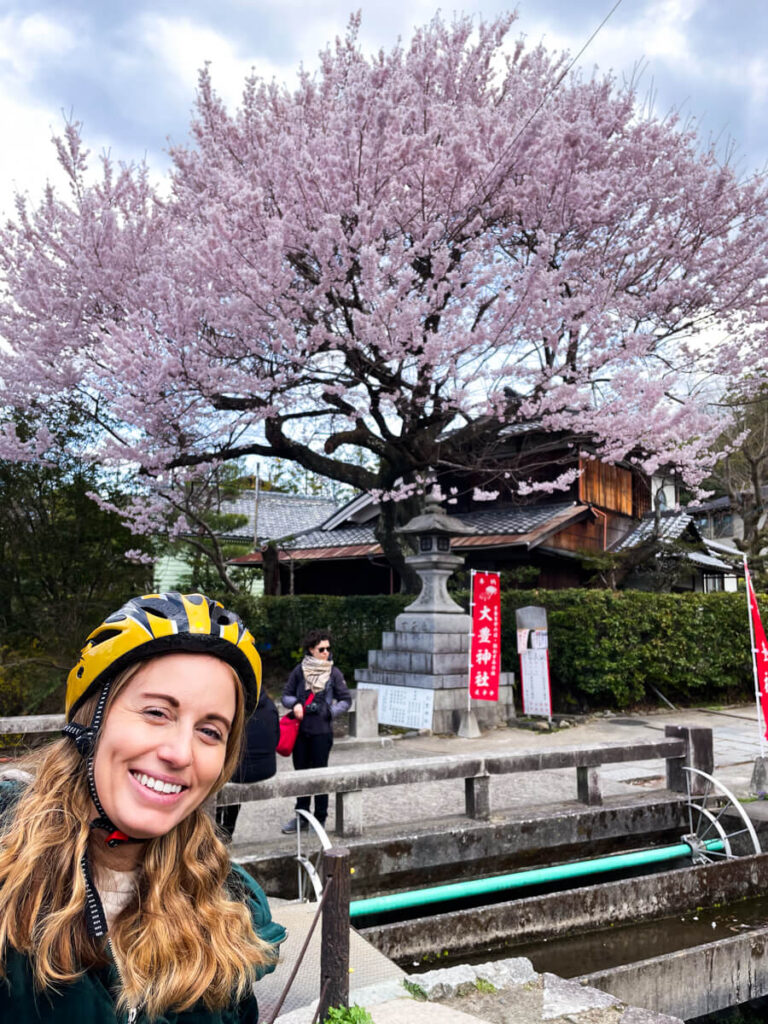
Kyoto is famous for its temples, and in my opinion, the best way to experience them is by bike!
We booked a half-day guided bike tour with Kyoto Fun and absolutely loved it. It started early in the morning, and we visited some off the beaten path spots away from the crowds, which was a great chance of pace.
Our first stop was Ginkaku-ji Temple, also known as the Silver Pavilion. The temple grounds here were so peaceful, with a stunning moss garden and a path that winds up behind the pavilion for a view of the city.
Next was Nanzen-ji Temple, one of the most important Zen temples in Kyoto. It’s famous for its huge wooden Sanmon gate and the red brick aqueduct that cuts through the grounds. We spent some time wandering the side paths here and learning about the history from our guide.


The final stop on our tour was Heian Jingu Shrine, known for its massive red torii gate and spacious inner courtyard. The gardens behind the shrine are gorgeous, especially in spring when the cherry blossoms are blooming over the pond and footbridges.
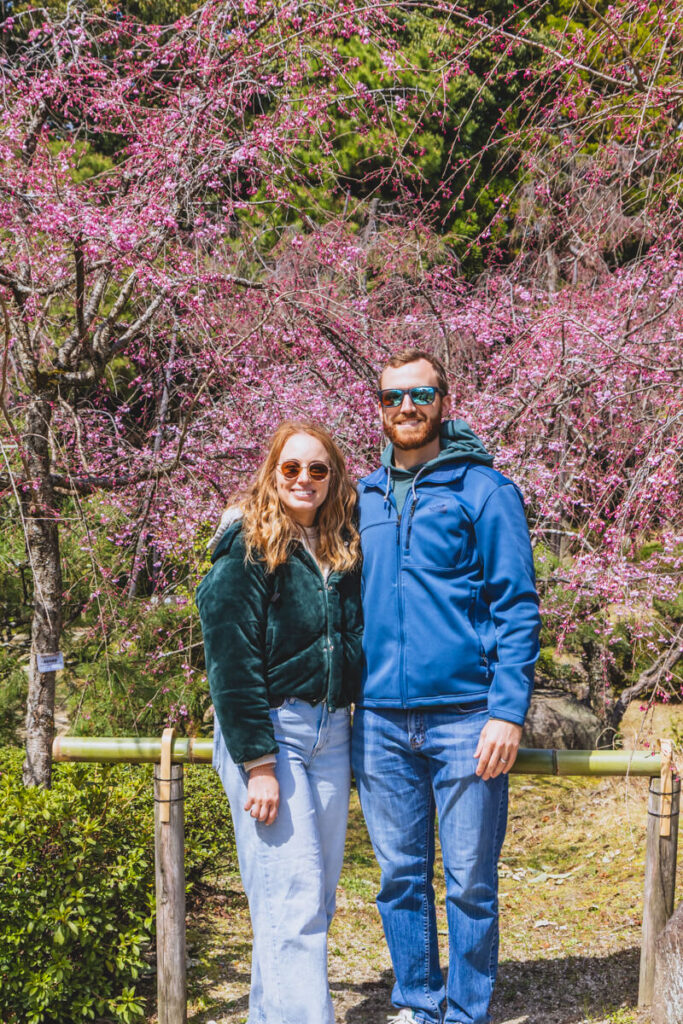
In between these temple stops, we rode along the Philosopher’s Path, a canal-side walkway lined with cherry trees and flanked by cozy cafes and local shops. Riding under the blossoms here was SO beautiful and it wasn’t even full bloom yet!
If biking isn’t your thing, you can visit all these stops by walking or taxi, but if you’re up for it, I really think biking gives you the best mix of efficiency and local charm!

Afternoon & Evening: Maruyama Park & Kiyomizudera Temple
After the bike tour, head over to Maruyama Park, especially if you’re visiting during cherry blossom season. This park is one of Kyoto’s most popular hanami (flower viewing) spots, and I can totally see why!!
The best part of Maruyama Park is the massive weeping cherry tree at the center that glows pink in the spring light, which was in full bloom when we visited. It was absolutely stunning!
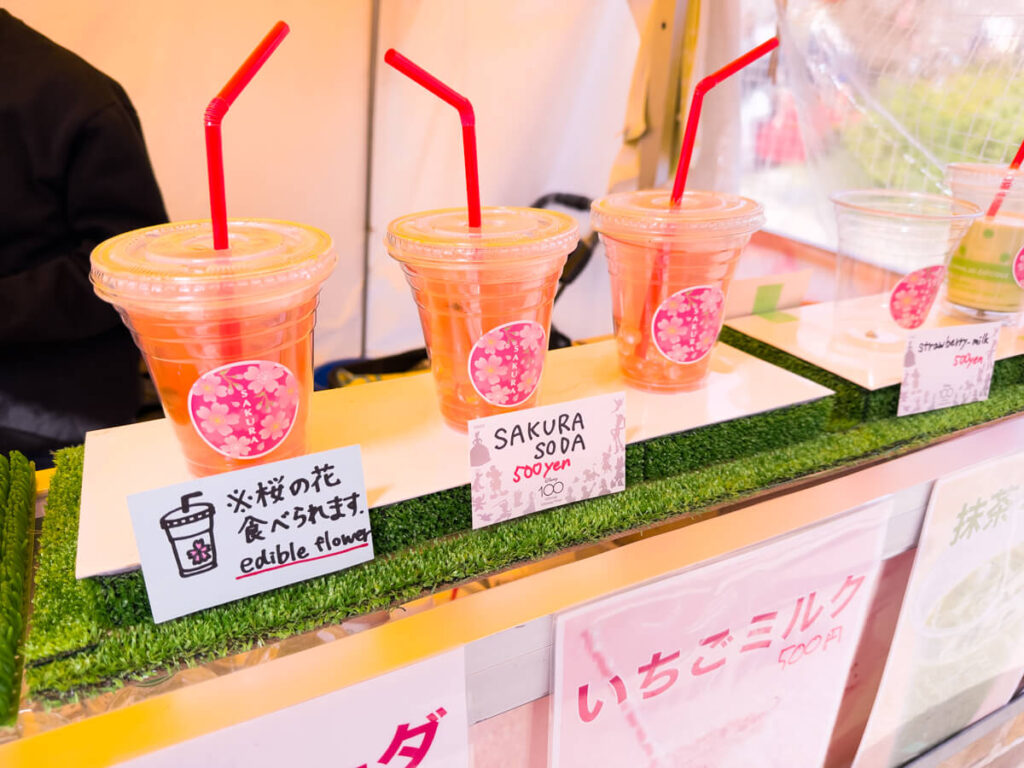
And during sakura season, the park comes alive with yatai (food stalls) selling all kinds of street snacks: yakisoba, takoyaki, fresh strawberries, and more. We grabbed a few snacks and sakura-themed drinks to eat picnic-style under the blossoms!
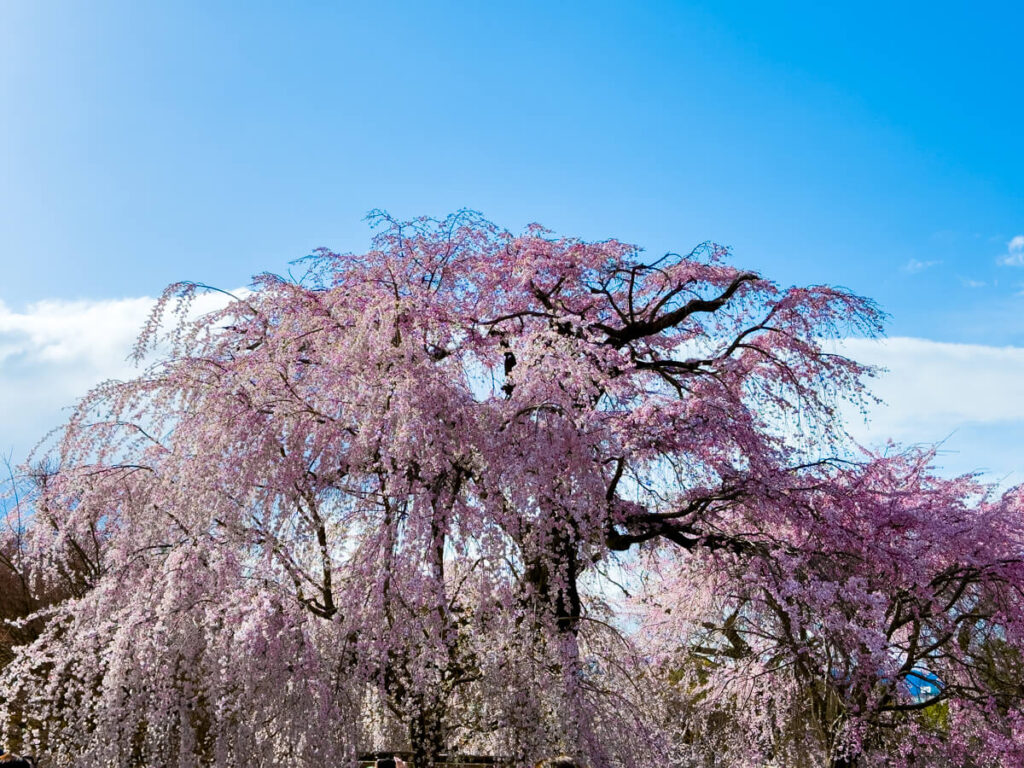
From there, slowly make your way south through the Higashiyama district, following the narrow stone-paved streets toward Kiyomizudera Temple. You’ll pass tons of little shops and sweets stands along the way, so give yourself time to wander.
Plan to arrive at Kiyomizudera about an hour or two before sunset. The temple sits on a hillside and has a huge wooden terrace (small entry free) that overlooks the valley below, and it’s gorgeous right before sunset.
We timed our visit just right and caught the whole area bathed in golden light! This is a popular time to visit of course, but it’s totally worth it.
After taking in the view, walk back through the lantern-lit streets of Higashiyama and grab dinner near your hotel or at a cozy spot nearby. We stopped for some sake at a tiny local bar at the bottom of the hill too!

Day 7: Travel to Tokyo, Experience Shinjuku and Shibuya
Early Morning: Bullet Train to Tokyo
Time to head to Tokyo, part 3 of this 10-day itinerary!
We took an early-morning Shinkansen (bullet train) from Kyoto Station to Tokyo Station. The ride is around 2 hours and 20 minutes, but it flies by!
We booked our train tickets through Klook a few days in advance so we could get reserved seats and sit together. If you’re trying to spot Mount Fuji from the train, sit on the left side, but just know that clear views depend on the weather!
Once you arrive in Tokyo, I recommend checking into your hotel first and dropping off your bags. We stayed in a VRBO in Shinjuku, which I loved for its energy, food options, and easy train connections.
There are endless hotel options in Tokyo of course, but being close to Shinjuku Station makes getting around the city way easier.
Save this post for later!
Late Morning & Early Afternoon: Shinjuku, Cherry Blossoms, and lunch
Once you’re settled into your hotel, spend some time exploring Shinjuku, which feels like Tokyo’s Times Square.
Walk past the towering skyscrapers and head over to see the Godzilla head perched on top of Hotel Gracery — it roars and lights up on the hour and is such a quirky Tokyo moment.
Then, hop on the train (Odakyu or Yamanote line) and head to Yoyogi Park, especially if the cherry blossoms are in bloom.
It’s one of the largest parks in Tokyo and turns into a sea of white and pink petals during sakura season!! This was the first place we saw “full bloom” on our trip, and it was pure magic!
Next, walk over to Shibuya Parco for lunch and some shopping. This building is home to the Nintendo Store, the Pokémon Center, and a whole floor dedicated to anime and gaming culture.
We grabbed lunch in the food hall here (there are tons of casual options) and spent at least an hour just exploring the shops.


Late Afternoon & Evening: Go-Karting and Shibuya Sky
In the late afternoon, it’s time to tackle one of the most exhilarating experiences of the trip: Go-karting through the streets of Tokyo!!!
You will absolutely need to book this experience in advance, especially if you are visiting during cherry blossom season! You will also need an international driver’s license if you’re coming from the USA, which you can get through AAA.
Once you arrive, you’ll suit up (aka pick a character costume), and drive through the streets of Shibuya (including the famous scramble road). It’s wild, it’s weird, and it’s absolutely one of the most memorable things you can do in Tokyo.
🏎️ Book the same go-karting experience we did in Tokyo here! 🏎️

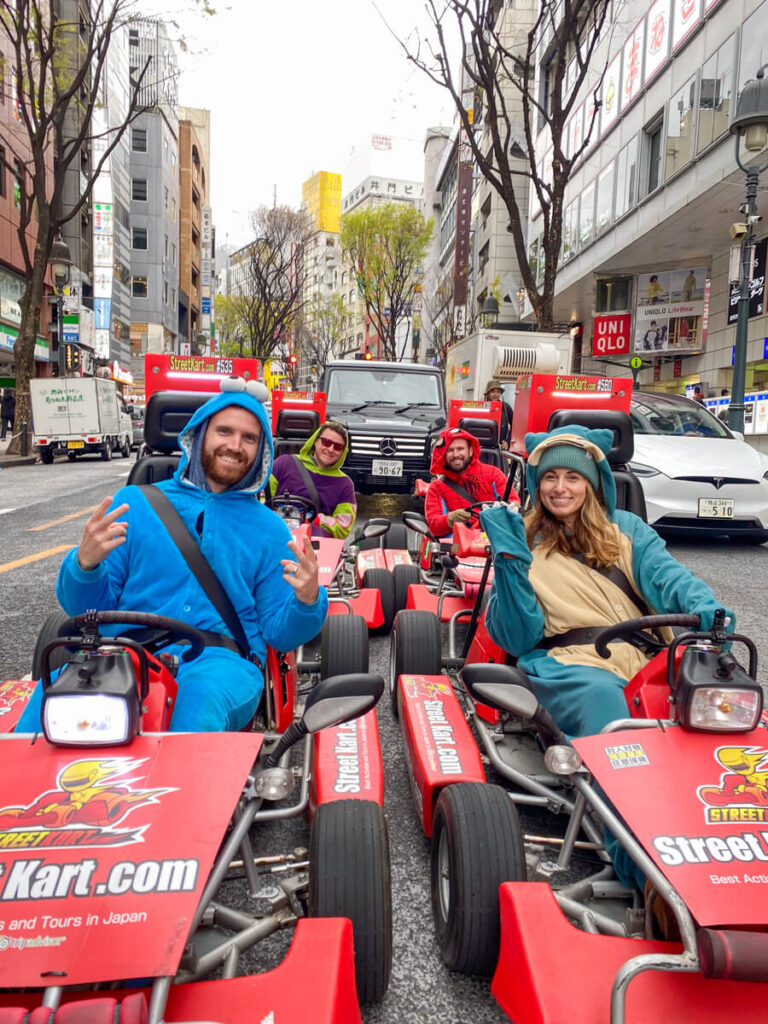
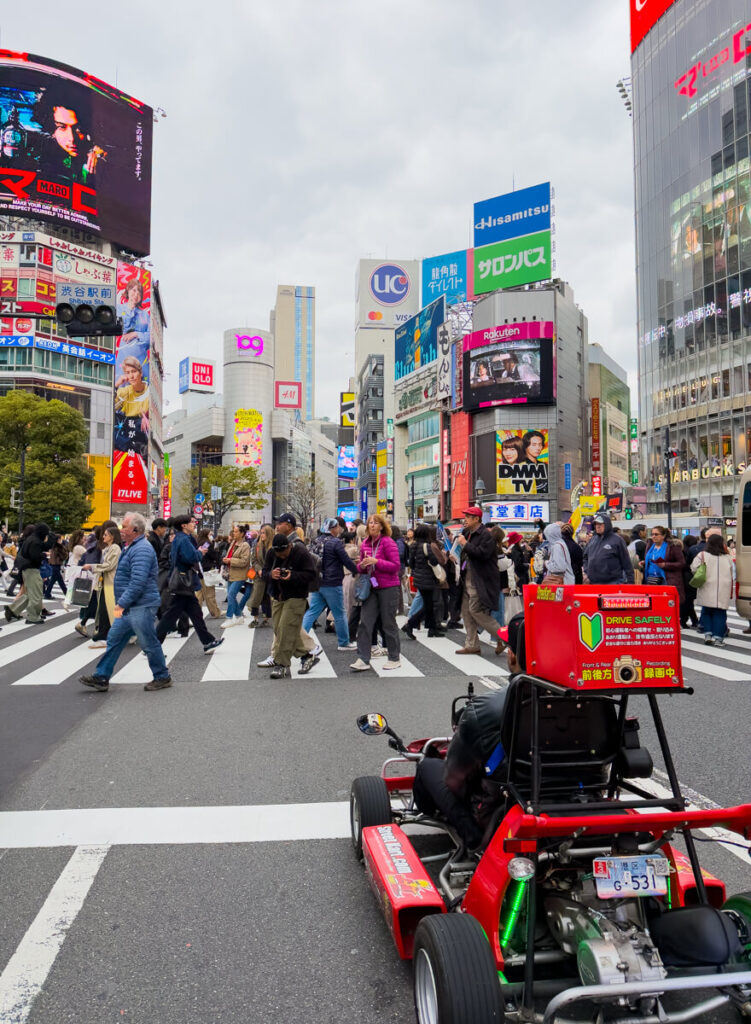
After go-karting, swing by the Mega Don Quijote in Shibuya, a popular discount store that is a must-visit while in Japan. This one is HUGE and is open 24/7. It has everything from snacks and beauty products to cosplay outfits and Japanese souvenirs. It’s sensory overload in the best way.
For dinner, treat yourself to a delicious wagyu yakiniku dinner (here is the restaurant we booked). I would make a reservation in advance!
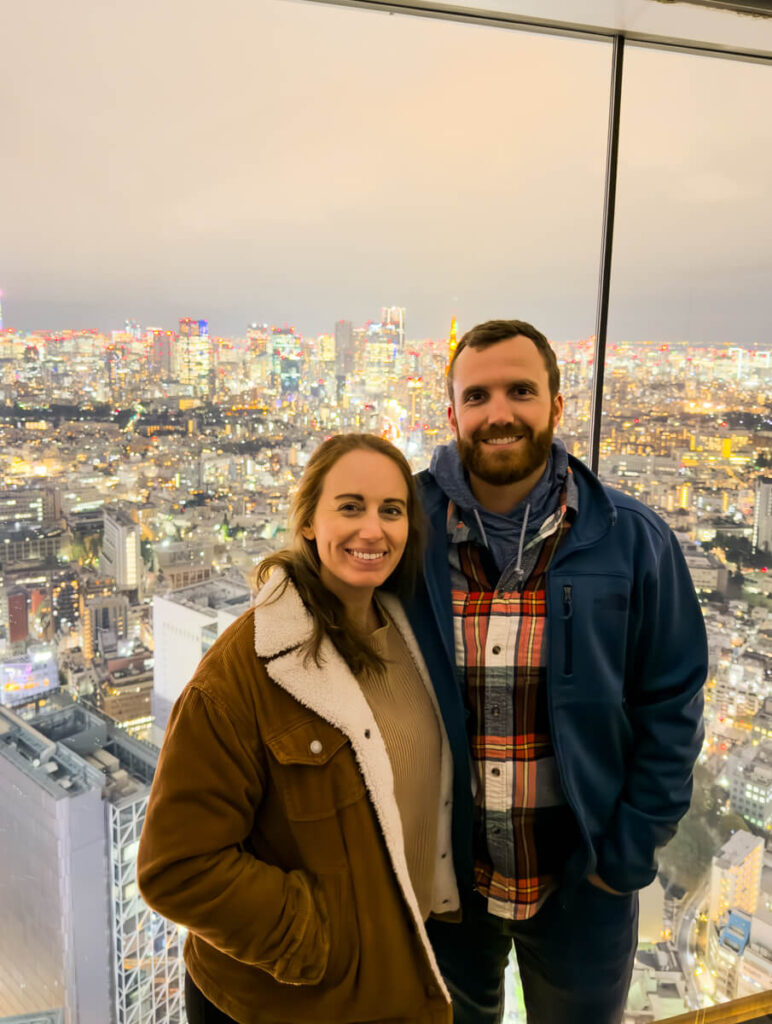
After dinner, end your night with a visit to Shibuya Sky, the open-air rooftop observatory above the famous Shibuya Scramble Square building.
We booked timed-entry tickets through Klook for around 7pm (sunset tickets sell out almost immediately). The views of Tokyo sprawling all around you were absolutely unbelievable from the top!
We were completely wiped after this day, but it was everything I wanted from our first full day in Tokyo!
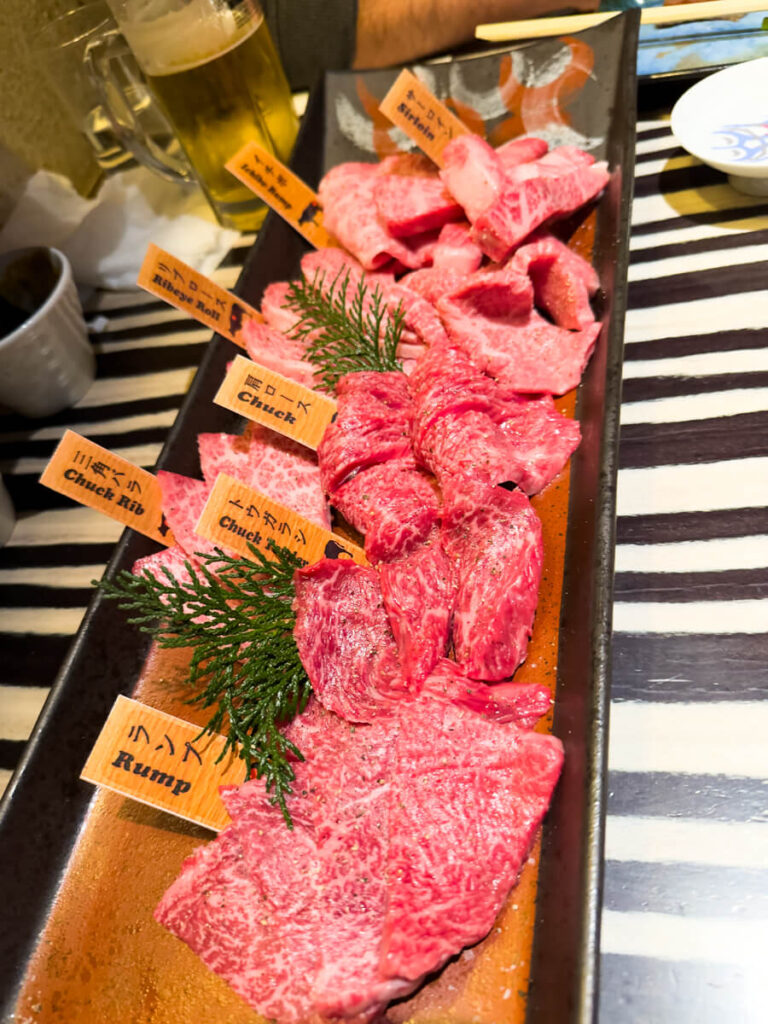

Day 8: Day Trip to Mount Fuji
Morning and Afternoon: Explore Kawaguchiko and Mount Fuji
Full transparency: this was one of the days we were most excited for during our 10 days in Japan, but we ended up not being able to do it.
The night before, we checked the forecast for Kawaguchiko (the town outside of Mount Fuji), and it was 100% chance of rain and snow, meaning we definitely wouldn’t be able to see Fuji.
Because Mount Fuji is a notoriously shy mountain, if the weather isn’t cooperating, you often don’t see her at all, and in that case, it’s better to pivot your day and save this for a clearer forecast!
That said — here’s exactly how we planned our perfect Fuji day, in the order we would’ve done it if the weather had been good!
🗻 If you prefer to skip all the transportation stress and explore Mount Fuji on a guided tour instead, this 10-hour Mount Fuji tour includes round-trip transportation from Tokyo, as well as all the major sites mentioned in this itinerary!
First, book tickets on the Fuji express train a few weeks in advance (we ended up cancelling these and getting a full refund thanks to Klook!). This is the fastest and easiest way to get to Kawaguchiko from Tokyo (and it leaves from Shinjuku Station).
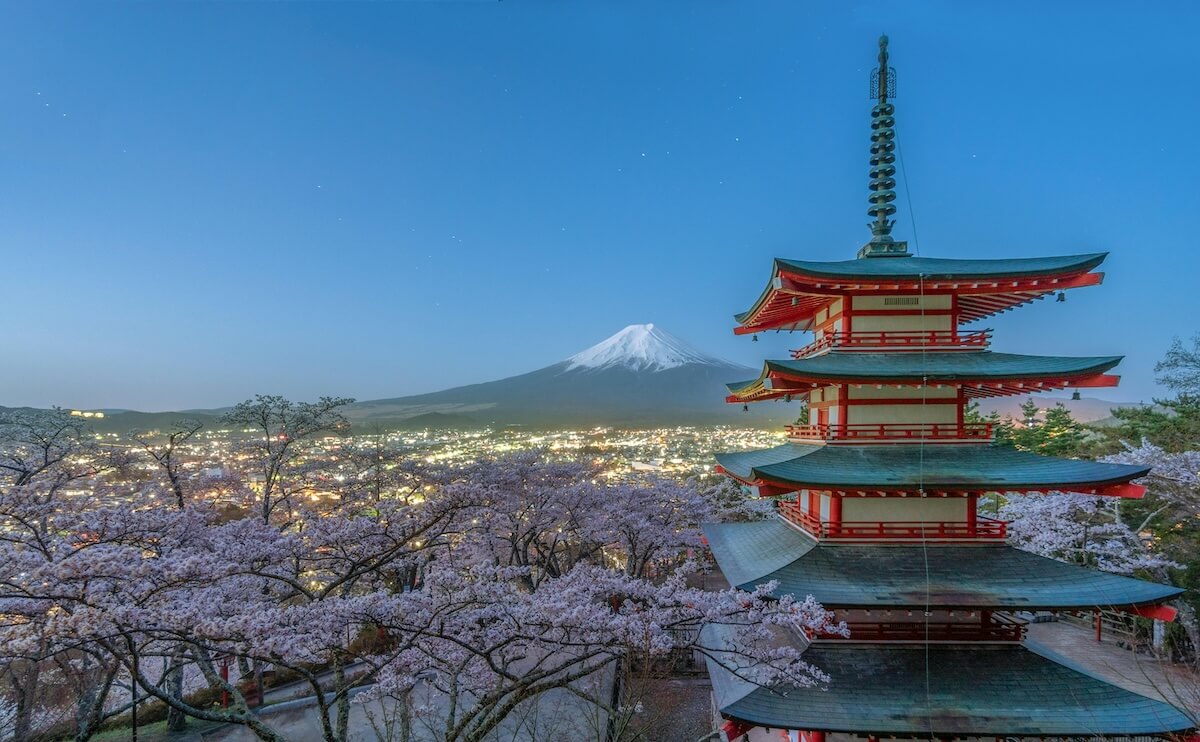
Board the train but get off a few stops early at Shimoyoshida Station. Once there, it’s a short walk up to Arakurayama Sengen Park and the famous Chureito Pagoda lookout.
This is the classic photo spot with the red pagoda and Mount Fuji in the background, framed by cherry blossoms! Be ready for stairs and a bit of a climb.
Once you’ve soaked in the views, head back down and jump on the same train to Kawaguchiko Station — this is your home base for the rest of the day.
When you arrive in Kawaguchiko, grab lunch at either Hotou Fudo (home‑style hotou noodles, a local specialty) or Shaw’s Sushi Bar & Dining (a great sushi option if you want something lighter). Both are right near the station and perfect fuel for the rest of your day.
After lunch, head out toward Kawaguchiko’s lakeside parks. You can rent bikes from Fujikanko Travel and ride out to Nagasaki Park and Oishi Park, or take the Red Line Sightseeing Bus if you’d rather save your legs.
These parks are supposedly gorgeous in spring — you’ll find cherry blossoms, lakeside views, and plenty of photo spots. At Oishi Park, don’t miss a treat stop at the Kawaguchiko Natural Living Center — their blueberry ice cream is famous!
Next up, if you still have time, hop on a sightseeing boat around Lake Kawaguchi. Or, if the weather is really bad and Fuji is nowhere in sight, head to Ide Sake Brewery for a tasting.
Once you’ve wrapped up your Kawaguchiko afternoon, catch the train back to Tokyo (the last one leaves at 5:40pm).
Back in Tokyo, head to Golden Gai for dinner and drinks. This tiny neighborhood in Shinjuku is full of tiny themed bars, each with its own vibe.
Day 9: Asakusa, Ueno Park, Akhibara, Sumo Show
Morning: Explore Asakusa & Senso-ji Temple
At this point in the trip, you’re probably starting to feel that travel fatigue. But don’t worry, today’s pace is relatively chill!
Start your day in Asakusa, the historic heart of Tokyo! The main draw here is Senso-ji, Tokyo’s oldest and most famous Buddhist temple.
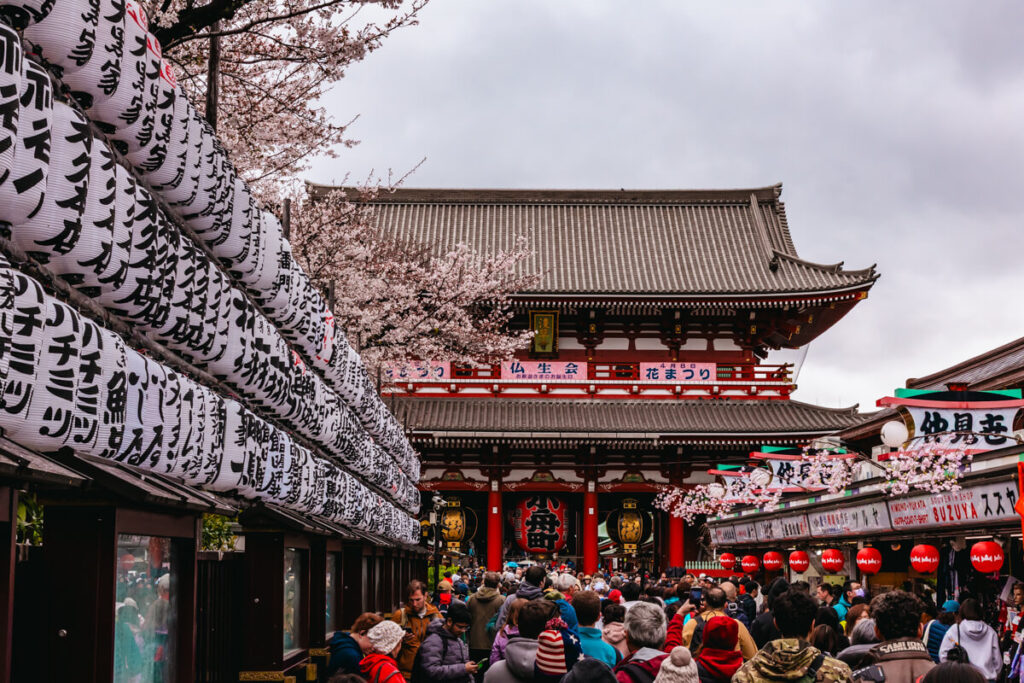
When you arrive, you’ll walk through Kaminarimon Gate (look for the giant red lantern), then stroll down Nakamise Street, a colorful shopping street filled with traditional snacks, souvenirs, and trinkets.
I recommend arriving here as early as possible to avoid the heavy crowds, as this is one of the most popular places in Tokyo!
Once you reach the temple grounds, take a moment to explore the main hall and the massive incense burner. This is also a great place to take a guided tour if you want to learn more about the history and significance of the temple!
Definitely walk east towards the river and Sumida Park for incredible cherry blossoms and views of the Tokyo Skytree in the background.

Afternoon: Ueno Park and Akihabara
After Asakusa, hop on the subway (Ginza Line) or walk 30 minutes to Ueno Park, especially if the cherry blossoms are blooming.
This park has hundreds of sakura trees and turns into a full-on festival during peak bloom! (I recommend returning here at night as well, to see the trees lit up with the lanterns).
If you’re hungry, there are food stalls throughout the park during sakura season, or you can pop over to Ameya-Yokocho, a bustling open-air market just south of the park, for lunch and street food.
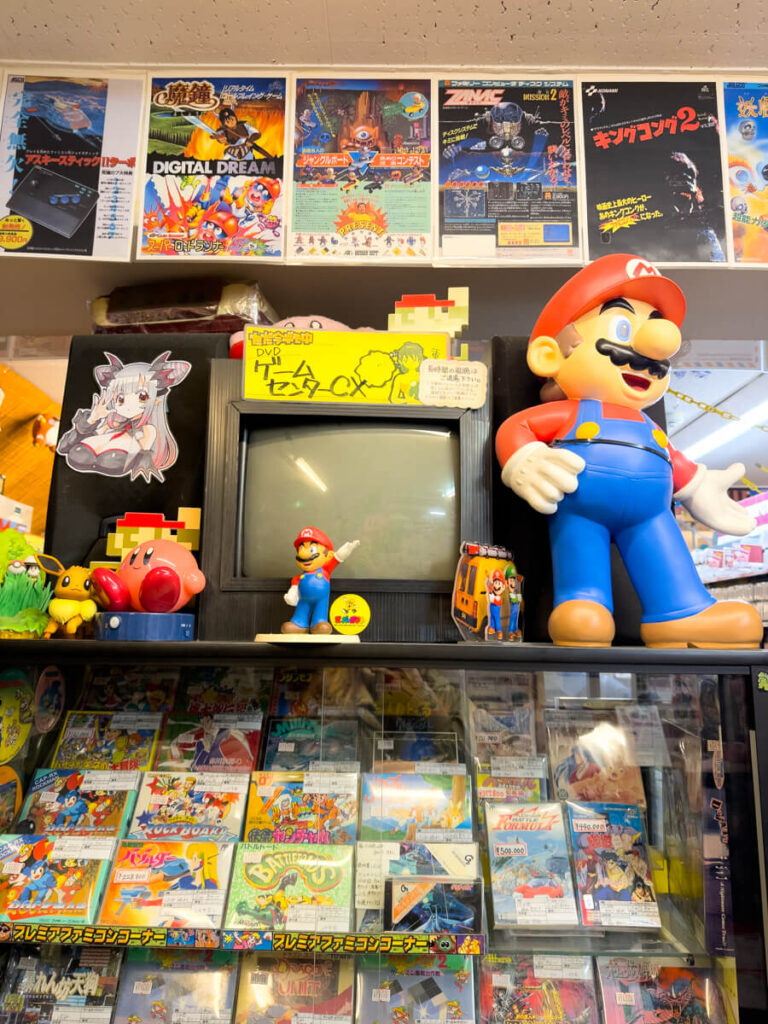
Next, make your way to Akihabara, Tokyo’s mecca for anime, manga, video games, and electronics. Even if you’re not into that world, it’s worth walking through just for the sensory experience.
We wandered through Mandarake and Super Potato, and of course, Yodobashi, Japan’s version of Best Buy! If you’ve got time, you can also visit a themed café (there are everything from maid cafés to animal cafés here).
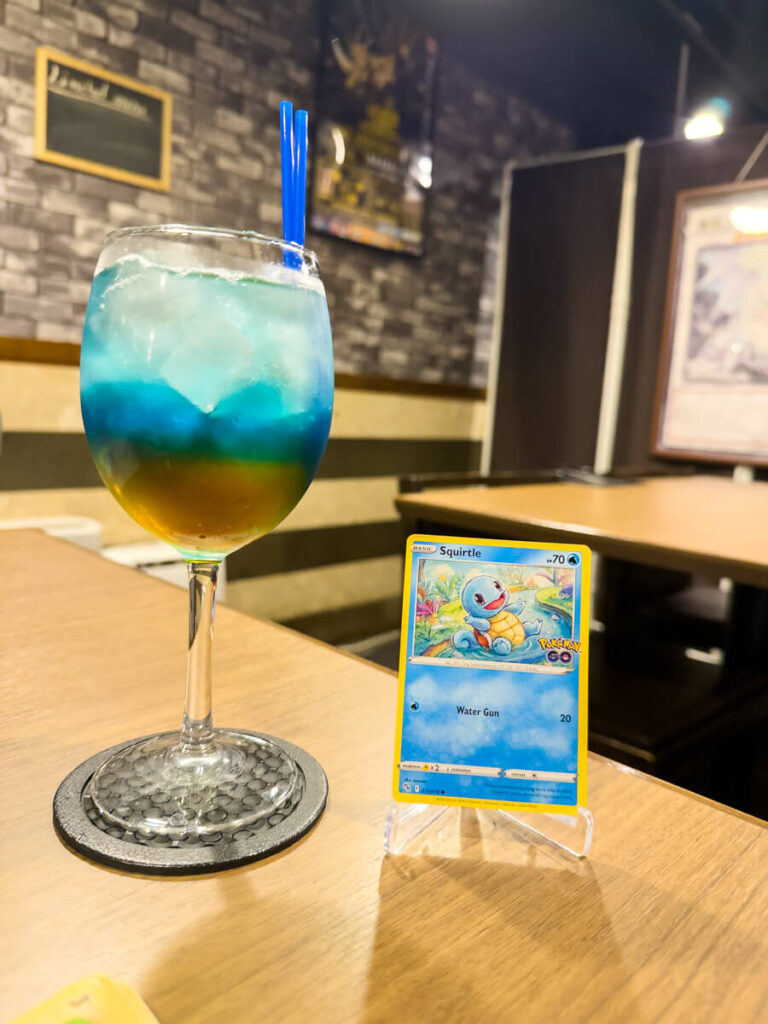
If you’ve got time, you can also head over to the TCG BOARD GAME Cafe & Bar FUN, where you can bring your own trading card (like a Pokemon) and the bartenders will make a custom drink based on the card – so fun!

Evening: Sumo Show Experience
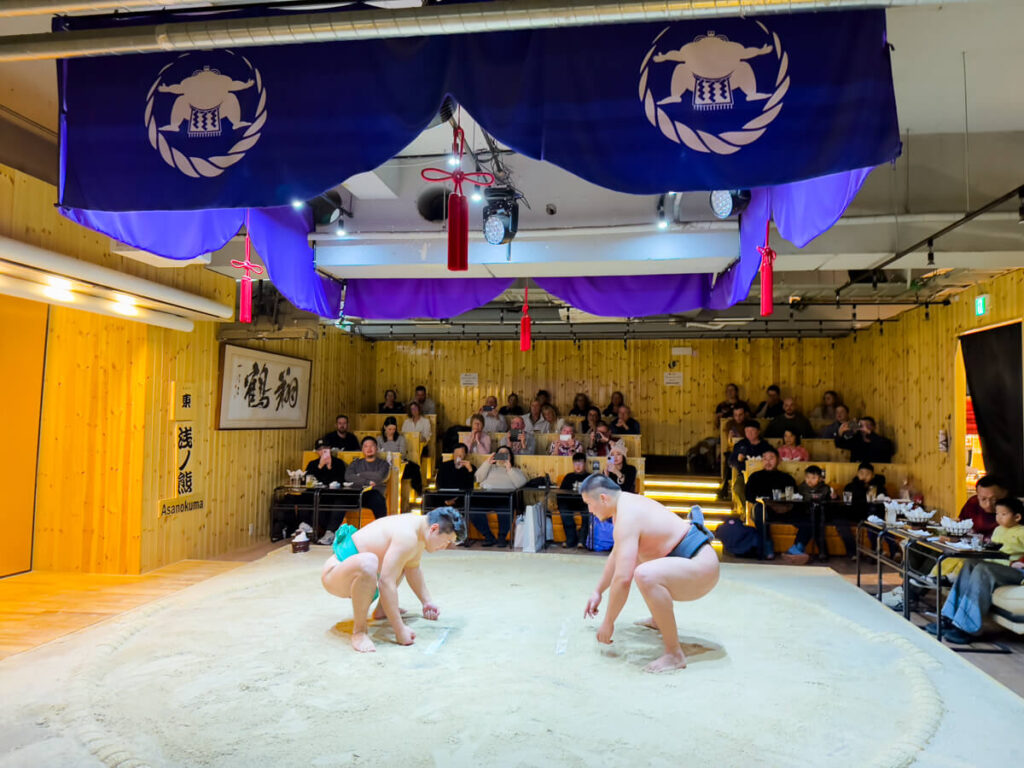
To end the night, consider booking a Sumo Experience Dinner Show like we did!
Or if you’re lucky enough to be in town during an actual sumo tournament, definitely go for the real deal instead!
This particular show is pretty touristy, but it was still really fun and is an interactive way to learn about Japan’s national sport.
It’s held in a small venue (not an arena), and includes live sumo matches with play-by-play explanations, some audience participation, and even a chance to take photos with the wrestlers at the end.
We did the evening session and had a great time! Plus, the food is all-you-can-eat hot pot, the same type of food that sumo wrestlers eat!
After the show, grab dinner nearby or head back to your hotel to rest up. Tomorrow’s your final day in Japan!
🎟️ Be sure to book this sumo show in advance! The nighttime show sells out quickly, especially in the spring.
Day 10: Shinjuku Garden, Tsukiji Fish Market, Imperial Palace, Tokyo Tower
Morning: Shinjuku Gyoen National Garden
Start your last day with a peaceful walk through Shinjuku Gyoen National Garden, one of the most beautiful parks in all of Tokyo. And if the cherry blossoms are blooming, this spot is even more magical!!
It has white and pink and purple trees exploding all around, and it’s way less busy than other spots in the city.
There’s a small entrance fee (about ¥500), but it’s worth every yen for the quiet paths, traditional gardens, and seasonal flowers. We spent about an hour wandering here and soaking it all in. Don’t miss the greenhouse for tropical flowers!




Late Morning: Tsukiji Market
Next, jump on the subway (Oedo Line) and head to Tsukiji Outer Market, Tokyo’s legendary seafood and street food market. While the inner wholesale fish auction has moved to Toyosu, the outer market is still buzzing with food stalls and vendors!
And, you can sometimes still see large tuna and other fish at the Tsukiji Nippon Fishing Port Market on the outskirts of the market area (it is closed Wednesdays and Sundays)!
You can snack your way through an early lunch here: think sea urchin (uni), tamagoyaki (egg omelette) on a stick, fresh sushi, and more. Come hungry and follow your nose!
Afternoon: Imperial Palace & Tokyo Tower
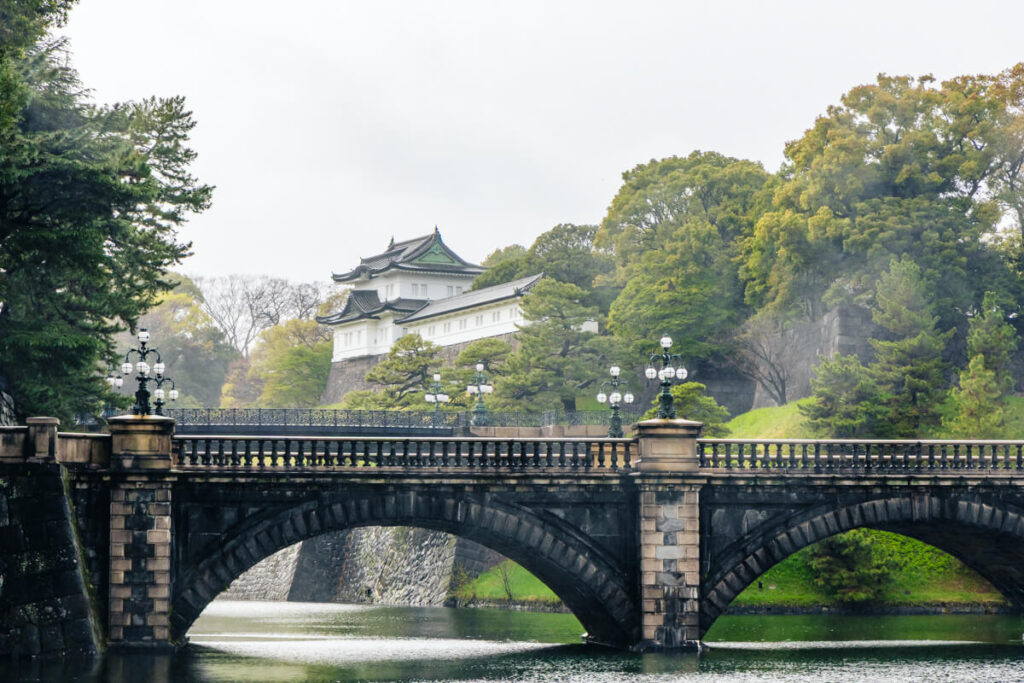
If you’ve still got some energy (and time) left in your day, head over to the Imperial Palace (where the current Japan Emperor and Imperial family live) for a quick walk around the outer gardens and moat.
The East Gardens are open to the public and provide a nice dose of greenery and history right in the heart of the city. The view of the Palace with the double bridge in front of it looks like a painting!
Then, to wrap up your trip (again if you have time), you can make your way to Tokyo Tower — the city’s original skyline icon. It’s less flashy than Skytree or Shibuya Sky, but I personally think it’s a fun and nostalgic way to say goodbye to Tokyo.
You can head up to the main observatory deck or just admire it from below (especially pretty at sunset or when it’s lit up at night!).
If you’ve got a red-eye or late-night flight, now’s the time to grab any last souvenirs or snacks for the plane before heading to the airport!
We personally took the airport bus from Shinjuku station to Haneda airport instead of the train! It’s only 1,400yen (~$9) and took around 35 minutes, which is less than the train takes! Plus, you don’t have to worry about lugging your bags onto a train.
Final Thoughts
And that’s a wrap on our 10 days in Japan! I truly hope this itinerary helps you plan your own trip, whether you’re chasing cherry blossoms like we did, or just hoping to soak in Japan’s history, food, and culture for the first time.
It’s hard to put into words just how special this country is. From the quiet zen temples of Kyoto to the neon chaos of Tokyo, every day felt packed with beauty and culture.
If you’re still in planning mode and want to dive deeper into each city, I’ve also written up detailed guides that break everything down even further:
- 🏯 Planning to spend more time in Osaka? Check out my 3 Day Osaka Itinerary for food tours, castle views, and the best day trips!
- 🍵 Want more of Kyoto’s charm? Here’s my 3 Day Kyoto Itinerary with all my favorite temples, hidden corners, and cultural experiences. (COMING SOON!)
- 🌆 Sticking around in Tokyo? Don’t miss my 3 Day Tokyo Itinerary for the best neighborhoods, shopping, and off-the-beaten-path finds. (COMING SOON!)
Don’t forget to pin this post for future planning!