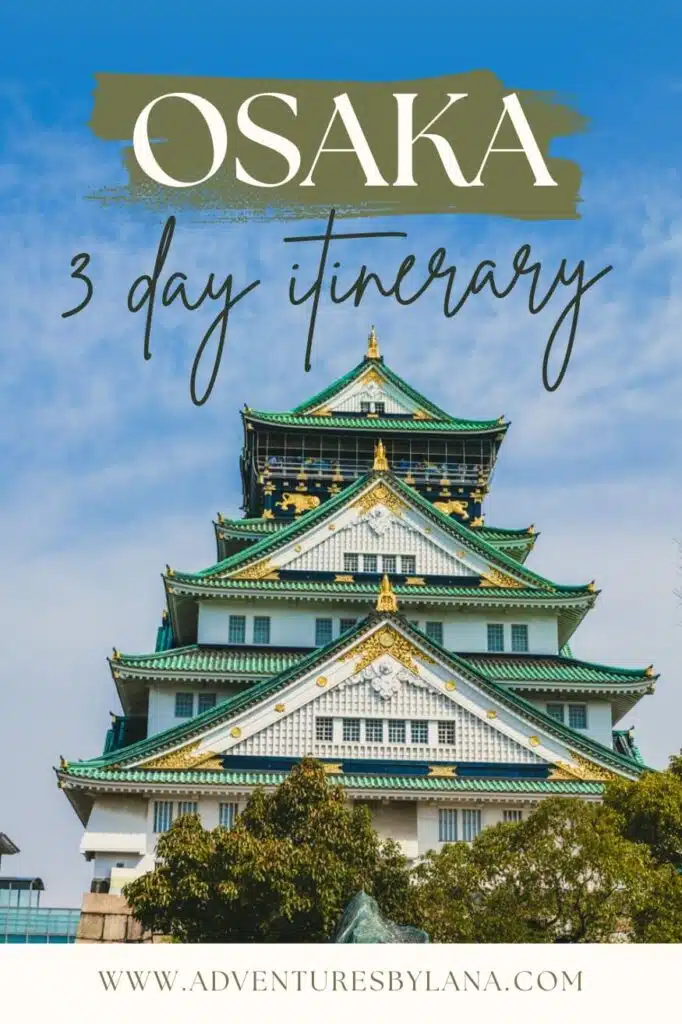
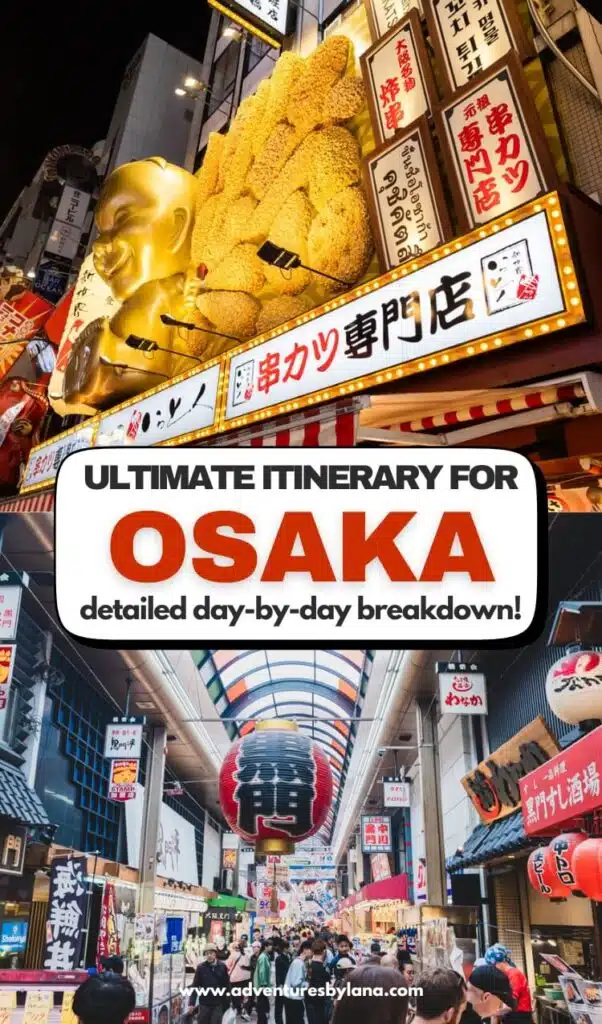
Detailed 3 Day Osaka, Japan Itinerary for First-Timers!
Osaka, Japan will always hold a special place in my heart!
I spent 6 weeks living in Osaka while I worked on the installation of Super Nintendo World at Universal Studios, but recently got to return during our 10 Day Japan Cherry Blossom trip as a real tourist.
And I was immediately reminded why I love this city so much!
If this is your first time visiting Osaka, this 3 day itinerary is designed to help you see the best of the city, as well as some more local and hidden gems along the way too!
Because if there is one thing that living in Osaka taught me, it’s that the best spots are the ones you randomly discover for yourself.
I’ve also included helpful tips on getting to and navigating around Osaka for first-time visitors, as well as where I recommend staying to maximize your time!
Itinerary Overview
Before we get into all the details, here is a quick breakdown of what this itinerary covers! As you can see, this assumes you have 3 full days in Osaka.
If you have more (or less), feel free to re-arrange your activities as needed and use this itinerary as a baseline! (And check out my 1-day Osaka itinerary for an action-packed, consolidated version if needed.)
I’ve also included links to the activities we booked in advance for this itinerary, either because they sell out or you can skip the line by booking ahead of time!
Day 1: History & Hidden Gems 🏯🍣
- Morning at Osaka Castle (buy your tickets in advance here!)
- Local lunch & shopping at Tenjinbashi-suji
- Evening omakase sushi dinner (book the one we did here!)
Day 2: Choose Your Adventure 🎢🦌
- Option 1: Full day at Universal Studios Japan (book your tickets on Klook here!)
- Option 2: Day trip to Nara (deer, temples, parks)
Day 3: Culture, Street Food & Dotonbori ⛩️🌃
- Morning at Shitennō-ji Temple & Tennōji Park
- Food tour and lunch at Kuromon Market (book the food tour here!)
- Night exploring Dotonbori & Shinsaibashi
Getting to Osaka
Osaka is one of the most accessible cities in Japan, making it an easy stop whether you’re flying in internationally, arriving by bullet train, or traveling in from a nearby town.
No matter where your journey begins, this section will help you figure out the best way to get into the city center so you can hit the ground running!
Arriving by Plane
If you’re flying into Osaka, you’ll most likely land at Kansai International Airport (KIX), which is about 50 km (30 miles) southwest of the city center. It’s the main international gateway to the region, which includes Osaka, Kyoto, Nara, and more!
Once you arrive at the airport, you have several options for getting into the city center, depending on your budget and which neighborhood you are staying in (which we will go into more in the Where to Stay section below).
The most popular choice is the Haruka Express, a comfortable express train that takes you straight to the top train stations in the city in less than an hour. (It also goes all the way to Kyoto and Nara!).
This is what we did on our last trip to Osaka and it worked out perfectly! We booked our train tickets in advance through Klook so we didn’t have to worry about getting tickets at the station. Klook gives you a barcode that you can scan to board the train – super easy!
The train took us directly to Osaka Station, and our hotel was just a few blocks away.
Book your Haruka Express train tickets on Klook in advance! 🚆🎟️
If you’re staying near Namba in southern Osaka, the Nankai Airport Express is your best bet for getting into the city. It runs every 30 minutes from the airport to Namba station in the heart of the Minami area.
Another good option, especially if you have lots of luggage or are staying in a less central neighborhood, is the Airport Limousine Bus. These buses run directly to many hotels and major stations in Osaka and can be more convenient than navigating the train with a ton of luggage.
This is what I did on my first trip to Osaka, since one of the routes drops you off right in front of the Osaka Hilton!
And for those who want the smoothest, most convenient option, you can pre-book a private transfer from the airport to your hotel. This is the priciest option, but it’s perfect for families, groups, or late-night arrivals. You can also always grab a taxi into the city, but this will be pretty expensive (around $100 USD)!
P.S. I cover this topic in even more detail in my guide on How to Get from KIX to the city center! Check it out for more information on the different trains, buses, and more!
Arriving by Train
If Osaka is a stop on your longer Japan itinerary, chances are you’re arriving by train, either on the Shinkansen (bullet train) or local commuter lines!
If you are taking a bullet train (from Tokyo or anywhere else), you will arrive at Shin-Osaka Station. This is where both major Shinkansen (bullet train) lines connect in Osaka – the Tokaido Shinkansen and the Sanyo Shinkansen.
Shin-Osaka station is well-connected to the rest of Osaka’s transportation network, so depending on where you are staying, you can hop on the Osaka Loop Line or the Midōsuji subway line to get into the city center (more on that in the Navigating Around Osaka section below!).
If you are arriving from Kyoto or a smaller nearby town, you will most likely arrive at Osaka Station, the main transit hub. From here, you can pretty much get anywhere in the city, either on the Loop Line or the Metro (subway)!
📍Lana’s Tip: Osaka has multiple major train stations, including Shin-Osaka, Osaka Station (Umeda), and Namba, so make sure you know which one is closest to your hotel or starting point.

Navigating Around Osaka
Osaka’s Train Systems
Osaka has one of the most convenient and efficient public transportation systems in Japan, and during your 3-day visit, you’ll mostly be riding a mix of JR trains and the Osaka Metro.
The JR Osaka Loop Line is a circular train route that loops through the heart of the city and stops at several major districts, including Osakajokoen (Osaka Castle), Tennoji, Universal-city, and of course, Osaka Station (Umeda).
If you’re using a Japan Rail (JR) Pass during your time in Japan (which we didn’t end up getting), this line is fully covered!
P.S. I go into way more detail about the JR Pass and tips for navigating around Japan in my Ultimate Japan Beginner’s Guide here!
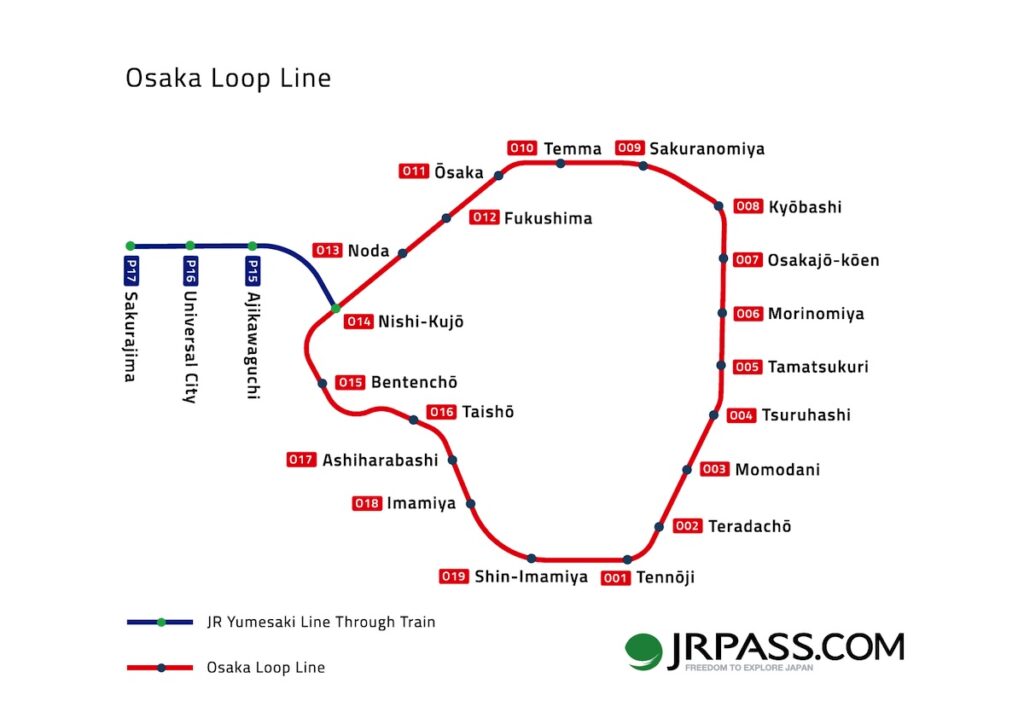
In addition to the Loop Line, you’ll also be using several subway lines that are part of the Osaka Metro system. These lines are color-coded, well-labeled in English, and have frequent service around the city.
Here are the main lines you’ll likely use for this itinerary:
- Midōsuji Line (Red) – Runs north to south through the city and connects major areas like Umeda (Osaka Station), Shinsaibashi, Namba, and Tennoji. You’ll use this one a lot!
- Tanimachi Line (Purple) – Handy for getting to Shitennō-ji Temple
- Sakaisuji Line (Brown) – Useful for accessing more off-the-beaten-path areas like Kuorom Market and Den-Den Town if needed
You can check out the full Osaka Metro map here! 🗺️
As mentioned, Osaka Station (Umeda) is the central hub for both the JR Loop Line and multiple Osaka Metro lines (via connected underground stations).
You’ll also find several private railway lines here, which makes it one of the best-connected transit points in the city. This is one of the reasons I personally love staying in this area. You can get basically anywhere in Osaka (or beyond) with minimal transfers.
💡 Lana’s Tip: Use Google Maps or the Japan Travel app to plan each leg of your journey. These apps will show you the exact platform, line color, and transfer point in real time!
Getting a Transport Card
To make getting around Osaka (and the rest of Japan) as seamless as possible, I highly recommend using an IC card, which is a rechargeable tap-and-go card that works on most trains, subways, and buses.
In Osaka, the local version is called ICOCA, but if you already have a Suica or Pasmo card from Tokyo, don’t worry — they’re all interchangeable and work exactly the same way!
There are two main ways to get an IC card:
- iPhone Users: Add a Suica or Pasmo card directly to your Apple Wallet! You can load it with yen using Apple Pay and start using it immediately — no physical card needed.
- Android Users or Physical Card Fans: You can buy an ICOCA card at any JR station in Osaka, including Shin-Osaka or Kansai Airport. You’ll find top-up machines at most stations.
You can also pre-order a physical ICOCA card through sites like Klook and pick it up at the airport when you land.
These cards are incredibly convenient. Not only do they work for JR lines, Osaka Metro, and buses, but you can also use them at most vending machines, convenience stores, and even some restaurants.
🎥 Check out this video on how to add a Suica to your Apple Wallet if you want a visual walkthrough!
Where to Stay in Osaka
Choosing the right area to base yourself in Osaka can make your entire trip smoother, especially with only three days to explore. Osaka is a large, sprawling city, but when it comes to convenience, atmosphere, and easy transit, two areas stand out: Umeda (also known as Kita) and Namba (Minami).
I personally prefer Umeda and recommend it for most travelers who prefer convenience and local vibes!
Umeda is home to Osaka Station, the city’s major transportation hub and the most well-connected area in Osaka.
You have access to the JR Osaka Loop Line, multiple Osaka Metro lines, and private railways like Hankyu and Hanshin, meaning you can get almost anywhere in the city or surrounding regions with minimal transfers.
If you’re planning day trips to Kobe, Nara, or even Universal Studios, staying near Osaka Station simplifies everything.
It’s also a great area if you want nightlife and restaurants without the sensory overload of Dotonbori. Umeda has plenty of cozy bars, underground shopping arcades, stylish department stores, and late-night izakayas, but it tends to feel more balanced and less touristy.
I lived in this neighborhood for six weeks and loved being able to explore the city by day and come back to a more relaxed atmosphere in the evenings. I’ve personally stayed at the Hilton Osaka and Hotel Monterey Le Frere and had great experiences at both.

Cozy hidden alleyway in the Umeda area 
Bustling center of Dotonbori area in Namba

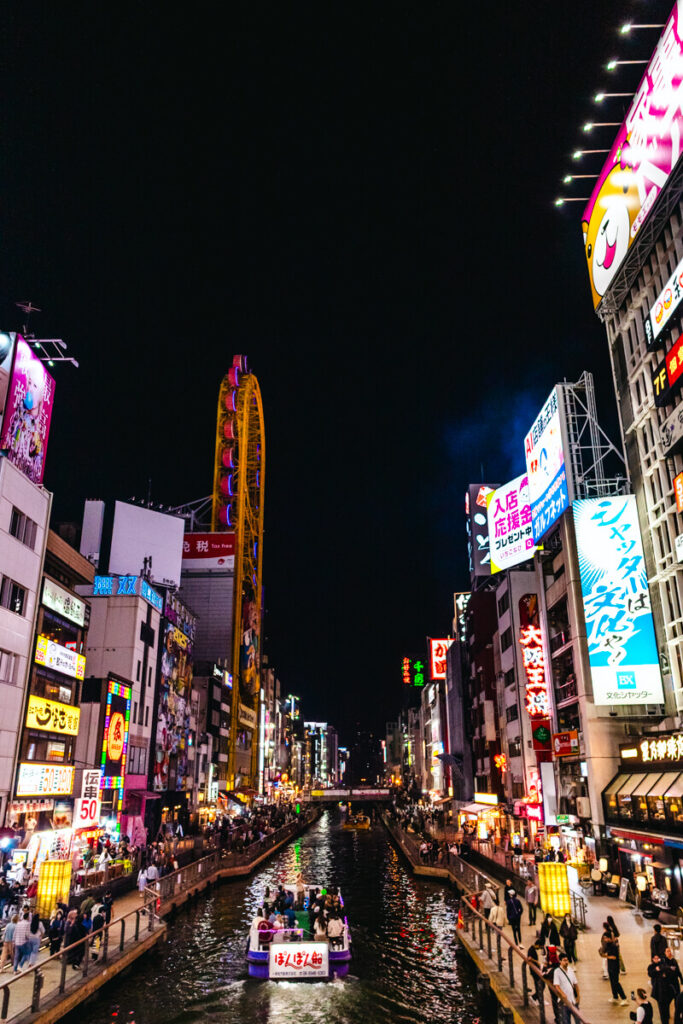
That said, Namba is a great option too, especially if you want to be in the middle of the action. This is where you’ll find Dotonbori’s neon lights, Kuromon Market’s street food, and more of the top things to do in Osaka!
It’s busy, chaotic, and buzzing until well past midnight, but there are of course quiet areas too!
If you want to roll out of bed and walk straight into the nightlife, or you’re a die-hard foodie looking to taste it all, Namba might be a better fit. It also connects to the rest of the city via the Midosuji Metro Line, so it’s not hard to get around from here either.
In short: stay in Umeda if you want easy transit, a more local vibe, and a calmer home base. Stay in Namba if you want nightlife, food stalls, and don’t mind crowds. Both are great – it just depends on your travel style!
And if you’re still torn, check out my full guide on Where to Stay in Osaka for a further breakdown of the different areas with more hotel recommendations!
Day 1: Osaka Castle, Tenjinbashi-suji, and Omakese Dinner
Morning: Explore Osaka Castle
Start your first full day in Osaka by diving straight into the city’s rich history at one of its most iconic landmarks: Osaka Castle!
To get here from Umeda, hop on the JR Osaka Loop Line and ride just four stops to Osakajokoen Station. From the station, it’s about a 10-minute walk through the park to the castle entrance. You’ll catch glimpses of the tower as you walk — it’s hard to miss!
Built in the late 1500s by Toyotomi Hideyoshi, Osaka Castle played a central role in Japan’s unification during the Azuchi-Momoyama period. Although the original structure was destroyed multiple times, the current version (a 20th-century reconstruction) still gives a powerful sense of the city’s historical importance.


Inside the Castle, there’s a museum spread out over several floors, showcasing weapons, armor, and detailed models of the famous Siege of Osaka, which we loved. There’s also a 360-degree observation deck at the very top, offering panoramic views of the city skyline and castle park below!
The castle opens at 9:00 AM, and I recommend arriving right around then to beat the crowds. If you’re planning to go inside, book your Osaka Castle tickets online in advance so you can skip the ticket line.
We didn’t do this and had to wait around 20 minutes to enter, but I imagine it could be even longer during peak season. I was bummed that I didn’t realize you could purchase tickets ahead of time!
💡 Lana’s Tip: Take the elevator straight to the top floor first (even if there’s a line), then work your way down through the museum exhibits. The climb can be a bit brutal if you do it the other way around!
Even if you skip the interior, the castle grounds are worth the trip. The park surrounding the castle is full of moats, stone walls, and tranquil gardens. During cherry blossom season, it’s one of the most photogenic spots in the city.
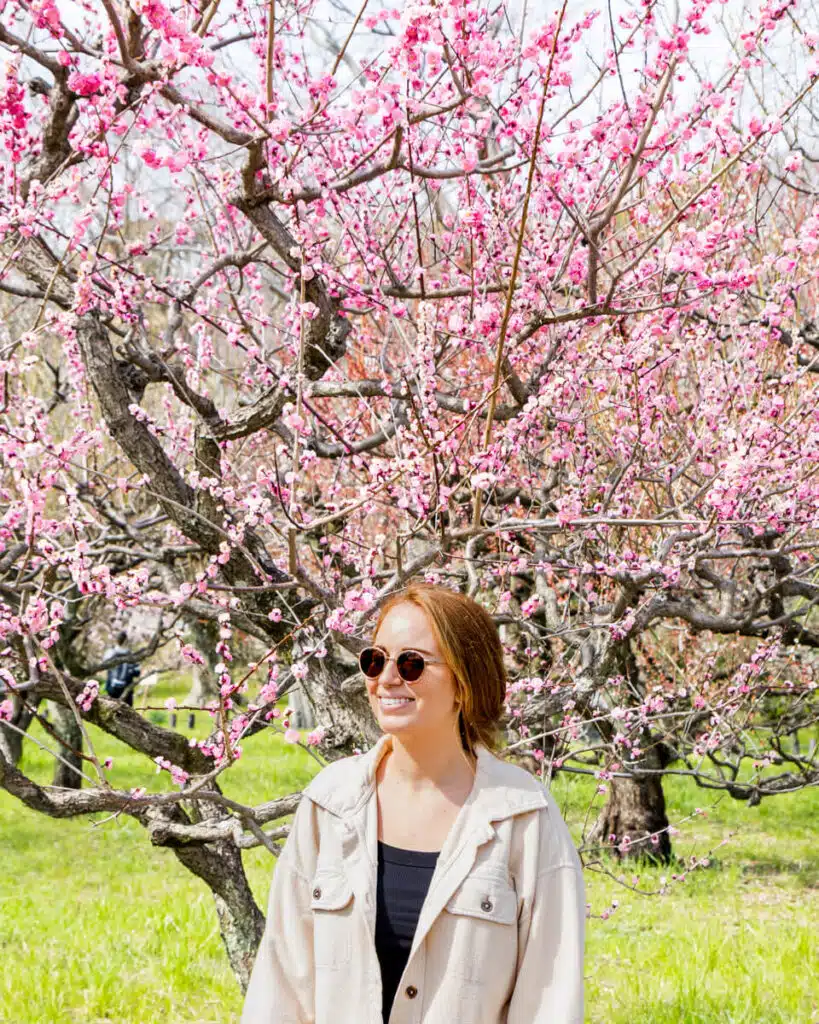
We visited in March, and the Plum Grove behind the castle was blooming beautifully. There were also cherry trees blooming around the castle!
And one of the sweetest interactions of our trip happened outside the castle — a group of school kids approached us to practice their English, asked us where we were from, and handed us tiny handmade gifts.
➡️ Read Next: Complete Guide to Cherry Blossom Season in Japan! 🌸


Afternoon: Tenjinbashi-suji Shopping Street
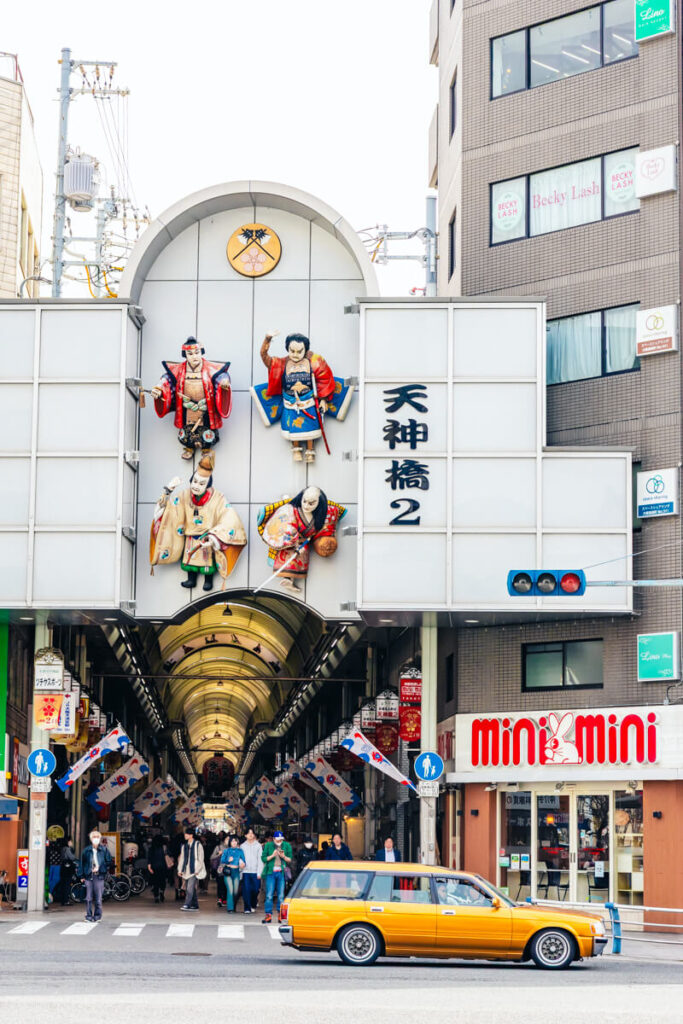
After soaking up centuries of history at Osaka Castle, it’s time to shift gears and dive into one of my favorite hidden gems in the city: a stroll through Tenjinbashi-suji, Japan’s longest shopping street.
To get there, hop back on the JR Osaka Loop Line at Osakajokoen Station and ride it just a few stops to Temma Station. Once you exit, you’ll find yourself right at the edge of the action.
Stretching for over 1.5 miles (2.6 km), Tenjinbashi-suji is a covered street filled with hundreds of small shops, restaurants, and local businesses. While it doesn’t have the flashy signs or crowds of Dotonbori, that’s exactly the appeal — this is everyday Osaka!
Locals come here to run errands, grab lunch, or browse for bargains. One of my favorite restaurants in Osaka, Kantipur, is located in this area!
P.S. For more hidden gems in Osaka that I don’t share anywhere else, check out my custom Osaka Google Map!

OSAKA MAP
Discover my top Osaka hidden gems!
$6.99
Save time and energy researching and get access to my private list of 50+ bars, restaurants, parks, shopping spots, and more! Most of which I don’t mention on my blog😉
There’s no “must-see” attraction here, but that’s what makes it such a fun place to explore. You’ll find everything from old-school candy shops and retro toy stores to specialty knife shops, cheap clothing stalls, and cozy cafes.
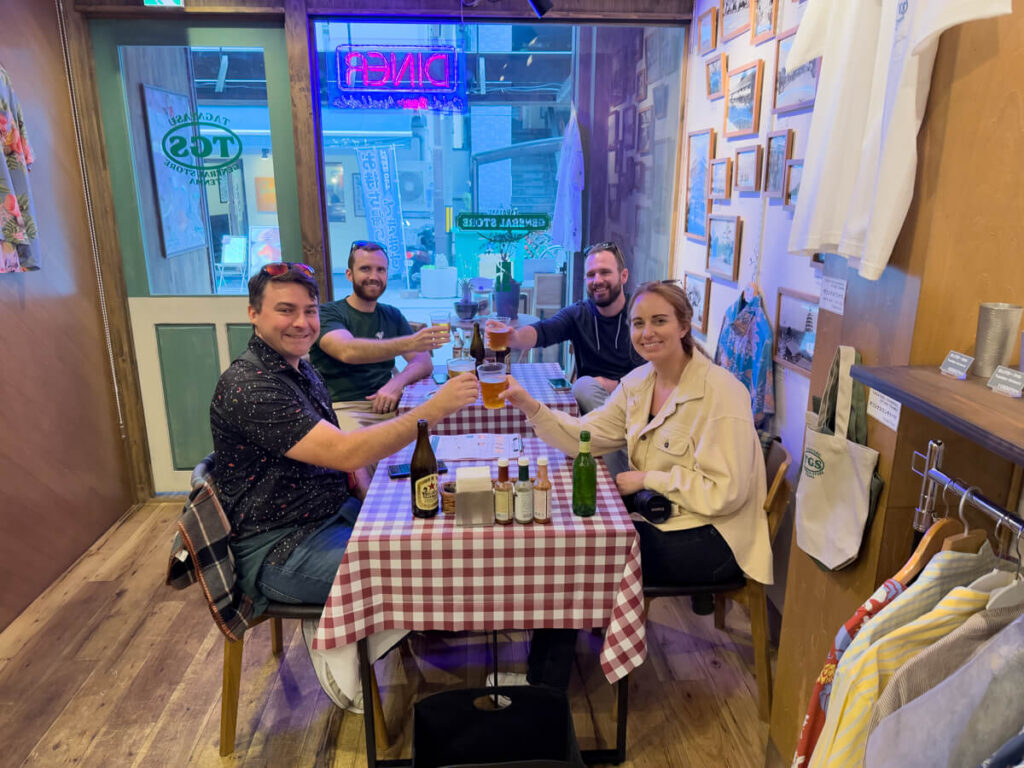
We ended up at a tiny noodle shop for lunch, followed by an unexpected hour-long chat with the owner of a tucked-away café called Tagayasu General Store. He even printed out a photo of us to keep — so adorable!
This area is also a great place to pick up souvenirs that aren’t mass-produced. You might find handmade chopsticks, vintage kitchenware, or quirky postcards.
If you’re looking to squeeze in a bit of culture before dinner, the Osaka Museum of Housing and Living is just a short walk away. It features a life-sized Edo-period street scene you can walk through, offering a glimpse into Osaka’s past before the era of neon and skyscrapers.


Evening: Omakase Dinner in Umeda
After a full day of history and neighborhood wandering, spend your first evening in Osaka experiencing the nightlife of Kitashinchi.
From Tenjinbashi-suji, it’s a short ride or walk back to the Kita/Umeda area, home to the upscale Kitashinchi neighborhood.
Known as Osaka’s business and nightlife district, this area is packed with intimate restaurants, cozy cocktail bars, and lantern-lit alleys hiding some of the city’s best food and drinks, without the crowds of Dotonbori. I think it’s one of Osaka’s best kept secrets!
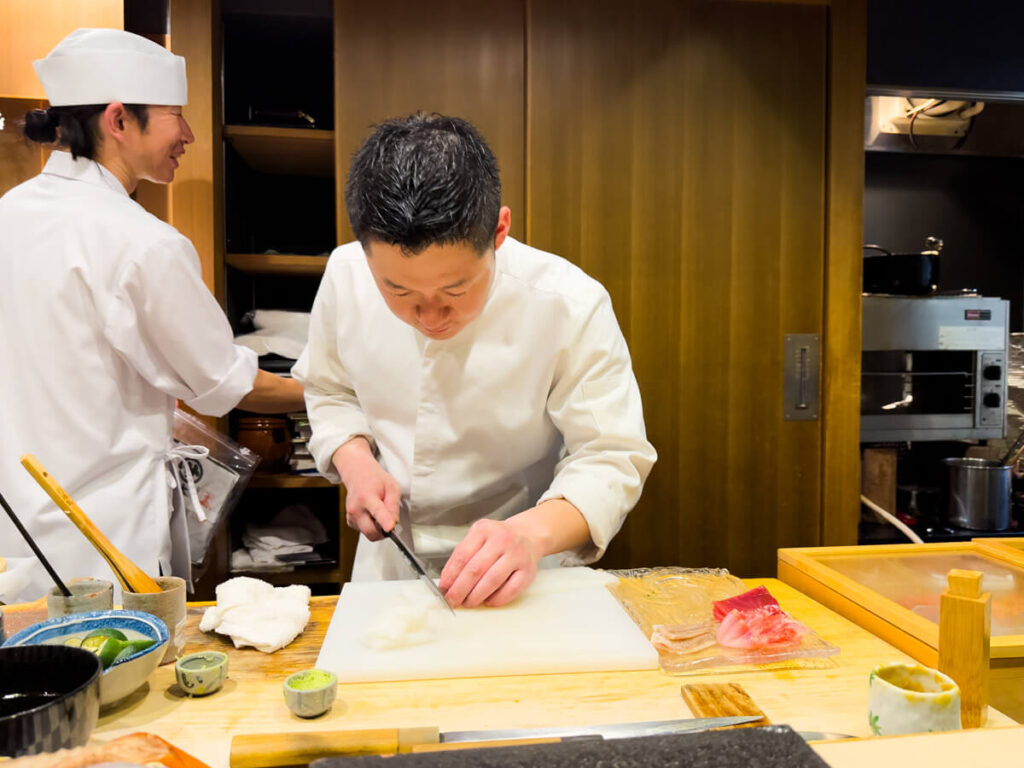
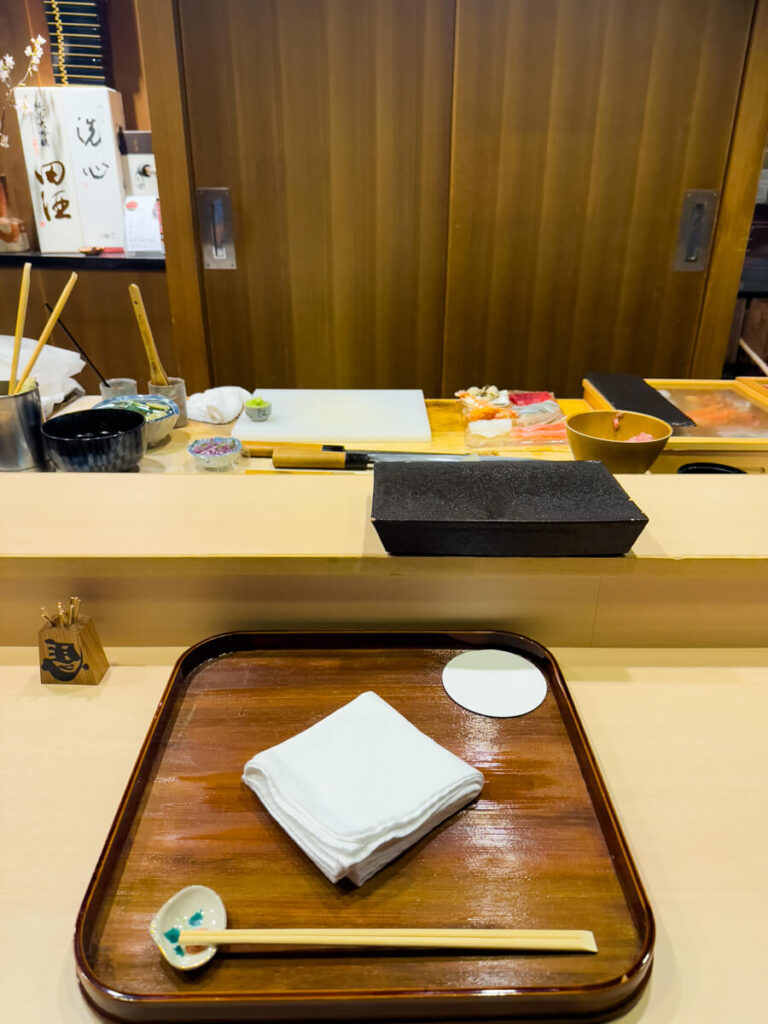
For dinner, we booked an omakase meal at Sushi Kazumi, a tiny but elegant sushi counter tucked away on the edge of Kitashinchi. If you’ve never done omakase before, it simply means “I’ll leave it up to you”. The chef decides on the menu and prepares each piece right in front of you, using seasonal ingredients and incredible precision.
Reservations are a must, especially during busy seasons!
After dinner, take some time to explore the winding side streets of Kitashinchi. Many of the best bars here are unmarked or tucked away on the upper floors of nondescript buildings.
One of our favorites was Kenraku Lemon (or as I call it, Lemon Bar), a tiny spot down a lantern-lit alleyway and a menu of shochu cocktails made with fresh, seasonal fruit.
Whether you’re in the mood for a whiskey highball, a quiet wine bar, or just a peaceful stroll, Kitashinchi is the perfect way to wind down your first day in Osaka.
Day 2: Universal Studios Japan or Day Trip to Nara
Option 1: Universal Studios Japan
If you’re a theme park fan (or a Nintendo fan), today’s the day to head to Universal Studios Japan!
To get there, take the JR Osaka Loop Line and transfer at Nishikujo Station to the Yumesaki Line, which will drop you at Universal City Station. From there, it’s just a short walk to the park entrance.
This was a must-do on our itinerary because I spent 6 weeks in Japan working on the Super Nintendo World at USJ. Returning to see the land completely finished felt like a dream!
Not to mention the entire park is a dream for immersive experiences and has some of the most elaborate themed areas, including Super Nintendo World, The Wizarding World of Harry Potter, Jurassic Park, Minion Park, and more. USJ has several rides and shows that are exclusive to Japan!
You’ll find The Flying Dinosaur, a high-speed suspended coaster in the Jurassic Park zone that’s not available anywhere else in the world. There’s also Hollywood Dream Backdrop, a backward roller coaster, and Space Fantasy, a spinning indoor coaster that’s uniquely Japanese.


Universal Studios Japan gets very crowded, so buying your tickets in advance is a must, and I highly recommend getting an Express Pass too.
Express passes are the easiest way to get access to Super Nintendo World, which has timed-entry. There are a variety of Express Passes available depending on what you want to ride!
If your Express Pass doesn’t include timed entry to Nintendo, you’ll need to use the USJ official app on the day of your visit to grab a timed-entry slot as soon as you enter the park. These fill up fast, and walk-up availability is rare.
We booked everything through Klook, which makes it easy to purchase your park entry ticket and the Express Pass tier of your choice.
P.S. I break down all of this down wayyy more in my Complete Guide to Visiting Universal Studios Japan! Check it out for details on how to purchase the right tickets, when to buy, etc.
Super Nintendo World is absolutely the star of the park – you’ll feel like you’ve stepped right into the Mushroom Kingdom! There are spinning coins, Koopa shells, Goombas, and even punch blocks (all of which I worked on)!
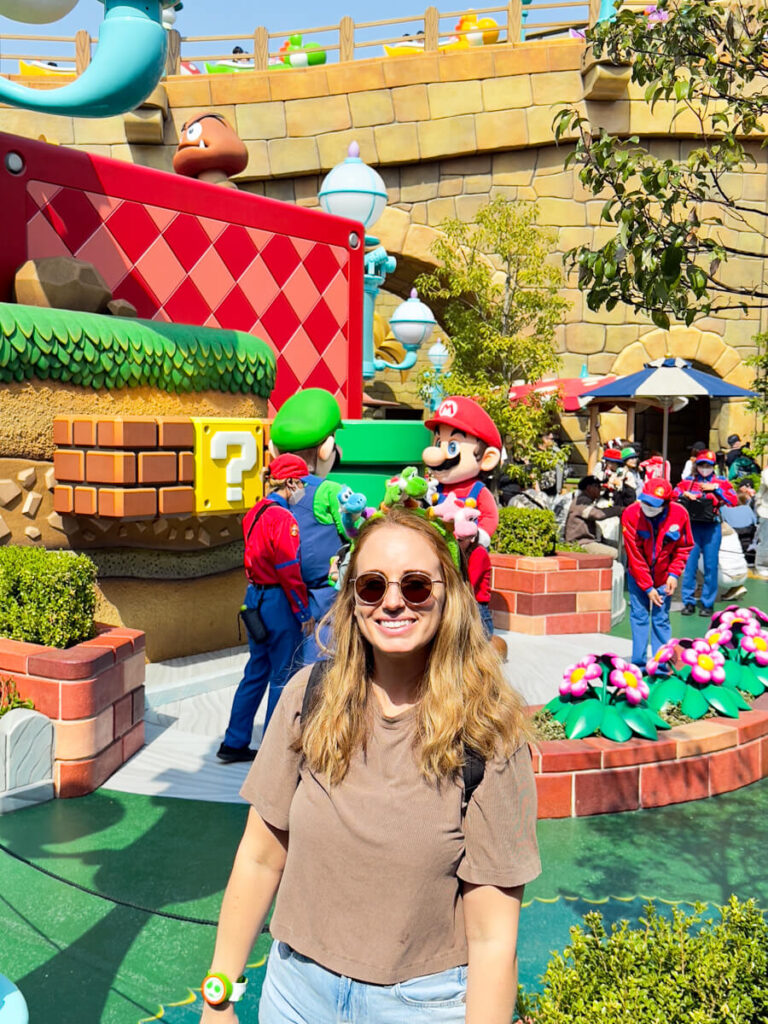
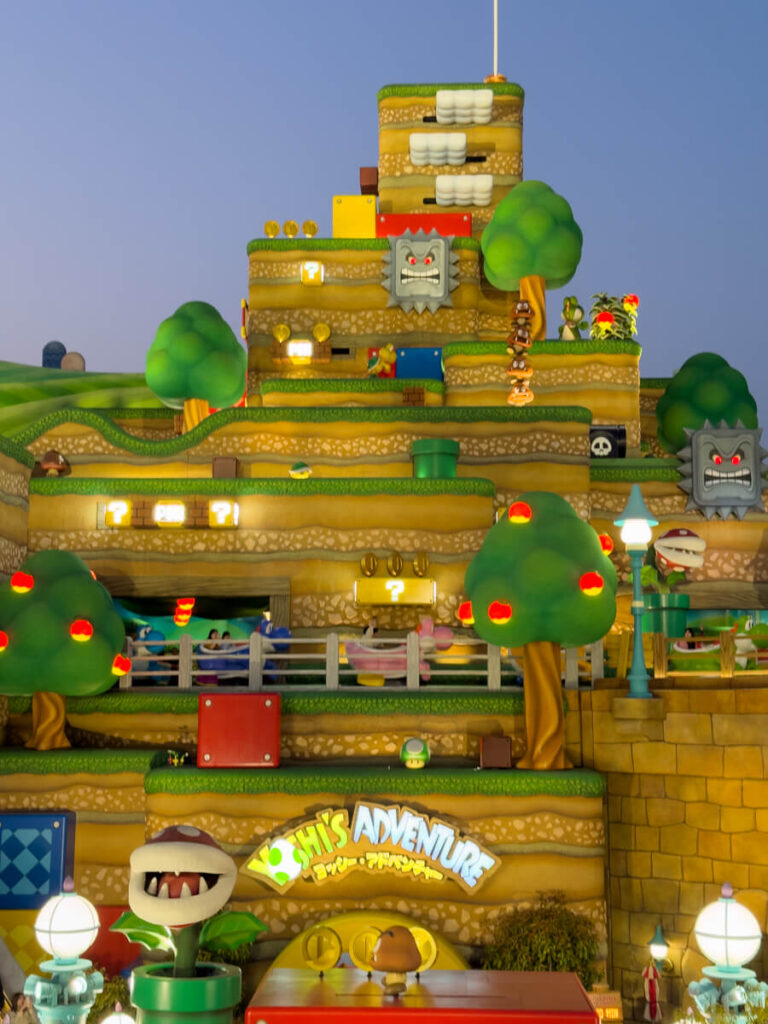

Make sure to purchase a Power-Up Band when you arrive (themed to your favorite character of course!) to participate in the mini-games throughout the park and collect points as you ride each attraction: Mario Kart Koopa’s Challenge, Donkey Kong Mine Cart Madness, and Yoshi’s Adventure!
The Wizarding World of Harry Potter is also worth the hype, with its snow-covered Hogsmeade and the Hogwarts Castle with the Black Lake in front of it. It’s not as big as the one in Orlando, but they did a life-like Buckbeak that was so cool!
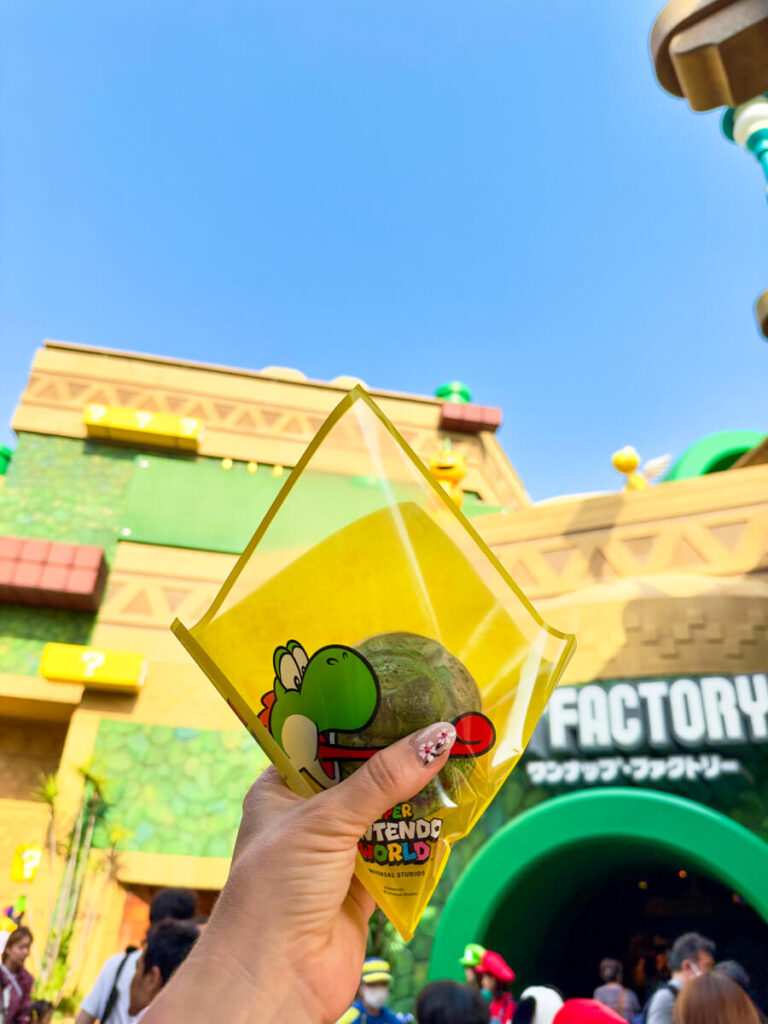
Food inside the park is expensive but fun and well-themed, like Minion burgers, green Koopa calzones, and of course, Butterbeer. However, the strangest thing I ate were actual shark nuggets that I thought were going to be just chicken!
Overall, USJ is truly one of the best theme parks in the world, and definitely worth a stop while in Osaka if you’re a fan!
Remember to book your tickets in advance to avoid ticket lines and sold-out Express passes! 🎢


Option 2: Day Trip to Nara
If theme parks aren’t your thing, or you’re craving a more cultural experience, Nara is an easy and super fun day trip from Osaka!
The fastest way to get from Osaka to Nara is to take the Kintetsu Nara Line from Osaka-Namba Station to Yamato-Saidaiji Station. Or, you can take the JR Yamatoji Rapid Service from Osaka Station’s Platform 1, which is an extension of the Osaka Loop Line.
Both routes take around 40–50 minutes depending on where you’re starting from. If you’re using a JR Pass, stick with the JR route. Otherwise, Kintetsu-Nara Station drops you closer to the main sights.
Once you arrive in Nara, head east from the train station towards Nara Park (just look for the large green area on Google Maps!).
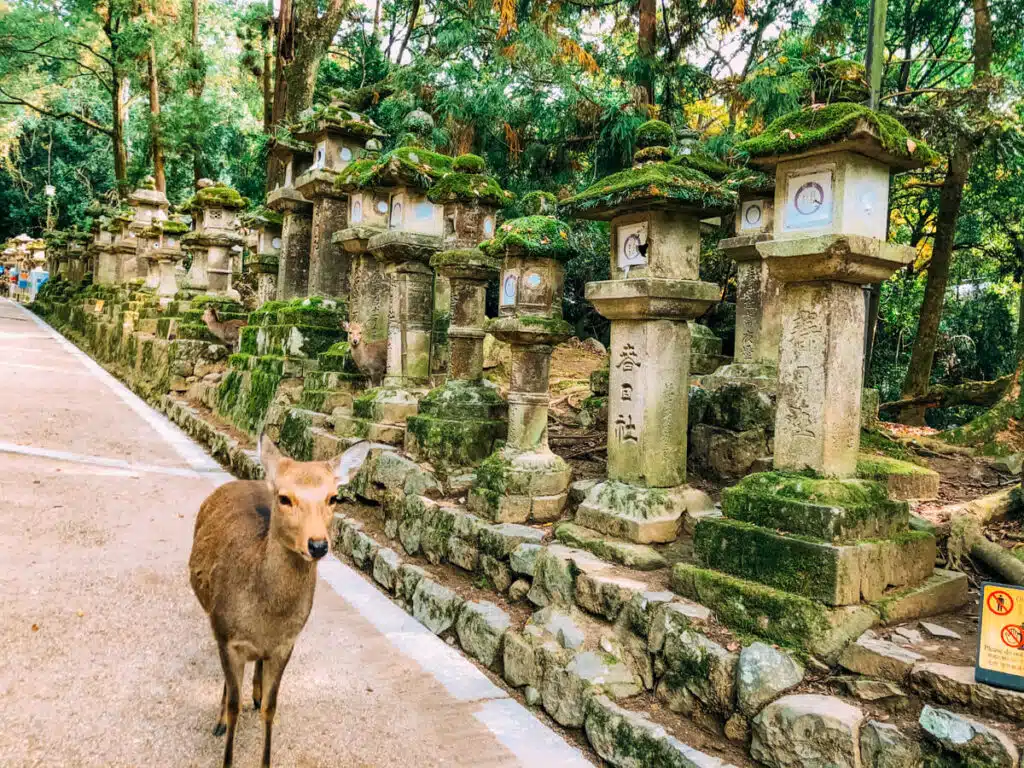
As you get closer to the park entrance, you’ll be greeted by Nara’s most famous residents: the free-roaming deer! These sacred deer are considered messengers of the gods and are now a symbol of the city.
You can feed them special crackers sold by vendors throughout the park, but be warned — they are very bold and know exactly what’s in your hands!
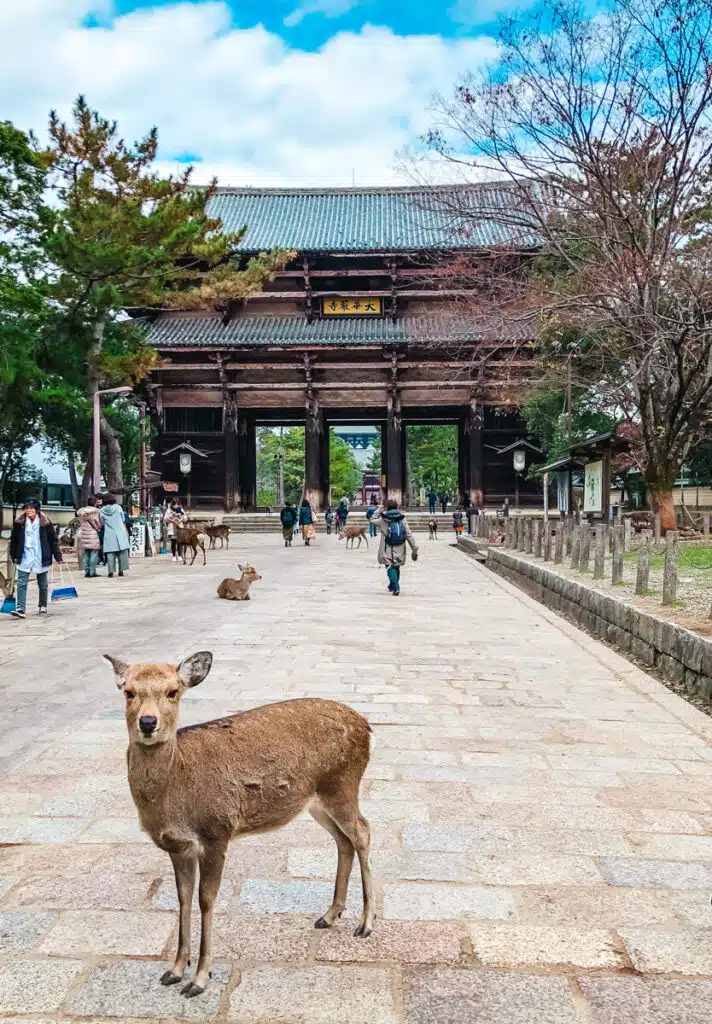
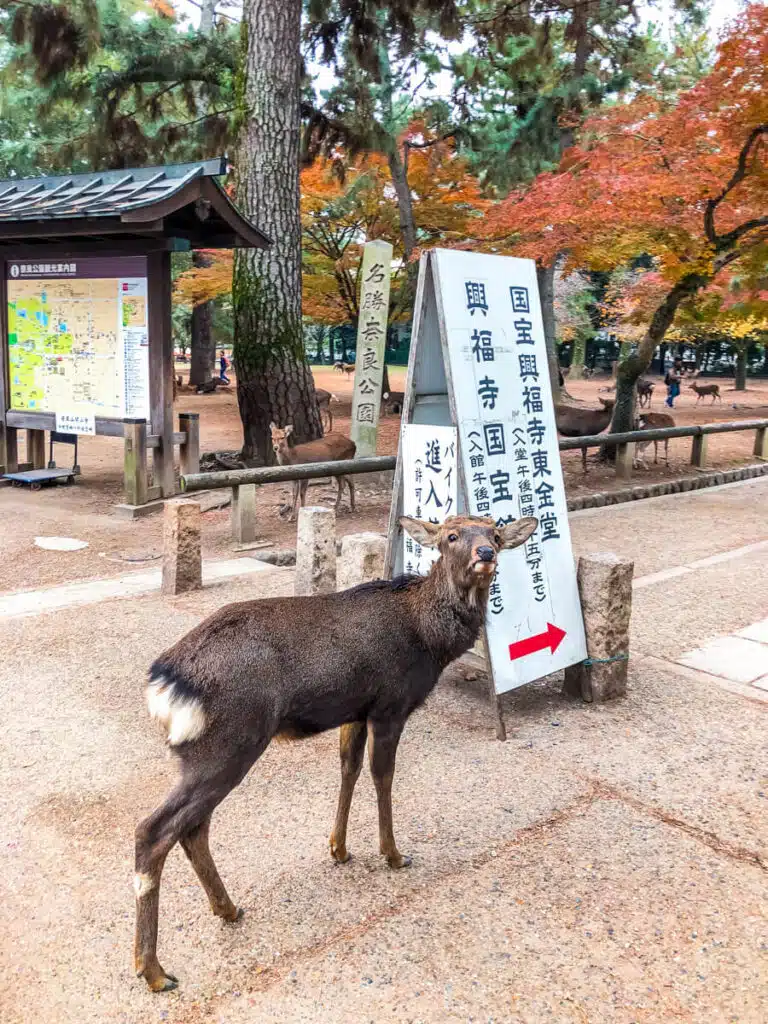
Nara Park is massive, covering over 106 square miles (277 square kilometers), so if you’re just visiting for the day, you can spend the whole time exploring the many temples, shrines, and forests within the park boundaries.
However, there are many more temples and hidden gems to see in Nara if you have more time! This post from Asia Odyssey Travel gives a great breakdown of Nara and which spots to see.
If you only have time for the highlights like we did, here is what I recommend!
Start at the famous Tōdai-ji, one of Japan’s most historically significant temples and home to the Great Buddha Hall, which houses a massive 15-meter bronze Buddha. There is a small entry fee, but it’s worth it!
Along the way, you’ll also pass through the enormous Nandaimon Gate, also known as the Great South Gate, which marks the entrance to the temple grounds.
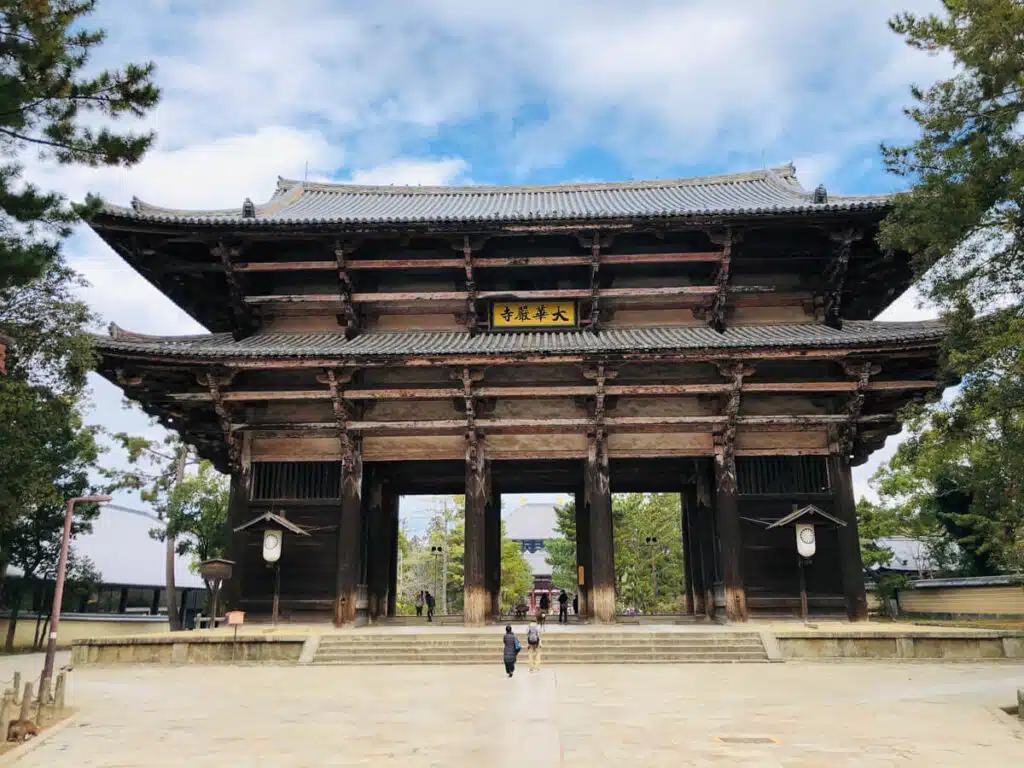
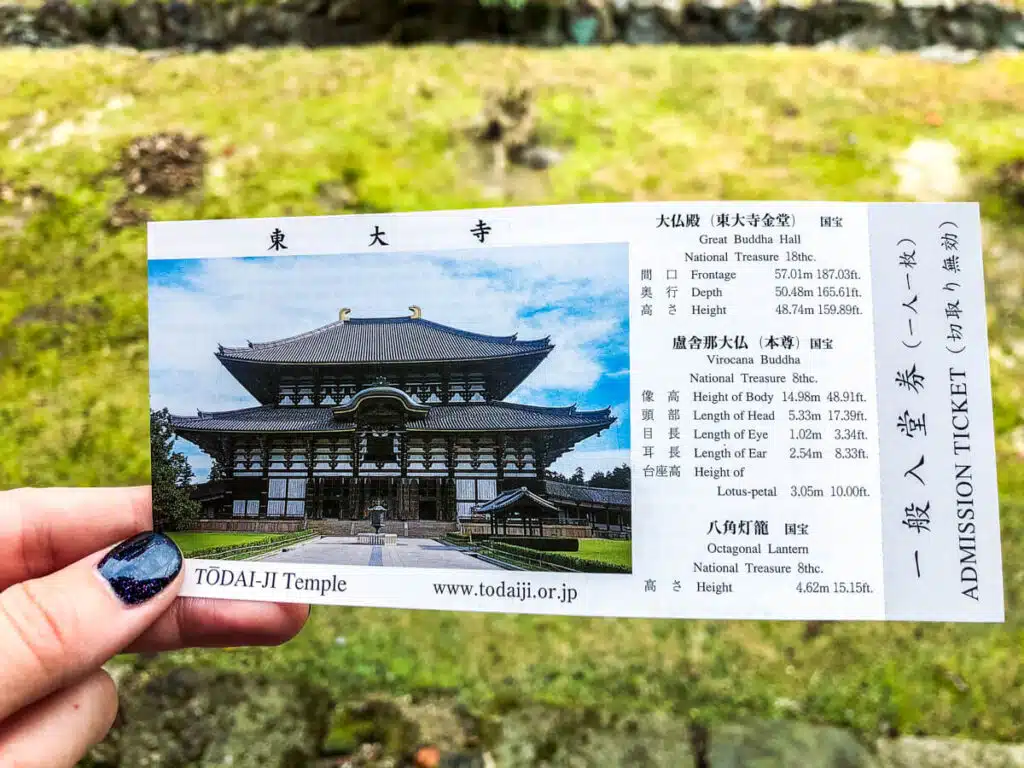
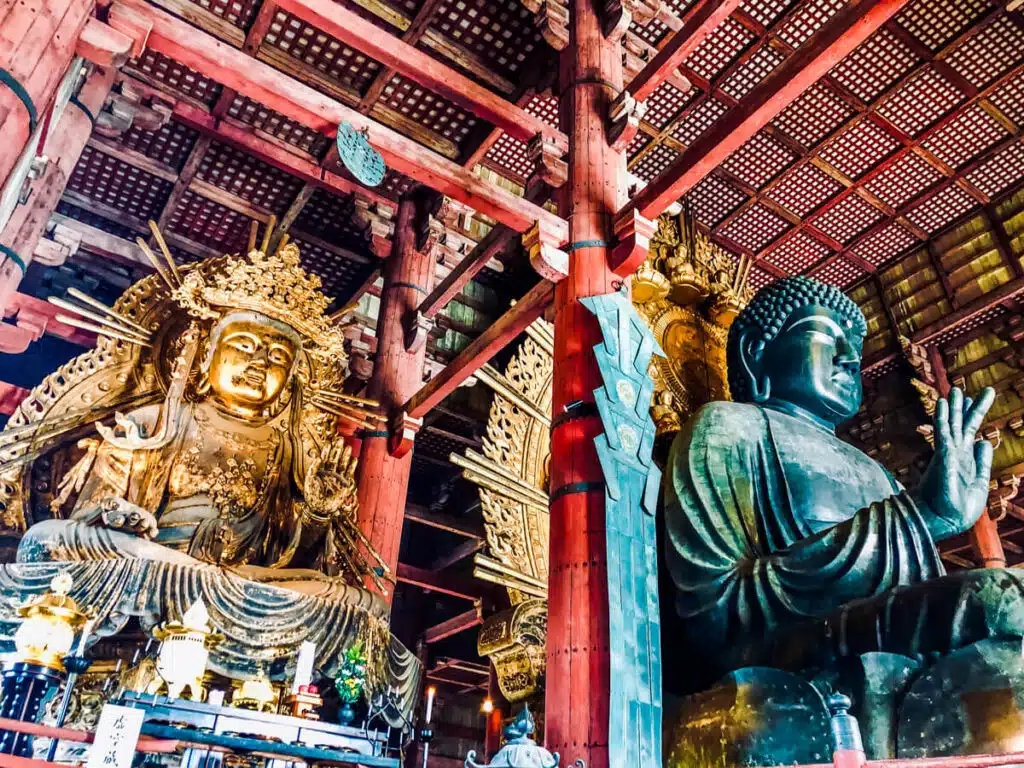
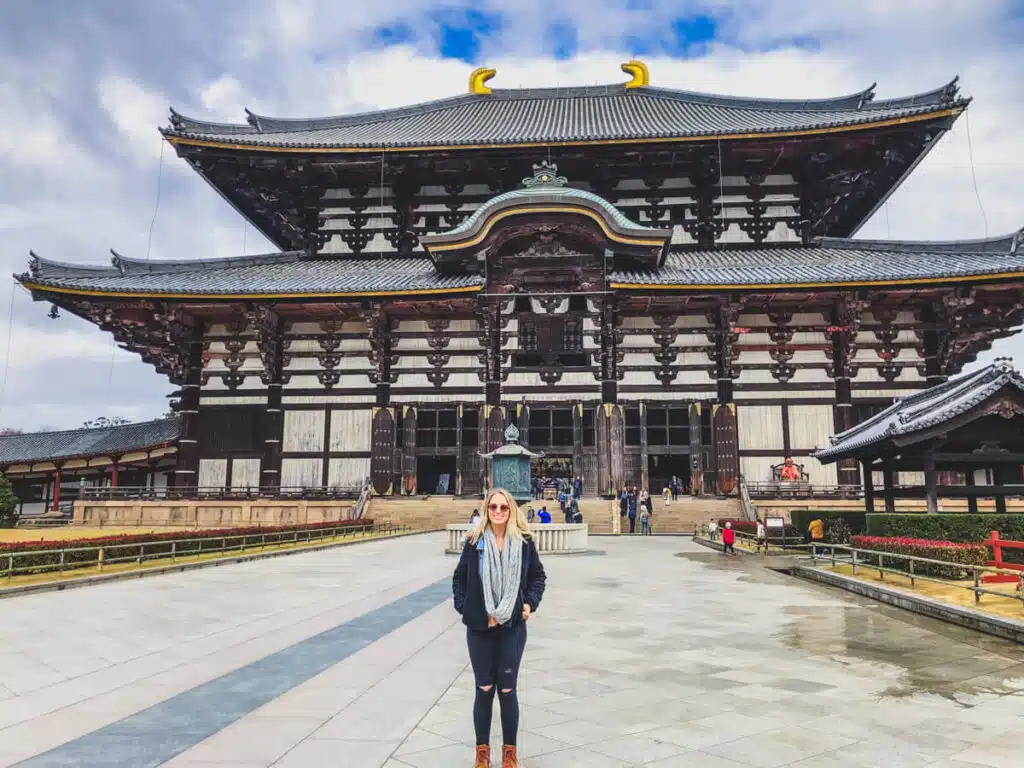
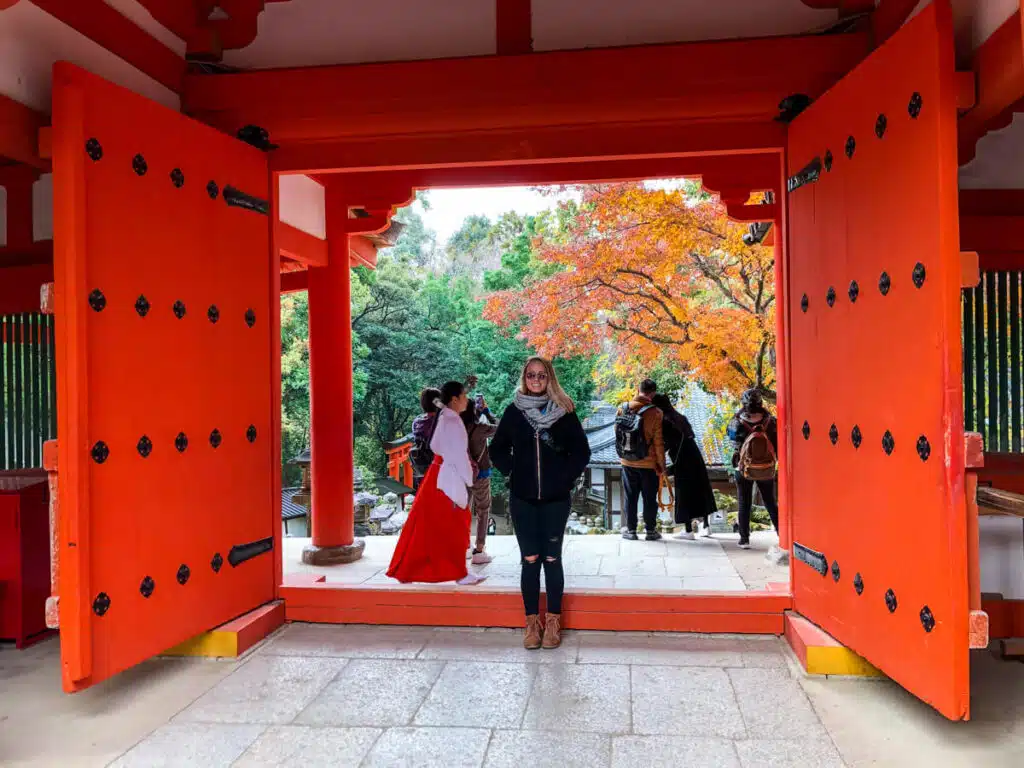
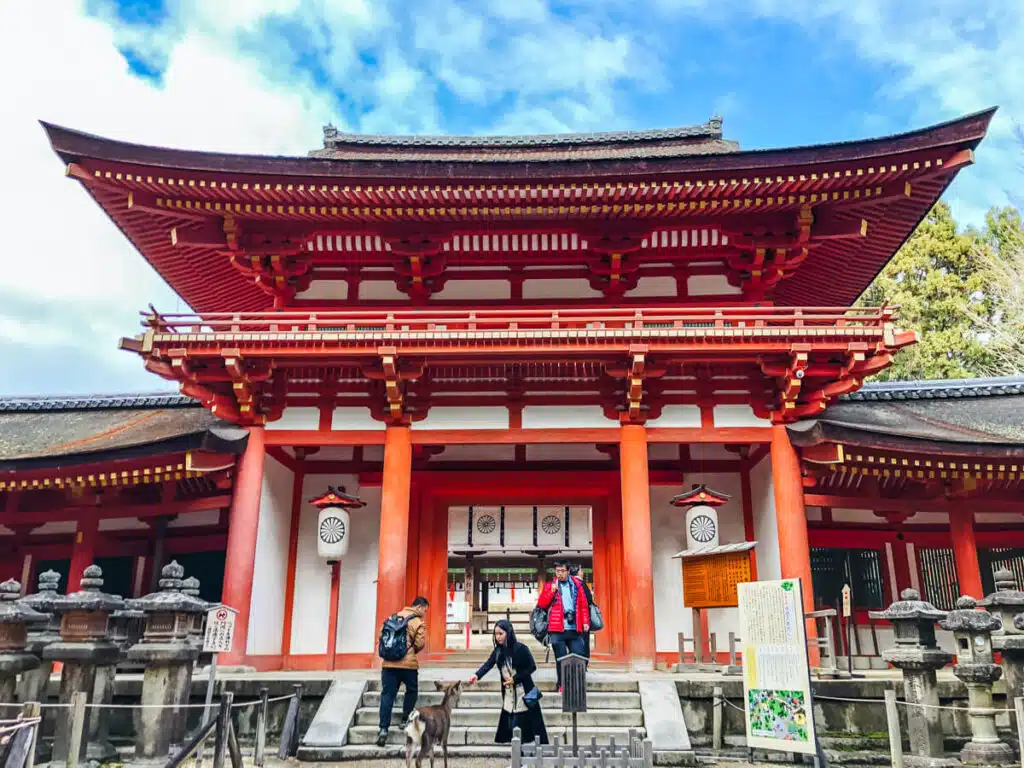
After Tōdai-ji, make your way south to Kasugataisha Shrine, Nara’s most popular shrine! You can visit the outer area for free, or venture further into the inner area for a small fee.
Our favorite part, however, was exploring the smaller auxiliary shrines along the forest path behind the main shrine area! There are many red torii gates along the way, as well as some friendly deer!
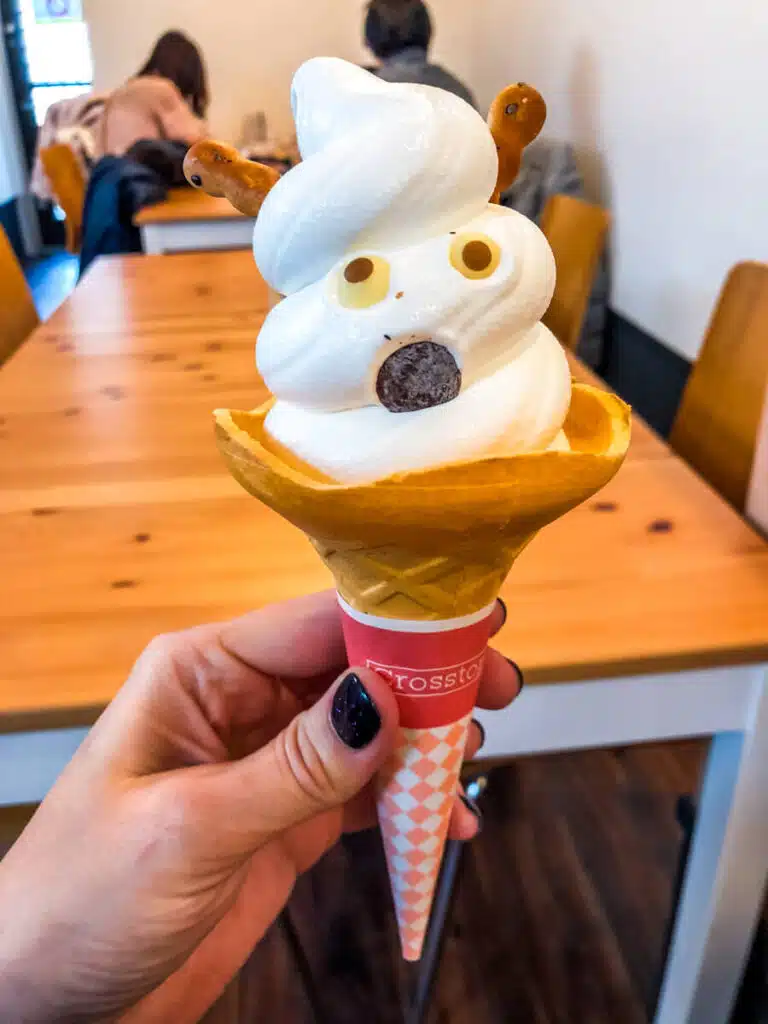
In terms of food, there are plenty of casual stands and cafes lining the streets near Nara Park – the one we visited even had deer-inspired ice cream!
On your way out of town, I also recommend exploring Higashimuki Shopping Street, a covered arcade near the Kintetsu-Nara Station with restaurants, snacks, and souvenir shops.

Day 3: Shitennō-Ji, Kuorom Market, and Dotonbori
Early Morning: Shitennō-ji Temple & Tennoji Park
Today is your last day in Osaka! And therefore will be an action-packed day so you can say goodbye to the incredible city in style.
Start your day by heading to Shitennō-ji Temple, one of the oldest temples in all of Japan!
To get here, you can hop on the Osaka Loop Line and ride it all the way to Tennōji Station, or take the Tanimachi Subway Line (purple line) to Shitennōji-mae Yūhigaoka Station.
From both stations, it’s a quick 5-minute walk to the temple! Shitennō-ji was founded in 593 AD by Prince Shōtoku, who played a key role in spreading Buddhism throughout Japan.
While the temple has been rebuilt many times over the centuries, it’s still considered the spiritual heart of Osaka.
The grounds are peaceful and open to the public for free, but you can also pay a small fee (¥300) to enter the inner temple complex and Gokuraku-jōdo Garden, a serene space designed to reflect the Buddhist concept of paradise.
After you’ve explored the temple grounds, take a walk south into Tennoji Park. This large urban park is home to beautiful walking paths, gardens, and ponds. If you’re traveling in spring, you might even catch some cherry blossoms here!
The Osaka City Museum of Fine Arts is also located in the park, if you’re in the mood for a quick cultural stop.


Late Morning: Shinsekai and Nipponbashi
From the southern end of the park, continue walking west toward Shinsekai, a retro neighborhood unlike anywhere else in Osaka.
Shinsekai means “New World”. The area was originally designed to resemble cities like Paris and New York, and it’s now a nostalgic throwback to the early 20th century.
You can’t miss the centerpiece of Shinsekai: Tsutenkaku Tower, a steel observation tower that offers panoramic views of the city.
Entry is optional, but the streets surrounding it are filled with neon signs, quirky restaurants, and local shops that are worth exploring. Be sure to grab some kushikatsu, Osaka’s famous skewered and deep-fried street food!
From Shinsekai, walk north about 10–15 minutes to reach Nipponbashi Den-Den Town, Osaka’s version of Akihabara in Tokyo. This district is a haven for fans of anime, manga, retro gaming, and Japanese pop culture.
You’ll find a mix of giant electronics stores, tiny used game shops, and arcades filled with vintage cabinets, claw machines, and themed photo booths.

Afternoon: Kuromon Ichiba Market
From Nipponbashi Den-Den Town, it’s an easy 10–15 minute walk to Kuromon Ichiba Market, one of Osaka’s most iconic food destinations!
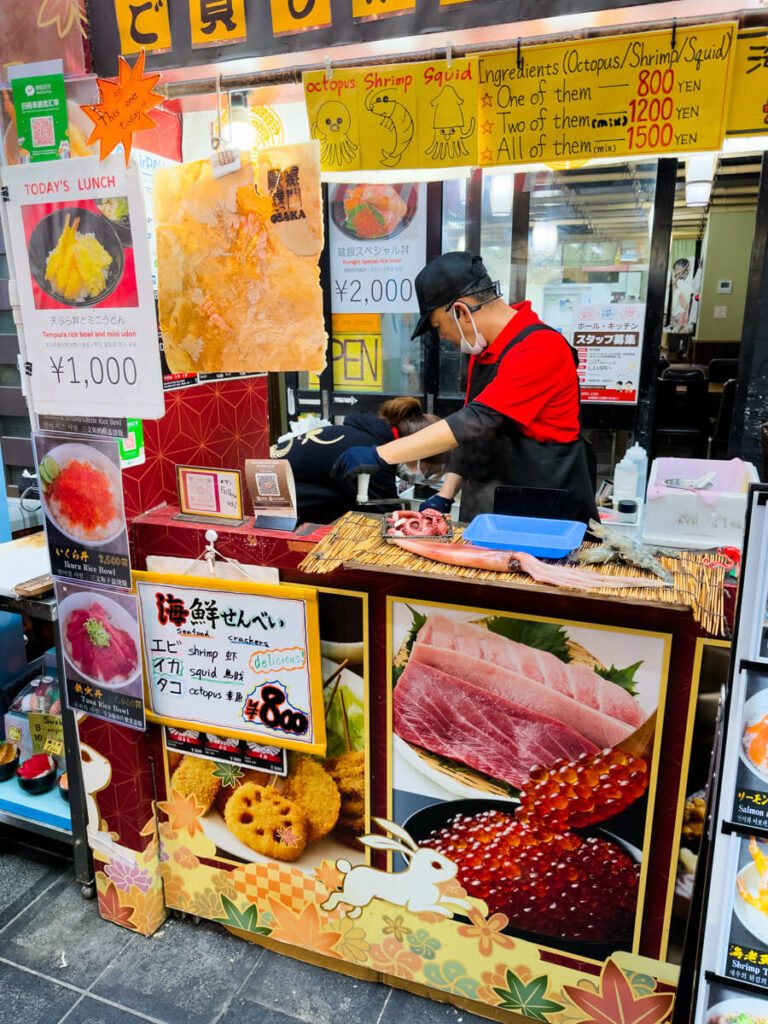
Stretching nearly 600 meters, Kuromon is a covered arcade filled with hundreds of stalls and vendors selling everything from raw scallops and pufferfish to the famous melon bread and seafood crackers.
To make the most of our visit, we booked a Kuromon Market food tour, which I highly recommend! Our guide gave us details on the market’s long history, insight into Osaka’s food culture, and introduced us to foods we never would have tried on our own!
At the end of the tour, we also visited the nearby Sennichimae Doguyasuji Shopping Street, a narrow covered street filled with shops specializing in Japanese cookware and kitchen tools. This is where my husband decided to buy a Japanese knife as a souvenir!


Evening: Dotonbori & Shinsaibashi
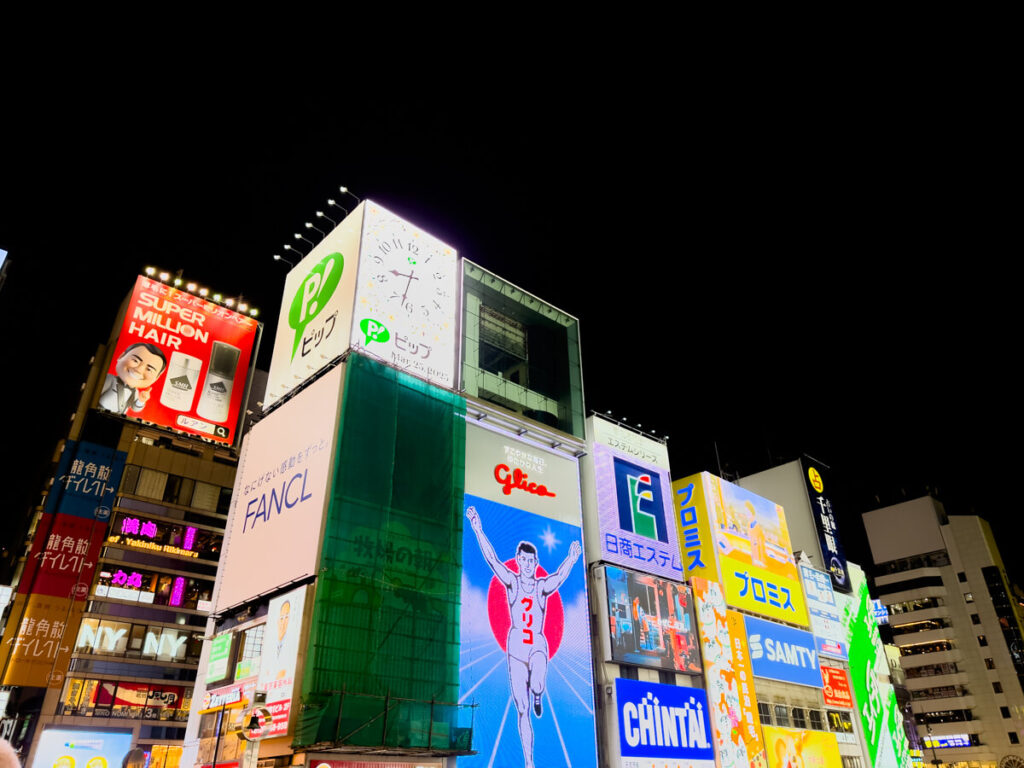
As the sun sets, head over to Dotonbori, the most iconic neighborhood in Osaka! Here, neon lights reflect off the canal and giant animated signs hang above food vendors in the streets. The entire area is sensory overload but in the best way possible!
To see the heart of Dotonbori, head to the Ebisu Bridge, where you’ll get the iconic view of the riverfront and the Glico running man sign!
One block south of the river, you’ll find the famous Dotonbori street, which is packed with food vendors, tourist shops, and lots and lots of people (especially at night).
This is one of the most popular places to try takoyaki – Osaka’s famous fried octopus balls! But there’s a ton of other street food around here, everything from dumplings to sushi to okonomiyaki.
Or, if you want a sit-down dinner, we had the best sushi of our life at Kaminari Sushi. There’s also the famous Zauo Fishing Restaurant, where you can catch your own dinner and eat inside a boat.


This area is packed with things to do – you could seriously spend several days exploring the surrounding streets and never run out of activities.
Our favorite thing we did was exploring a multi-level arcade center and trying out the famous Japanese claw machines. And don’t miss the famous Mega Don Quijote store behind the Ebisu Tower Ferris Wheel for late-night snacks, beauty products, Kit Kat souvenirs, and pure sensory overload.
If you’re in the mood to slow down for a bit, you can also hop on a Dotonbori river cruise, which runs in the evenings and offers a new perspective of the district’s glittering lights from the water without the crowds!
Make sure to also cross the river and explore Shinsaibashi-suji, the massive covered shopping arcade that stretches for blocks. You’ll find everything from trendy fashion shops and character stores to luxury boutiques and quirky pop-ups.
Stay here as long as you want to on your last evening, soaking in the chaos and saying goodbye to Osaka!
Final Thoughts
I hope this 3-day itinerary helped you get a sense of just how much Osaka has to offer, from peaceful temples and retro neighborhoods to next-level street food. There’s a reason it’s one of my favorite places in Japan!
And yes, while it is a big city, it has a completely different vibe than Tokyo and still deserves a spot on your Japan itinerary!
But if you don’t quite have three days to dedicate to Osaka, I get it! I also have a One Day Osaka Itinerary that’s perfect for travelers who are short on time but still want to hit the highlights of this incredible city!
And now that you know you’re visiting Osaka, make sure to check out my full guide on Where to Stay in Osaka (coming soon!), which compares the two most popular neighborhoods in town and which I think is best!
Read more blog posts about Osaka, Japan below! ⬇️🏯
Detailed 3 Day Osaka, Japan Itinerary For First-Timers!
How To Spend One Day In Osaka: An Action-Packed Itinerary
How To Get From Osaka Airport (KIX) To The City Center
Where to Stay in Osaka, Japan: Umeda vs Namba Breakdown!
20 Incredible Things To Do In Osaka, Japan!
Visiting Universal Studios Japan: Your Ultimate Guide
Don’t forget to pin this post for future planning!