20 Incredible Things to Do in Osaka, Japan!
Looking for the best things to do in Osaka but not sure where to start? I get it.
Most Japan itineraries focus heavily on Tokyo and Kyoto, and Osaka sometimes feels like the “extra” city people squeeze in.
But after spending six weeks living in Osaka while working at Universal Studios Japan, plus going back again with my husband, I can confidently say this city deserves way more attention! And spending an extended period time in Osaka allowed me to explore both the classic main attractions and the more off-the-beaten-path experiences.
Which types of activities you choose to add to your itinerary will depend on the rest of your Japan plans. So, I’ve compiled a list of all my personal must do’s, so you can choose the right ones for you!
Whether you have one day or 3 days in Osaka, these are the spots I’d prioritize if I were planning my first trip to this city!
Top Osaka Experiences to Book in Advance
Short on time? These are the experiences I personally recommend booking ahead of your trip — either because they sell out, save time, or are just 1000% worth planning for!
🎢 Universal Studios Japan + Express Pass
Super Nintendo World, Harry Potter World, and so much more! If this is on your must-do list, book your park tickets (and ideally an Express Pass) in advance. Read my full USJ Guide here!
🏯 Osaka Castle Skip-the-Line Ticket
One of the city’s most iconic landmarks. Pre-booking lets you skip the ticket line and head straight to the top-floor observation deck!
🍣 Kuromon Market Food Tour
The easiest way to try pufferfish, wagyu, sushi, and Osaka street snacks without guessing what to order. I loved having a local guide here!
🥢 Omakase Sushi Experience
An intimate, chef-led sushi dinner where you sit at the counter and eat each piece as it’s prepared. One of the most memorable meals I’ve ever had in Japan.
⚔️ Samurai Experience or Cultural Workshop
Dress in traditional armor, learn basic sword techniques, and dive into Japan’s samurai history. A fun, immersive cultural activity beyond temples.
Food Experiences in Osaka
Osaka is often called Japan’s Kitchen, and after spending six weeks living here, I completely understand why!
When I was living in Osaka, dinner wasn’t something we over planned. We’d just walk into whatever spot looked good, sit down, and trust it would be solid. And it always was!
Food isn’t just a tourist activity in this city. It really is part of the culture. Historically, Osaka was a major rice trading hub during the Edo period, and that legacy still shows up in how seriously people take what they eat.
Quality and technique matter here, no matter if you’re at a street food stand or a 5-star omakase.
As a result, there are tons of different “foodie experiences” to have in Osaka. I do recommend one or two tours to really embrace the culture and learn from a local while you’re here.
But the biggest tip I can give is just to eat as many different things as possible! You won’t be disappointed by any of them.
P.S. Flying into Osaka? Check out my guide on how to get from Kansai Airport (KIX) into Osaka in this guide!
Dotonbori Street Food Crawl
If you’ve started researching Osaka, you’ve probably seen photos of Dotonbori.
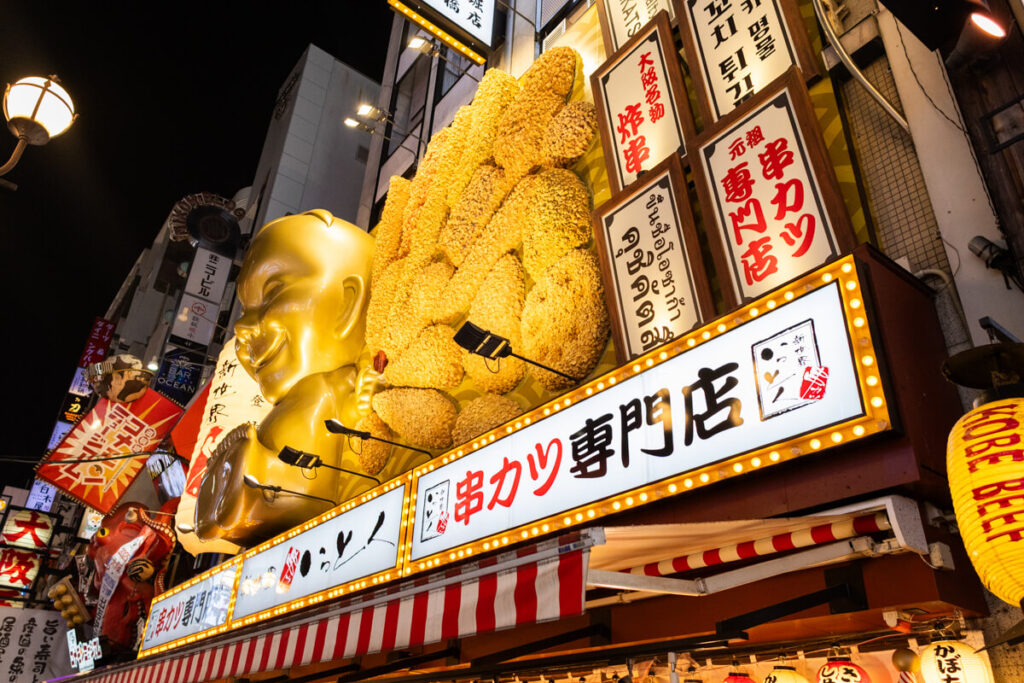
This is the stretch of canal lined with glowing billboards, giant moving crab signs, and tons of food stands, restaurants, and stores. It’s basically Osaka’s version of Times Square, but with way better food and shopping.
Besides visiting Dotonbori because it’s a popular landmark of Osaka, the primary thing to do here is EAT.
The main Dotonbori Street one block south of the river is where I recommend starting. Make sure to prepare your senses for the overwhelming amount of smells, sounds, and sights.
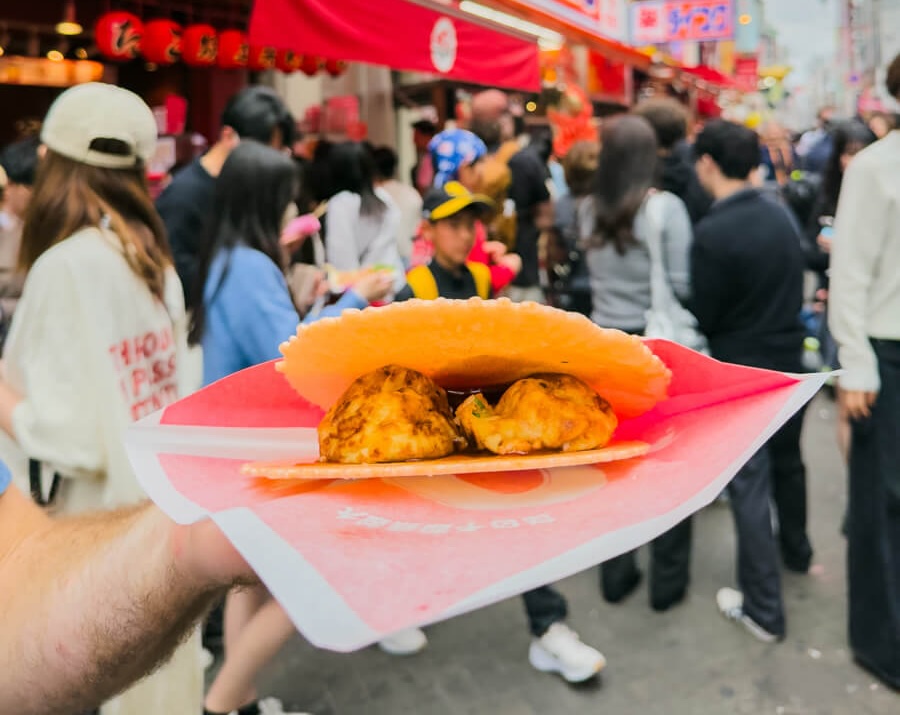
This is the best place to try takoyaki, Osaka’s famous octopus balls! Watching them get flipped by the takoyaki experts is half the fun. Make sure to let them cool off before biting into them, or you’ll burn your tongue like I did haha.
You’ll also see plenty of spots serving okonomiyaki, a savory cabbage pancake layered with pork or seafood and topped with sweet sauce and mayo.
These are the two top Osaka street foods you have to try, but there are plenty of other options around Dotonbori too. I highly recommend just wandering through the area and trying whatever piques your interest!


Kuromon Ichiba Market
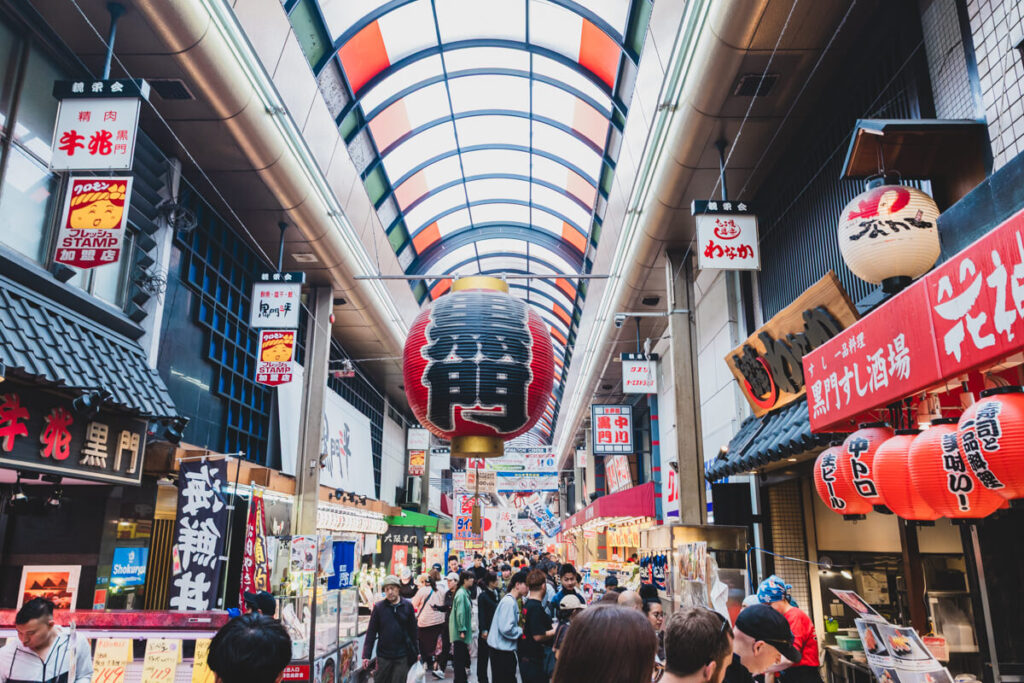
Just a short walk from Dotonbori, Kuromon Ichiba Market is also worth a stop, as it feels very different from Dotonbori!
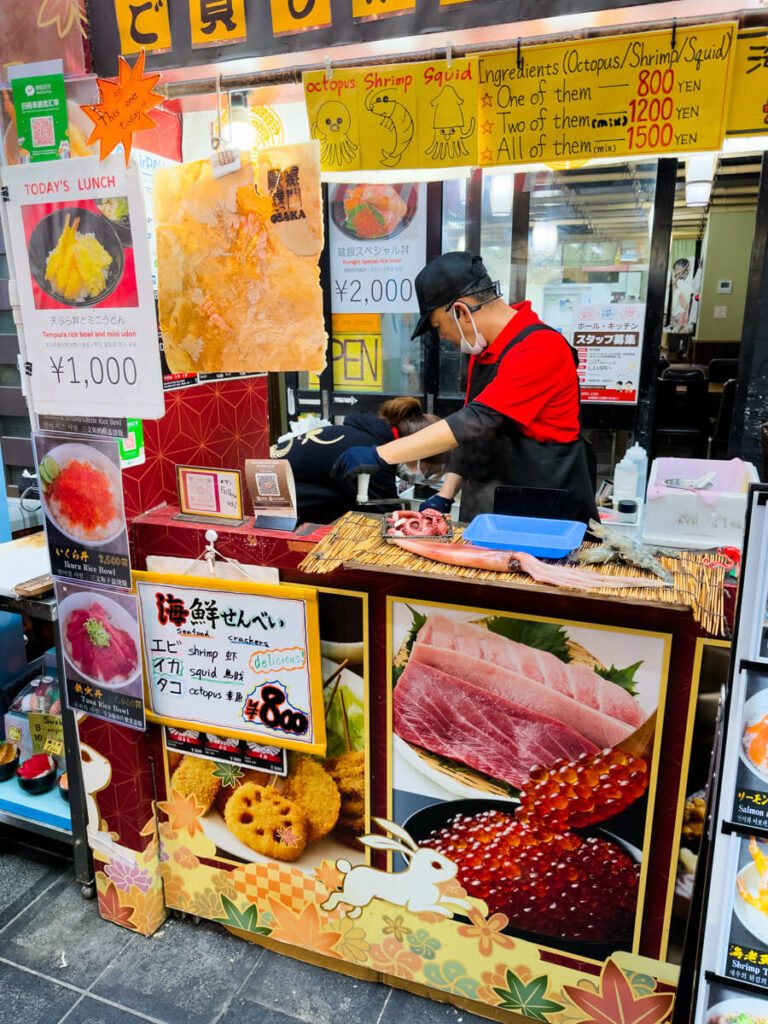
Where Dotonbori is flashy and chaotic, Kuromon is more focused and food-driven. It’s a covered market that stretches for several blocks, filled with seafood vendors, wagyu stalls, fruit stands, and small counters where you can eat right on the spot.
When we came back to Osaka as tourists, we decided to book a food tour here because we wanted to actually understand what we were eating (and make sure we were trying the best spots!).
And I’m so glad we did!
Our guide walked us through Osaka’s food culture, explained the difference between regional ingredients, and introduced us to things I probably wouldn’t have confidently ordered on my own, like pufferfish sashimi (which that can be poisonous if not handled properly)!
Kuromon has been around for over 100 years, and historically it’s been known as “Osaka’s Kitchen” because local chefs and restaurant owners sourced their ingredients here!
Whether you visit here on a tour or go on your own, come hungry and take your time!


Omakase Sushi Experience
If you’re going to splurge on one meal in Osaka, make it omakase!
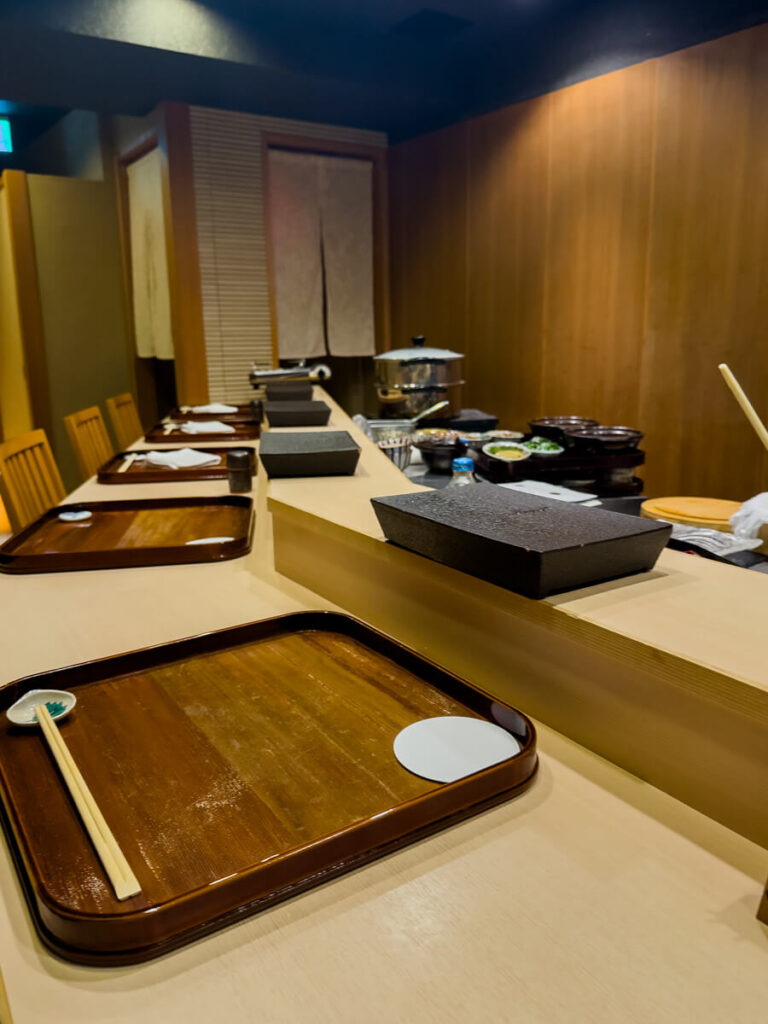
Omakase translates to “I’ll leave it up to you.” Basically, you don’t order anything specific. Instead, you sit at a small counter, usually with 6-8 seats, and the chef prepares each piece of sushi (and other types of food) one by one, placing it directly in front of you.
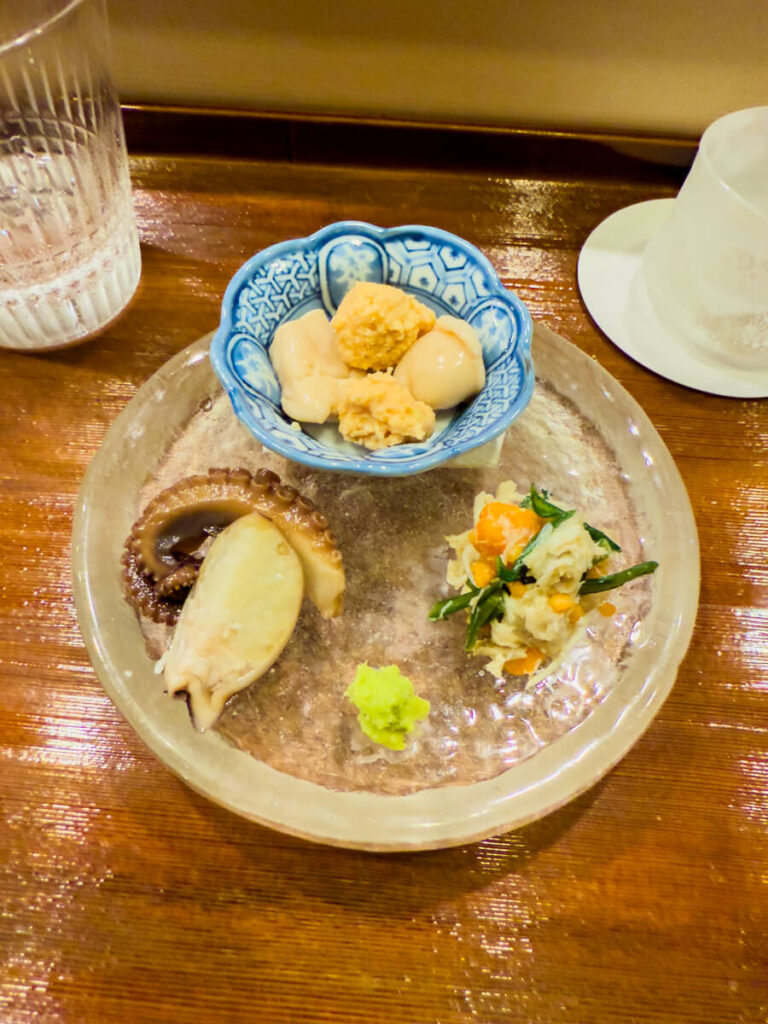
We found a very reasonably priced omakase in the Kitashinchi area of Umeda called Sushi Kazuma, and it ended up being one of the most memorable dinners of our entire Japan trip!!
Each portion was mouth-watering and delicious, even if we didn’t know what every item was. The sous chef did have a translator machine to help explain what we were eating, but some foods like milt (Google that one) got lost in translation.
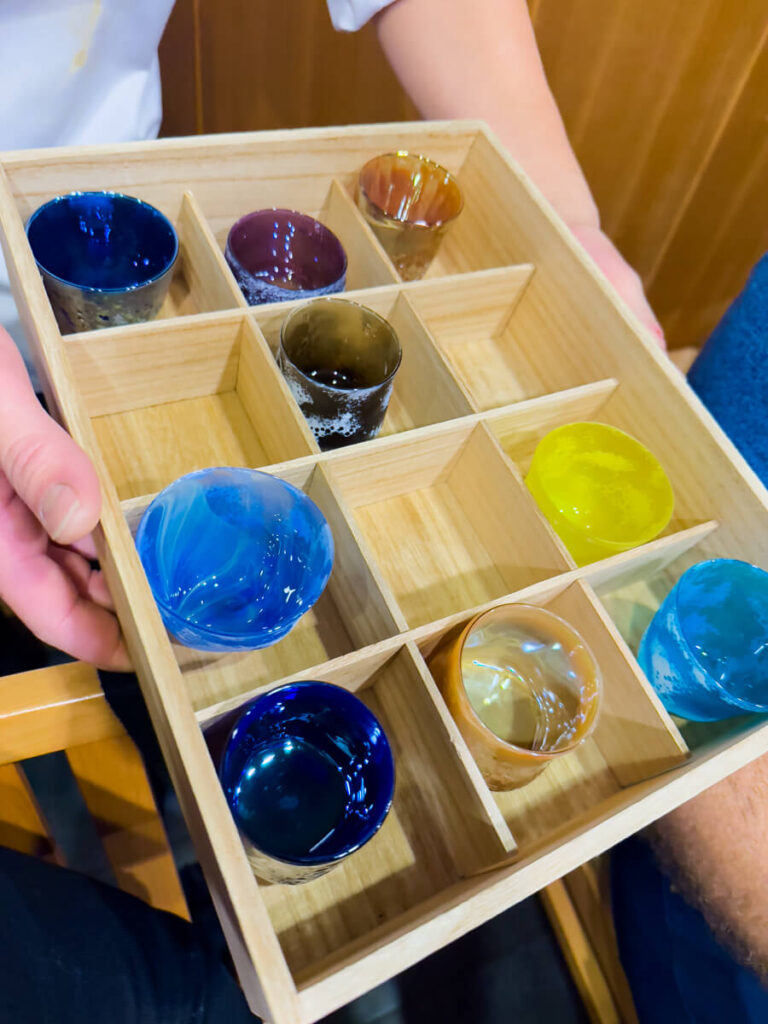
Besides the food and the adorable chef, one of my favorite parts was the selection of sake glasses the sous chef brought out in a masu box, where we got to choose whichever one we wanted (and they were all stunning!).
Omakase is definitely more expensive than conveyor belt sushi or street food, but in my opinion, it’s worth doing once while you’re in Osaka. If you do decide to do it, make sure to book in advance, as spaces are very limited!!
Yakiniku Dinner
If sushi isn’t your thing, or you just want something different, you have to go out for yakiniku one night while in Osaka!
Yakiniku is Japanese-style grilled meat, where you cook thin slices of meat right at your table over a small charcoal or gas grill. It’s definitely my favorite type of dinner to do in Japan!
We did this almost every other night during our 10 days in Japan, and it’s the perfect option if you don’t want to eat seafood every night! You can order different cuts of beef (and sometimes pork or chicken), grill them yourself, and dip them in different sauces before eating.
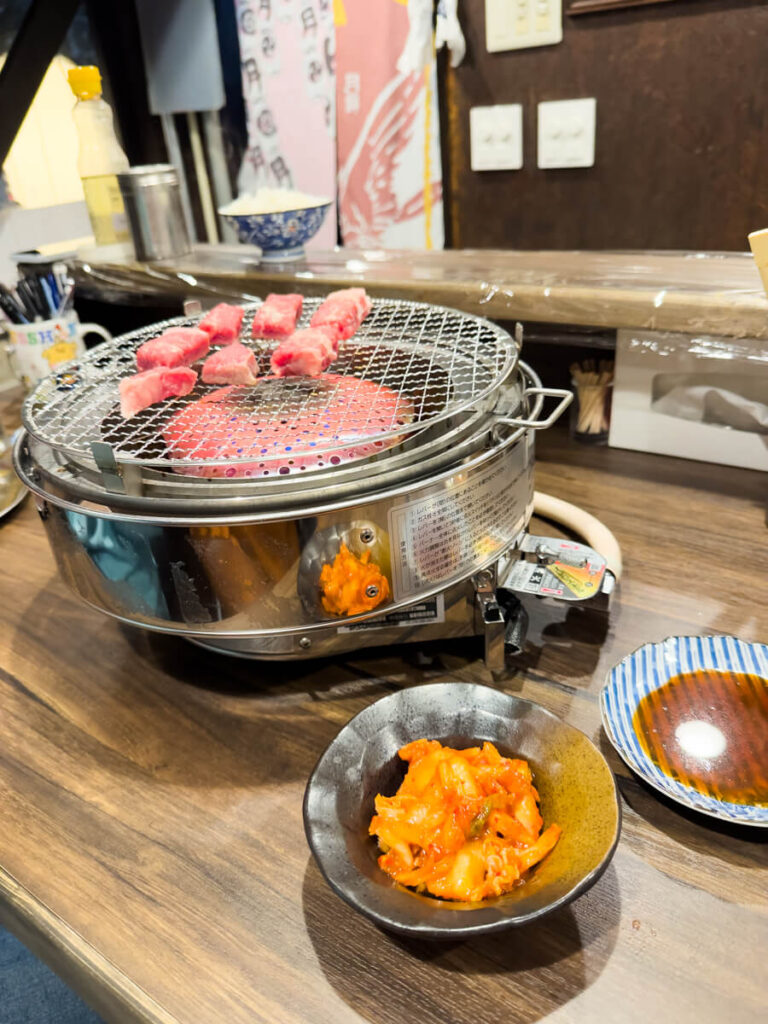
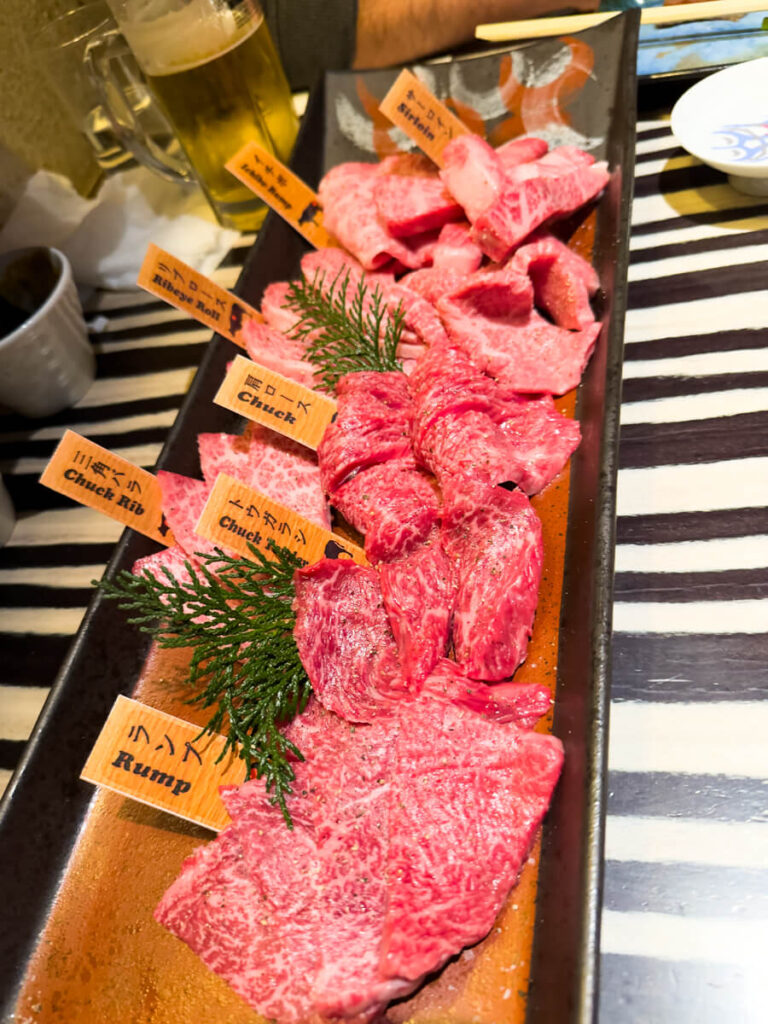
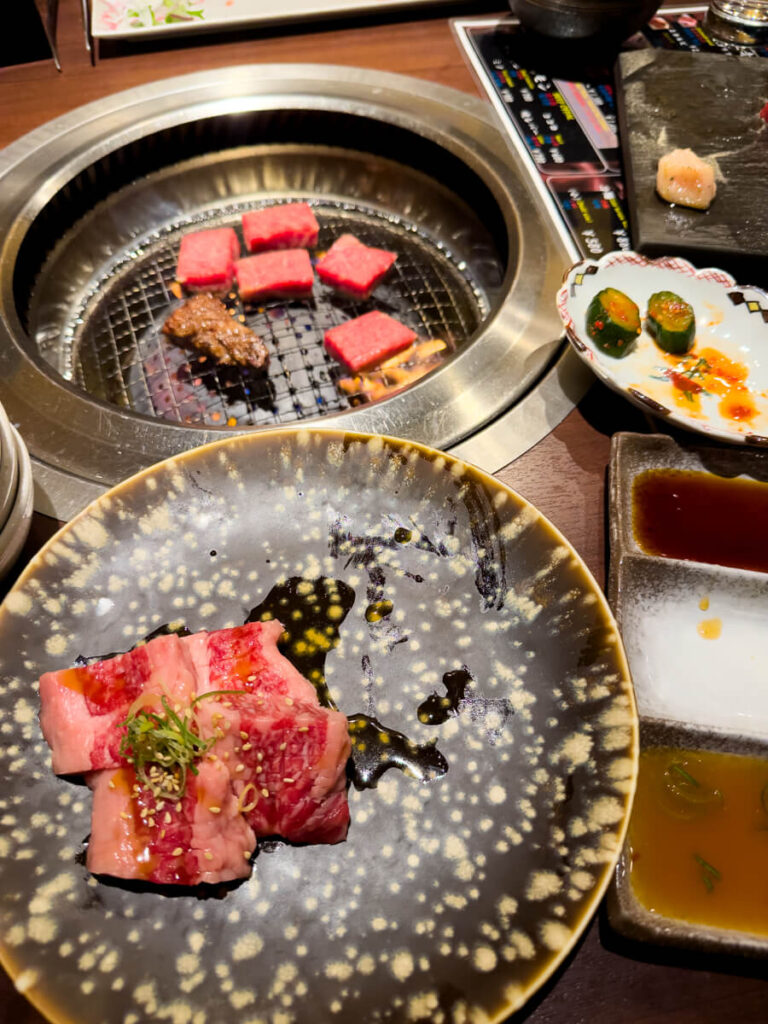
Plus, there will be other side options like rice, salad, kimchi, edamame, and more!
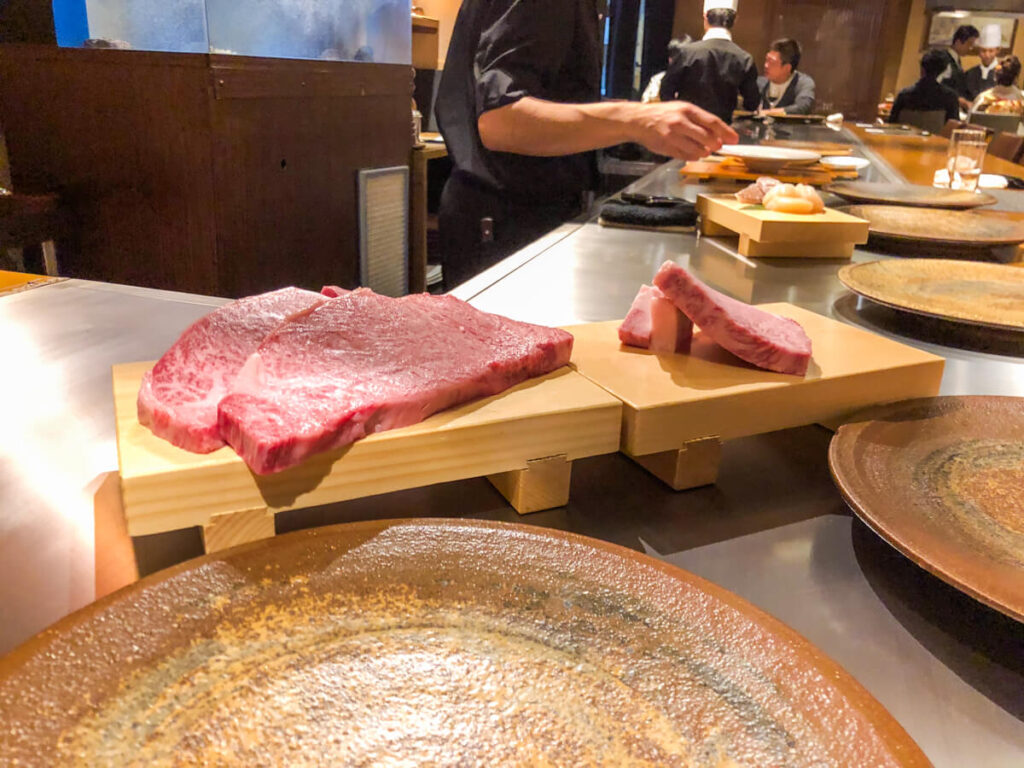
If you see wagyu on the menu, I highly recommend ordering at least one portion. This Japanese beef is famous for a reason! It truly melts in your mouth thanks to its signature fat marbling.
There are literally thousands of yakiniku restaurants in Osaka, so don’t feel stressed about finding the perfect one!
But if you need some help, you can get access to my favorites (plus 50 other bars, restaurants, parks, and photo spots in my Osaka map!!!)

OSAKA MAP
Discover my top Osaka hidden gems!
$6.99
Save time and energy researching and get access to my private list of 50+ bars, restaurants, parks, shopping spots, and more! Most of which I don’t mention on my blog😉
Izakaya Hopping in Osaka
An izakaya is basically a Japanese-style pub where you order small plates to share, like skewers, sashimi, fried bites, seasonal specials, and pair them with beer, sake, or a highball.
While I personally love the Kitashinchi area near Umeda for its cozy, tucked-away spots, there are incredible izakayas all over Osaka. Namba, Ura-Namba, and even random side streets near train stations are filled with tiny places you might not notice on first glance!
If you’re feeling overwhelmed or unsure about popping into these on your own, you can also book an izakaya bar crawl tour with a local!
We actually did this during our time in Kyoto, but Osaka is a great place to do it too!
On the tour, a local guide takes you to hidden izakayas you probably wouldn’t feel comfortable walking into as a foreign. It’s perfect if you want to explore with someone who knows the neighborhood, avoid tourist traps, and learn more about Osaka’s drinking culture along the way!
Iconic Landmarks in Osaka
Osaka might be known for food and nightlife, but there are still a few classic landmarks that are absolutely worth your time!
This is personally why I love Osaka. You can explore a 16th-century castle in the morning and be back in a neon-lit arcade by dinner.
Here are the iconic stops I’d personally prioritize for your first time in Osaka!
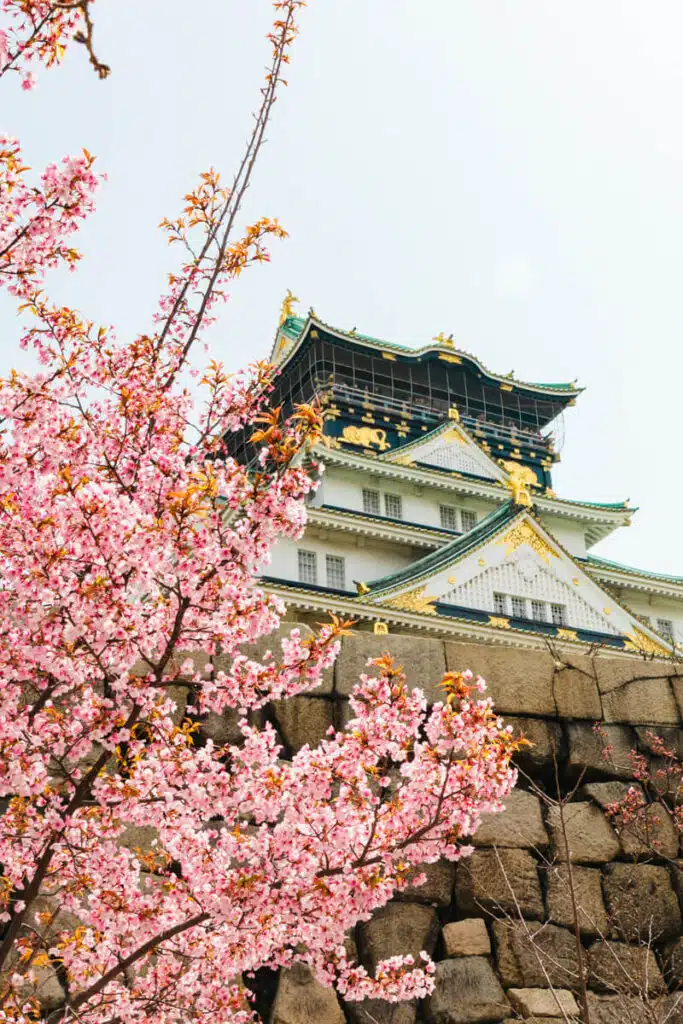
Osaka Castle
If it’s your first time in Osaka, Osaka Castle is non-negotiable!
Originally built in the late 1500s by Toyotomi Hideyoshi, the castle played a major role in Japan’s unification. It’s been destroyed and rebuilt multiple times over the centuries, so what you see today is a reconstruction, but it’s absolutely still worth visiting!
The grounds include not only the castle itself, but also an expansive public park surrounded by moats and massive stone walls. The park is beautiful year-round, with wide walking paths and open green space, but it’s especially popular during cherry blossom season in the spring and for fall foliage later in the year.
Access to the park itself is completely free, making it a great place to stroll even if you don’t plan to enter the inside of the castle!
However, I do think it’s worth exploring the inside, as you’ll find a multi-level museum dedicated to the history of Osaka Castle and the Sengoku period. Exhibits include samurai armor, weapons, historical documents, and detailed displays explaining events like the Siege of Osaka.
At the very top, there’s a 360-degree observation deck with views over the park and surrounding city skyline.
If you plan to go inside, I recommend arriving right when it opens at 9:00am, especially during peak travel seasons.
🏯 Lana’s Tip: The line gets long quickly, but booking tickets in advance on Klook allows you to skip the ticket counter and head straight inside 🎟️



Umeda Sky Building
If you want one of the best skyline views in Osaka, head to the Umeda Sky Building!
Located in the Kita (Umeda) district near Osaka Station, this unique building consists of two towers connected at the top by the “Floating Garden Observatory.”
The architecture alone makes it worth seeing, and the circular open-air deck gives you uninterrupted 360-degree views of the city!
From the top, you can see just how sprawling Osaka really is. On a clear day, you can even spot Awaji Island and the surrounding mountains in the distance.
I personally recommend going up around sunset. Watching the city shift from daylight to neon is one of the best ways to appreciate Osaka’s energy from above!
Admission to the observation deck costs $12, and while it’s not the cheapest viewpoint in Japan, it’s typically less crowded and less expensive than major observation decks in Tokyo!
If you’re staying near Osaka Station, it’s an easy add-on to your evening plans!
Tsutenkaku Tower
Tsutenkaku Tower is located in the Shinsekai neighborhood of Osaka, and the entire area feels very different from the polished skyline views in Umeda!
Originally built in 1912 (and later reconstructed after World War II), Tsutenkaku was designed to symbolize progress and modernity at the time. Today, it’s more nostalgic than futuristic, as it resembles Coney Island of New York and Paris, France in some ways.
The surrounding Shinsekai district has a retro, slightly gritty vibe with neon signs, old-school arcades, and tons of kushikatsu restaurants (deep-fried skewers that are a local specialty).
You can go up the tower for panoramic views, but even if you skip the observation deck, I still recommend walking around the neighborhood. The streets around Tsutenkaku are really what make the experience!

Theme Parks and Entertainment in Osaka
Of course, as a former Universal Studios employee, I had to include a section for theme parks and entertainment in this blog post!
While Tokyo might be better known for Disney World and TeamLab Planets, Osaka has its own varieties that are equally as impressive!
These options are especially great to do if you have young children! But even visiting Osaka as an adult, I had a blast experiencing these activities.
Universal Studios Japan
If you’re into theme parks, Universal Studios Japan is worth dedicating a full day to!
I may be slightly biased since I spent six weeks in Osaka working on the installation of Super Nintendo World, but coming back later as a guest and seeing it fully operational was such a surreal experience.
USJ is home to Super Nintendo World, The Wizarding World of Harry Potter, Jurassic Park, Minion Park, and several rides that are exclusive to Japan.
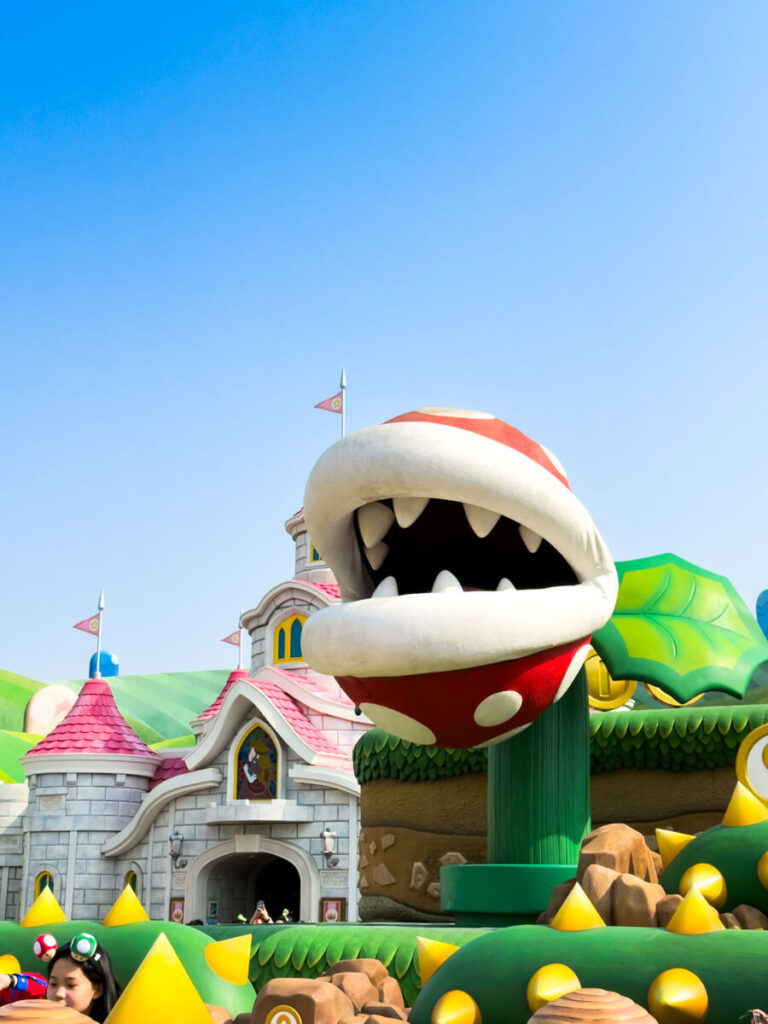
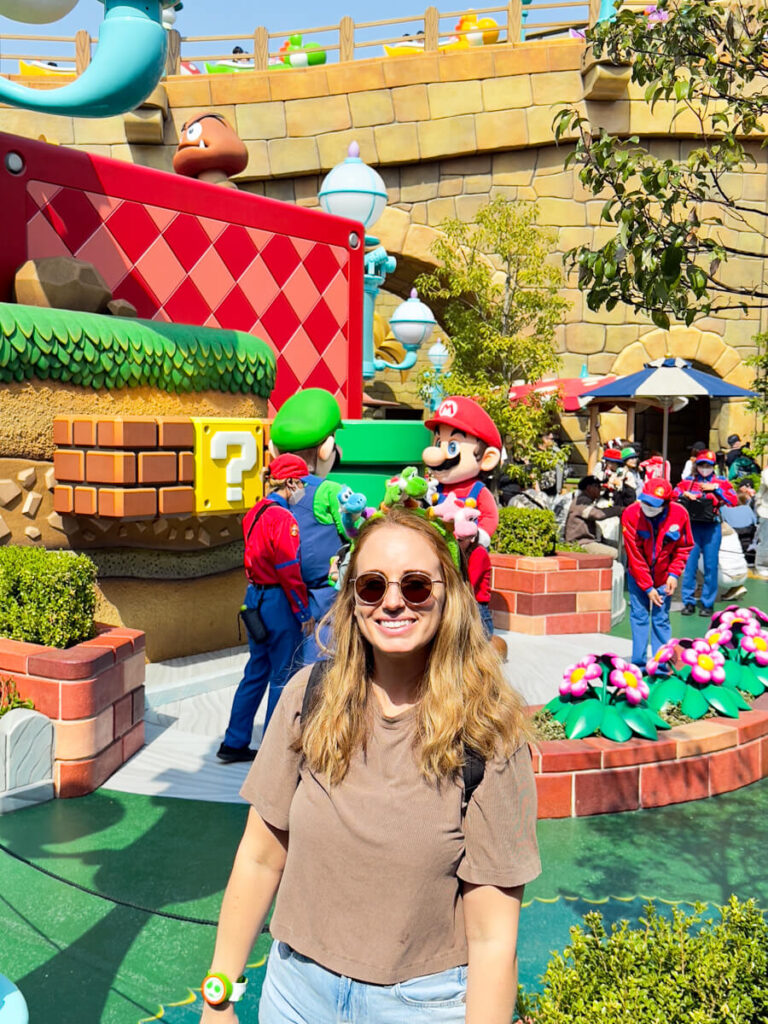
Of course, Super Nintendo World was easily the highlight of our day and where we spent the most time. It genuinely feels like stepping inside a video game!! Spinning gold coins, giant Piranha Plants, sliding mushrooms and Koopa shells, and more make the entire world of Mario and Donkey Kong come to life.
A few important tips for visiting Universal Studios Japan and Super Nintendo World:
- Buy your park tickets in advance
- Strongly consider an Express Pass, especially if visiting during peak season or if SNW is your priority
- If you don’t have an Express Pass with timed entry included, use the official USJ app immediately upon entering the park to secure access to Super Nintendo World
Read my full guide to visiting Universal Studios Japan here for more details on this confusing process!

Save this post for later!
Osaka Aquarium Kaiyukan
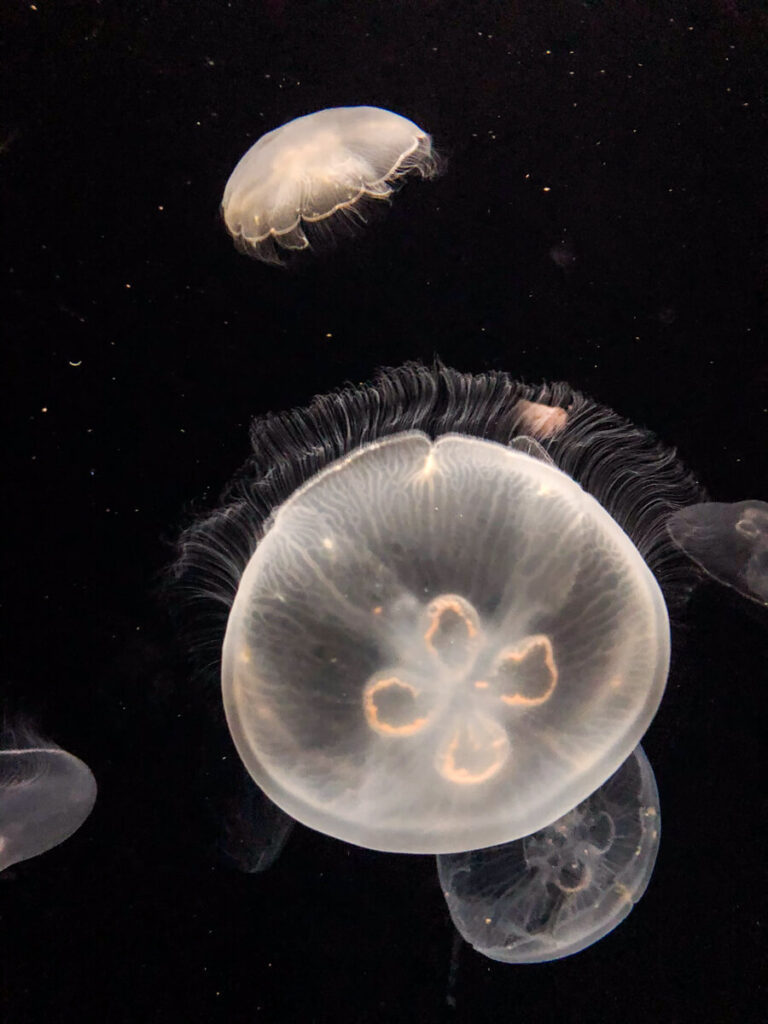
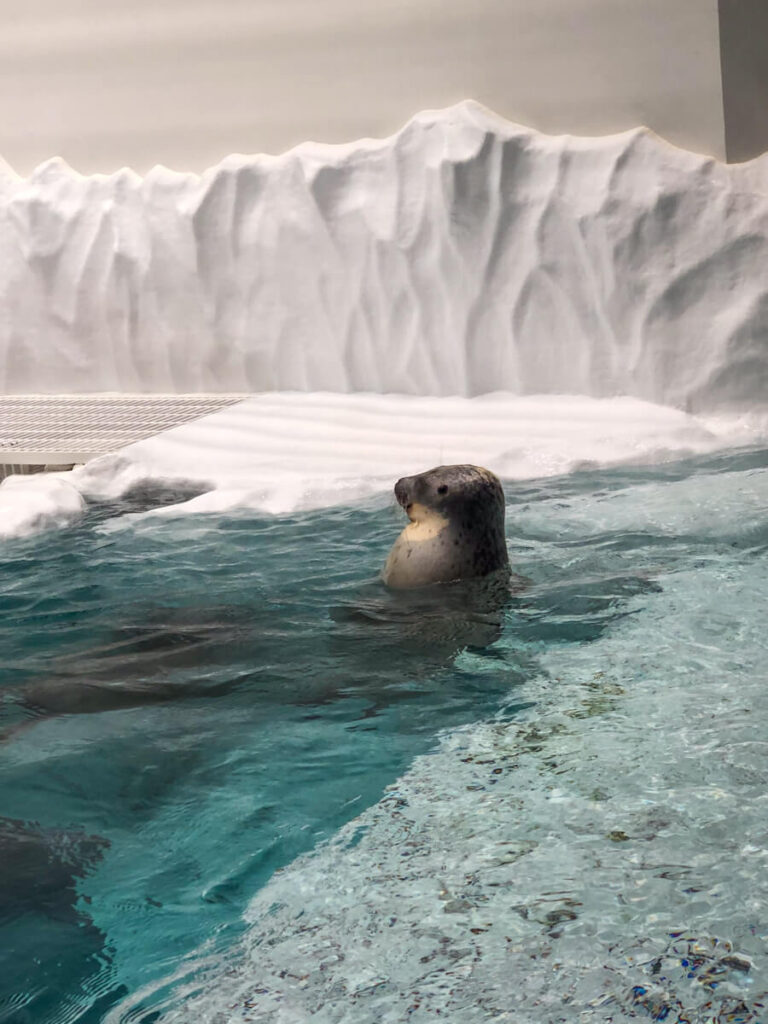
Osaka Aquarium Kaiyukan is one of the largest and most impressive aquariums in Japan. In fact, when it first opened, it was the largest aquarium in the world.
The layout is designed around the Pacific Rim, and you gradually spiral down through different marine environments as you explore. The central tank, which houses a massive whale shark, is the main highlight.
Even if you’ve visited aquariums before, this one feels thoughtfully designed and immersive. It’s especially great if you’re traveling with kids or visiting on a rainy (or snowy) day like we did!
🐋 Lana’s Tip: If you know you want to visit the aquarium, I recommend booking your tickets in advance, as it does sell out!
The aquarium is located within the Tempozan Harbor Village area, so you can easily pair it with lunch and a waterfront walk, where you can visit Tempozan Park, ride the Ferris Wheel, or even go on a harbor cruise!

TeamLab Botanical Garden
If you’ve seen photos of glowing, immersive light installations in Japan, you’ve probably seen something by TeamLab!
While the most popular TeamLab experiences are in Tokyo (TeamLab Planets and TeamLab Borderless), Osaka has their own version: TeamLab Botanical Garden!
Osaka’s TeamLab Botanical Garden is an outdoor digital art experience that transforms a botanical garden into an interactive light display at night.
The exhibits change with the seasons, and the experience feels more open and less crowded than some of the bigger TeamLab museums!
Shopping Areas in Osaka
Osaka is one of the best cities in Japan for shopping, but it’s not just luxury malls and department stores!
There are so many different types of shopping areas in Osaka, everything from massive covered arcades (like an outdoor market) to underground malls to packed electronic stores.
Even if you don’t want to buy a bunch of stuff on your trip, walking through these neighborhoods and browsing can be a ton of fun!
Shinsaibashi Shopping Arcade and Amerikamura
Just north of Dotonbori, you’ll find Shinsaibashi-suji — a massive covered shopping arcade that stretches for blocks.
This is one of the main shopping hubs in Osaka. It’s packed with everything from international brands and Japanese fashion labels to beauty stores, character shops, and random snack spots. If you want to browse without worrying about the weather, this is a great place to wander for an hour or two because it’s covered!
And connected to Shinsaibashi is Amerikamura (often called “Amemura”), which has a completely different vibe – much edgier and younger.
Think vintage stores, streetwear, record shops, and tiny cafes tucked into upper floors. It’s kind of Osaka’s version of Harajuku in Tokyo, but smaller and less overwhelming!
I like combining these two areas into one long wandering session. You can shop, snack, pop into random side streets, and just see what you stumble across. Even if you don’t buy much, it’s a fun way to experience the city’s modern energy.
Pssst: Shinsaibashi is in Namba, one of the most populars areas to stay in while visiting Osaka! For more details and hotel recommendations, make sure to check out my Detailed Guide on Where to Stay in Osaka!
Sennichimae Doguyasuji Kitchen Street
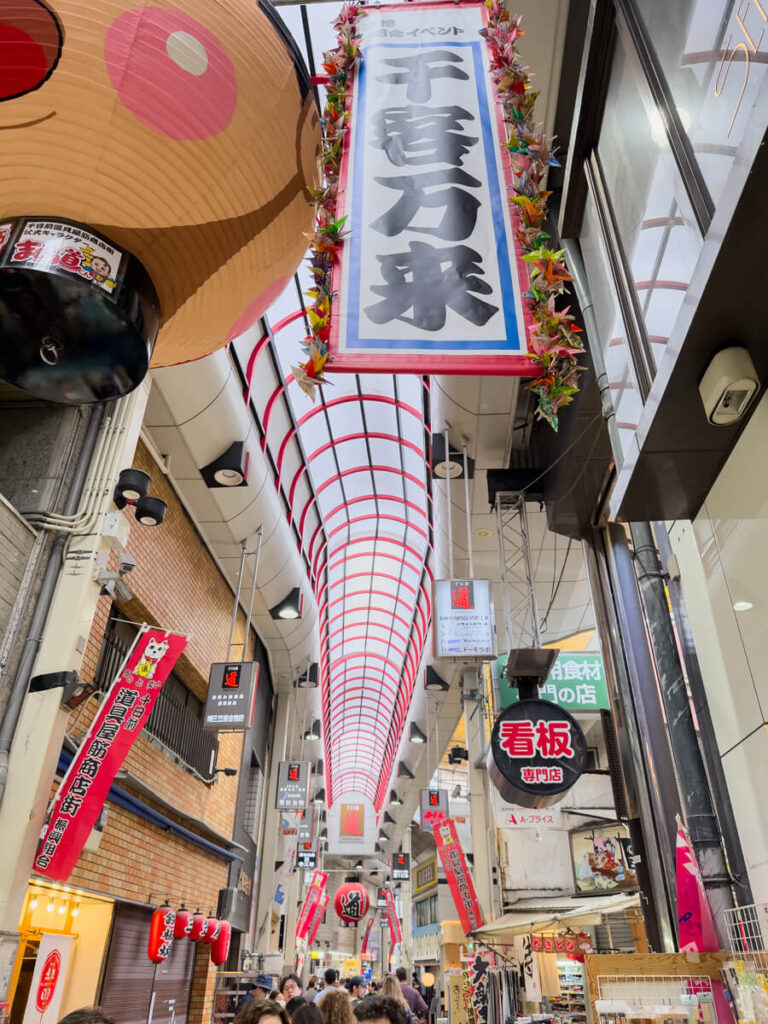
If you’re in the Namba area (where Dotonbori and Shinsaibashi-suji area), make sure to also walk through Sennichimae Doguyasuji, known as Kitchen Street.
We actually visited this street as part of our Kuromon Market food tour since it’s very close by, and I’m so glad our guide included it because I wouldn’t have known about it on my own!
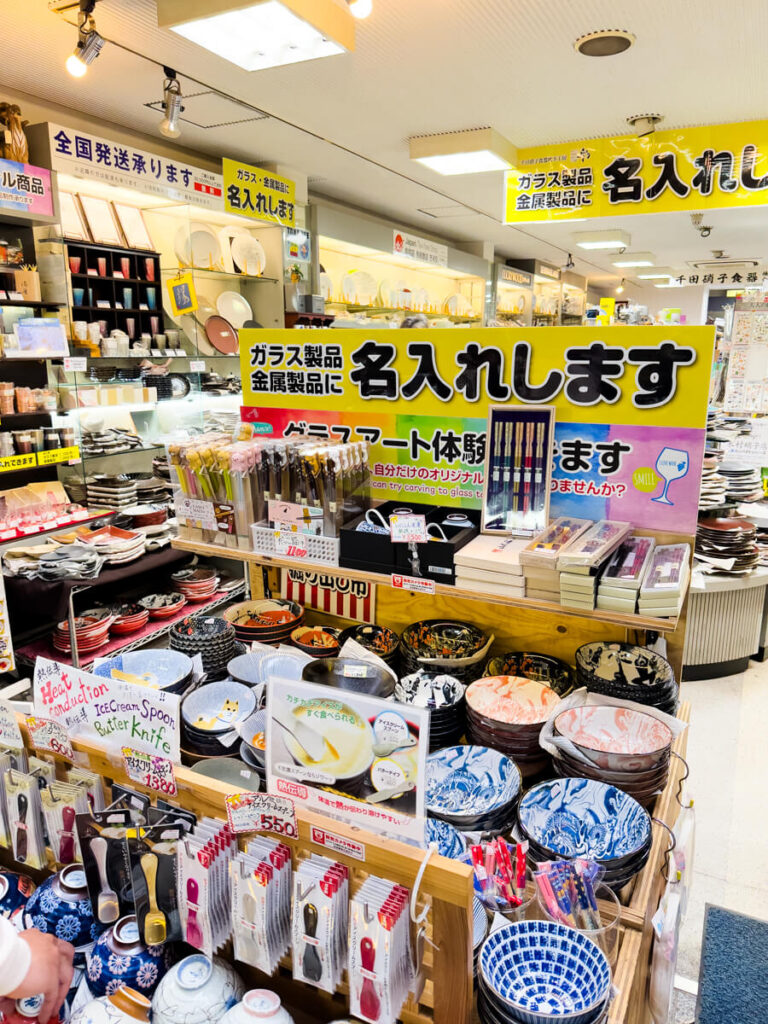
This entire covered street is dedicated to kitchenware, including high-quality Japanese knives, ceramic plates, chopsticks, restaurant-grade cookware, and more.
Our guide explained that it’s where restaurant owners in Osaka come to buy everything they need to stock a restaurant. There’s even plastic food displays and custom banners!
My husband ended up buying a Japanese knife here because our guide told us this would be the best deal in the city. It’s a great place to shop for souvenirs like sake glasses, chopsticks, etc.!
Tenjinbashisuji Shopping Street
Tenjinbashisuji is another covered shopping street, but feels very different from Shinsaibashi!
Stretching for over 1.5 miles (2.5 km), it’s the longest covered shopping street in Japan, but it doesn’t feel flashy or touristy. This is where locals come to grab lunch, run errands, and shop at small family-owned stores.
When I was living in Osaka, this area quickly became one of my favorites because it felt more like every day Osaka. There’s no giant neon signage here, just endless small restaurants, bargain shops, retro candy stores, and cozy cafes.
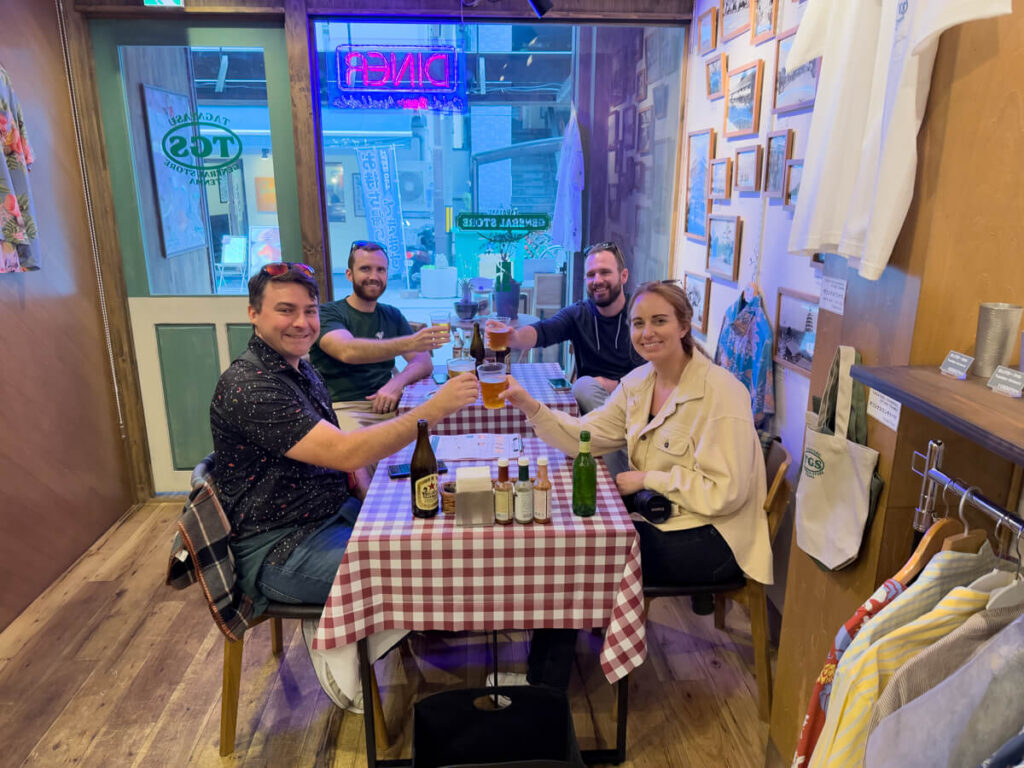
On our last trip to Japan, we stumbled into this tiny “General Store Restaurant” and ended up chatting with a shop owner for hours – he was so sweet! He insisted on taking our photo and then printed out copies for each of us.
It’s not far from the Umeda area of Osaka (where I recommend first-timers stay!), so it’s easy to walk to for lunch or an afternoon of shopping.

Namba Walk
Namba Walk is an underground shopping mall that runs beneath the busy Namba area, connecting multiple train stations and exits.
If you never connect through Namba station, you might not even know it’s there! But once you start exploring, you realize it’s packed with restaurants, boutiques, bakeries, and random little shops.
I actually had the best sushi of my life at a restaurant inside Namba Walk that had live fish swimming in tanks.. lol. Super fresh!
Because it’s underground, it’s also a lifesaver during rainy or snowy days.
If you’re staying in the Namba area, you’ll probably end up walking through here at least once without even planning to. It’s not necessarily a “must-see attraction,” but it’s part of local Osaka, which are my favorite parts to explore!
Cultural and Historic Sites in Osaka
Osaka may not get as much attention as Kyoto when it comes to temples and shrines, but there are still a few cultural spots here that are absolutely worth carving out time for!
What I love about Osaka’s historic sites is that most of them are integrated right into the city. You’ll step off a busy street and suddenly be at a quiet and reflective shrine.
If you want a break from food and shopping, these are the places I’d prioritize!
Shitennoji Temple
Shitennoji is one of the oldest Buddhist temples in Japan, originally founded in 593 AD by Prince Shotoku.
Even though the structures have been rebuilt over time, it’s still considered the spiritual heart of Osaka. The layout follows traditional Buddhist design, with a central pagoda, main hall, and lecture hall arranged in a straight line.
The outer grounds are free to walk through, which makes it an easy addition to your itinerary. If you want to explore further, there’s a small fee to enter the inner temple complex and Gokuraku-jodo Garden, which is designed to represent the Buddhist concept of paradise.
When we visited, it was basically empty in the late afternoon, especially compared to other areas of the city like Umeda and Namba.
It also pairs really well with a walk through Tennoji Park (pictured below) or a visit to Shinsekai since they’re all in the same general area!


Hozenji Yokocho and Hozen-ji Temple
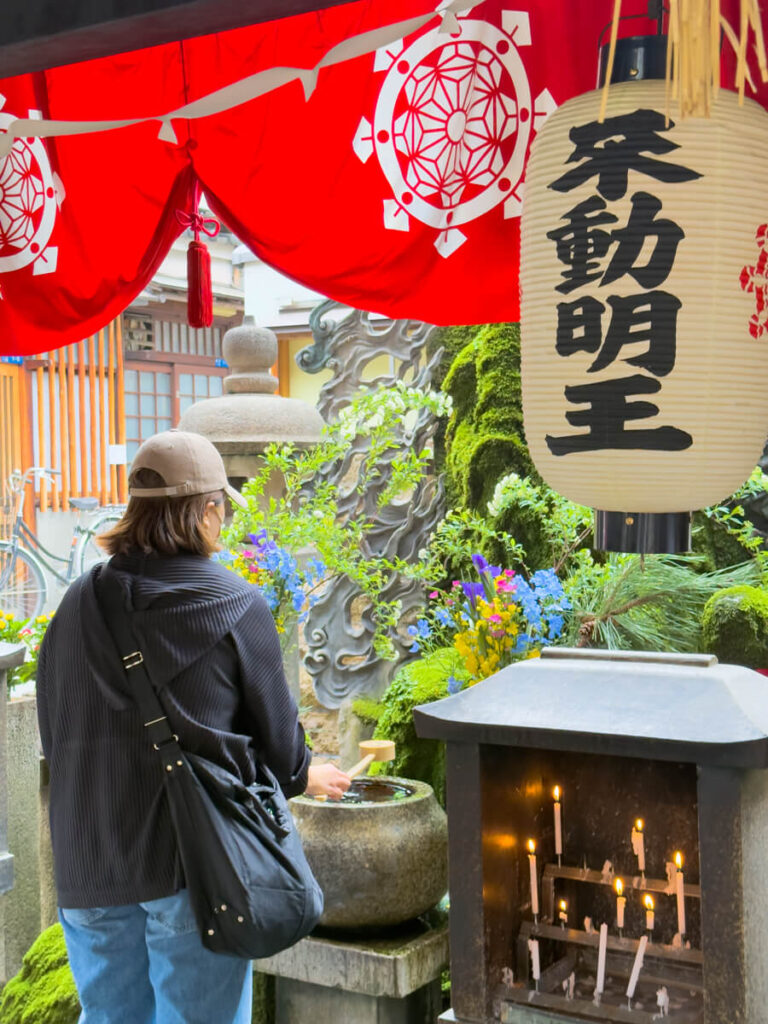
Tucked just steps away from the chaos of Dotonbori is Hozenji Yokocho. This narrow stone-paved alley is lined with traditional lanterns and small restaurants, and at the center of it is Hozen-ji Temple, a tiny but beautiful Buddhist temple.
The main statue here is a tribute to Fudō Myōō, a Buddhist deity. The statue is covered entirely in moss because visitors splash water on the statue for good fortune!
I absolutely loved visiting here, especially to get a break from the chaos of the surrounding Namba and Dotonbori area. It doesn’t take long to visit, but it’s absolutely worth the short detour!


Namba Yasaka Shrine
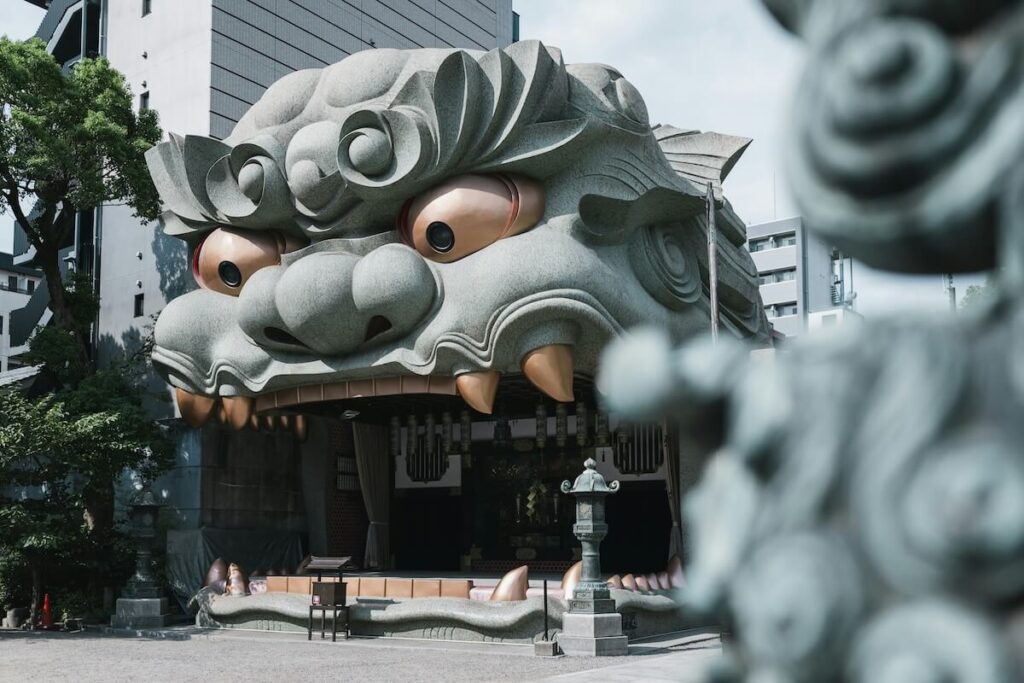
Namba Yasaka Shrine is one of the most unique shrines in Osaka!
Instead of a traditional shrine building, the main feature here is a massive lion head stage. The open mouth is said to “swallow evil spirits” and bring good luck, particularly for success in school or business.
It’s located in the Namba area but slightly removed from the main shopping streets, so it tends to be quieter than you’d expect.
Day Trips from Osaka
One of the best parts about basing yourself in Osaka is how easy it is to explore beyond the city, as Osaka is the central hub of the Kansai region.
From Osaka station alone, you can get to Kyoto, Nara, Kobe, Himeji, Lake Biwa, and many other incredible spots.
Depending on how many days you have in Osaka, you may want to do one or two day trips to see as much of the area as possible.
Below, I’ll cover the two main day trips that I’ve personally done: Nara and Kobe!
Of course, you can also visit Kyoto on a day trip from Osaka, but really, Kyoto deserves a few days of its own!
Nara
If you’re choosing just one easy cultural day trip from Osaka, Nara is the obvious choice!
It’s about 40–50 minutes away by train, depending on which line you take, and it’s incredibly simple to navigate. Once you arrive, most of the main attractions are within walking distance of each other.
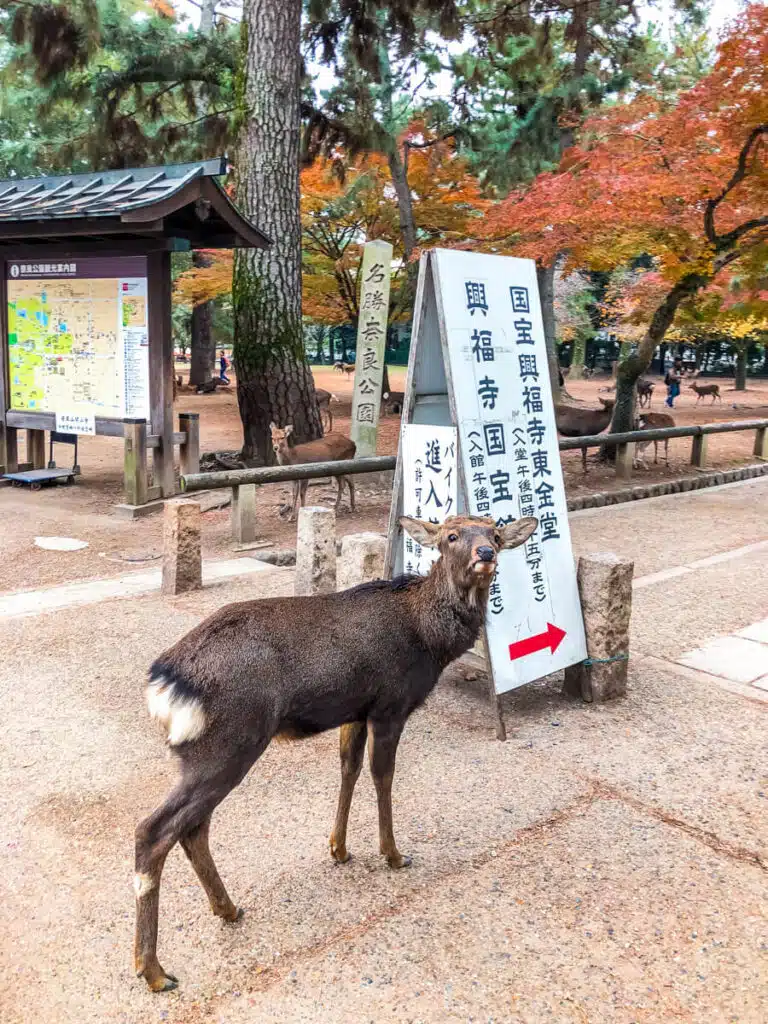
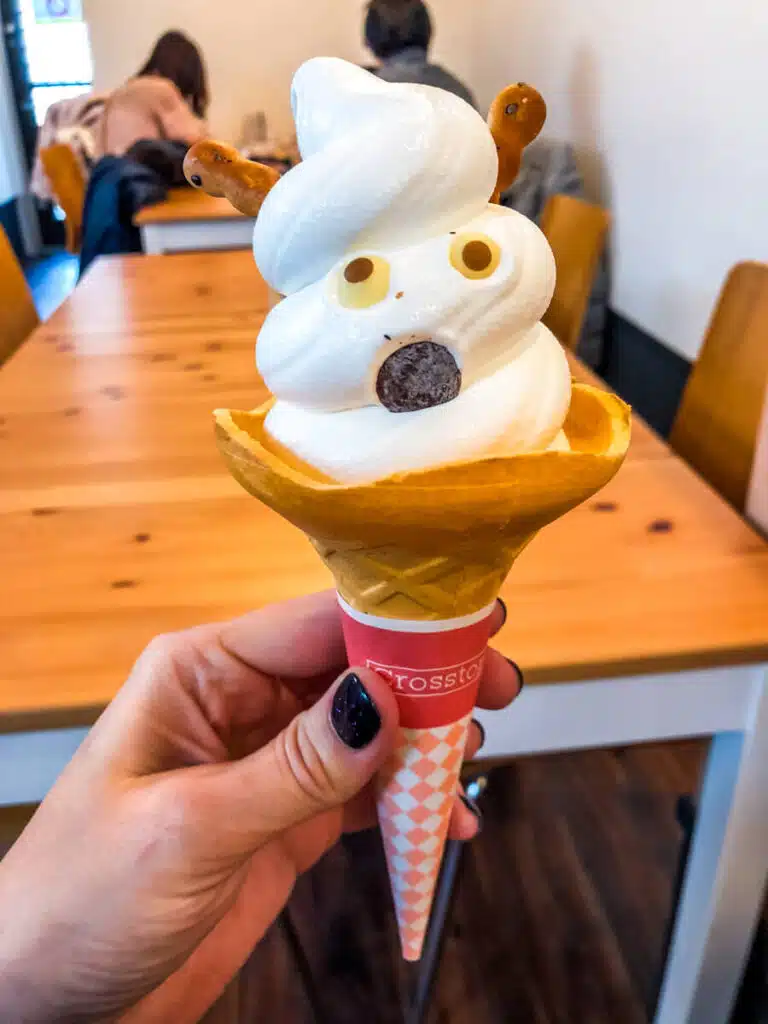
Nara is best known for Nara Park and its free-roaming deer. They’re considered sacred messengers of the gods, and yes, some really do bow to you.
Because they are fed daily by humans, they can be a little bold, so make sure to keep your head on a swivel, especially if you’ve got the deer crackers in your hand!
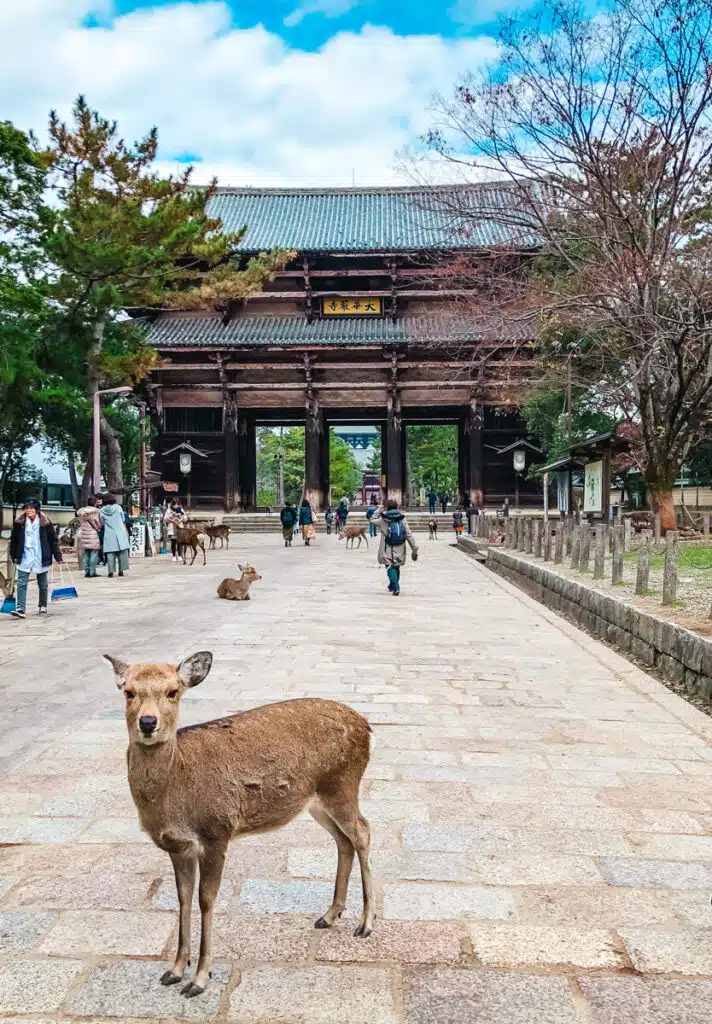
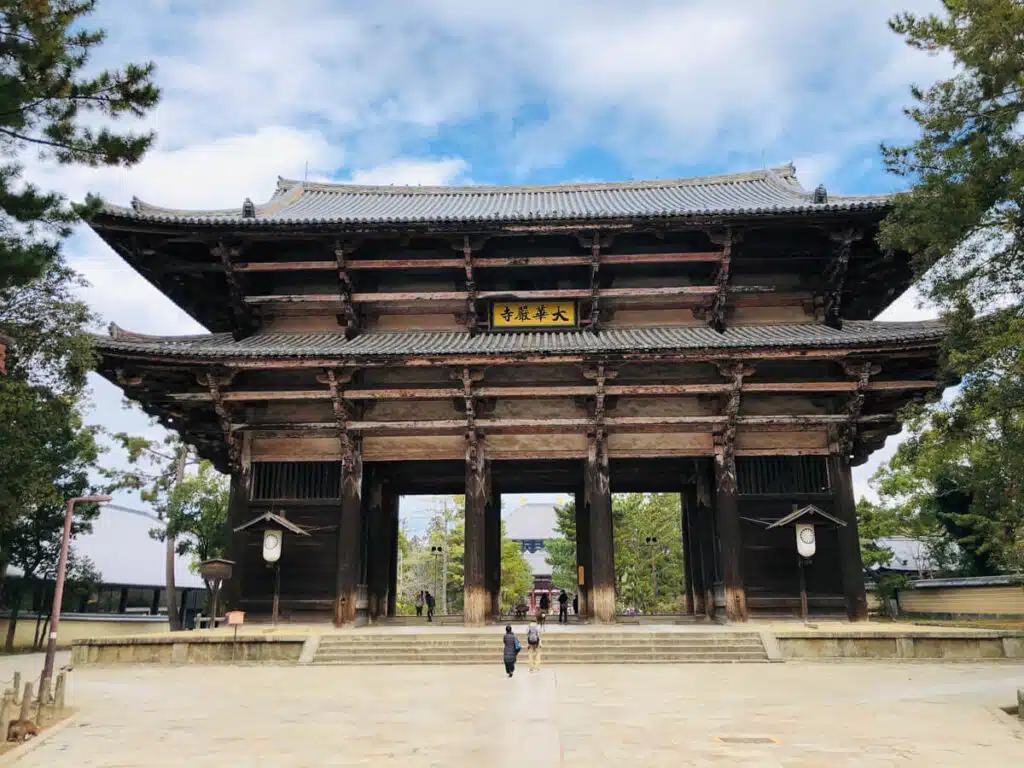
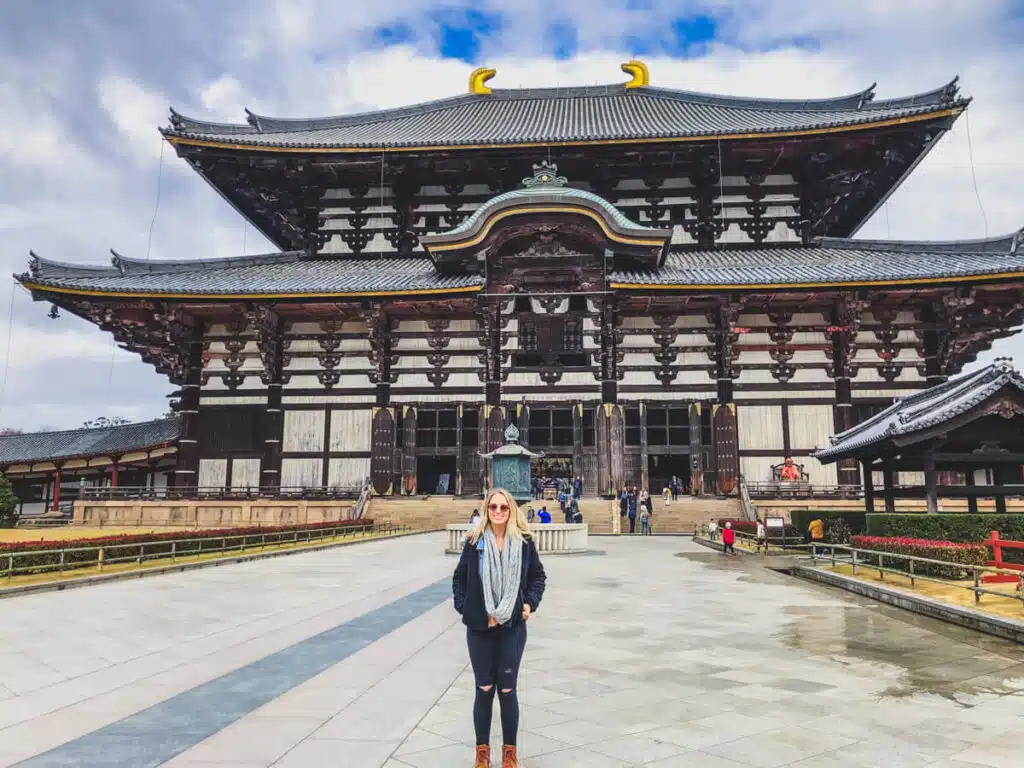
Beyond the deer, the main highlight is Todai-ji Temple, home to the massive Great Buddha statue. The scale of it is impressive in photos, but seeing it in person is something else. The wooden Great Buddha Hall itself is one of the largest wooden buildings in the world!
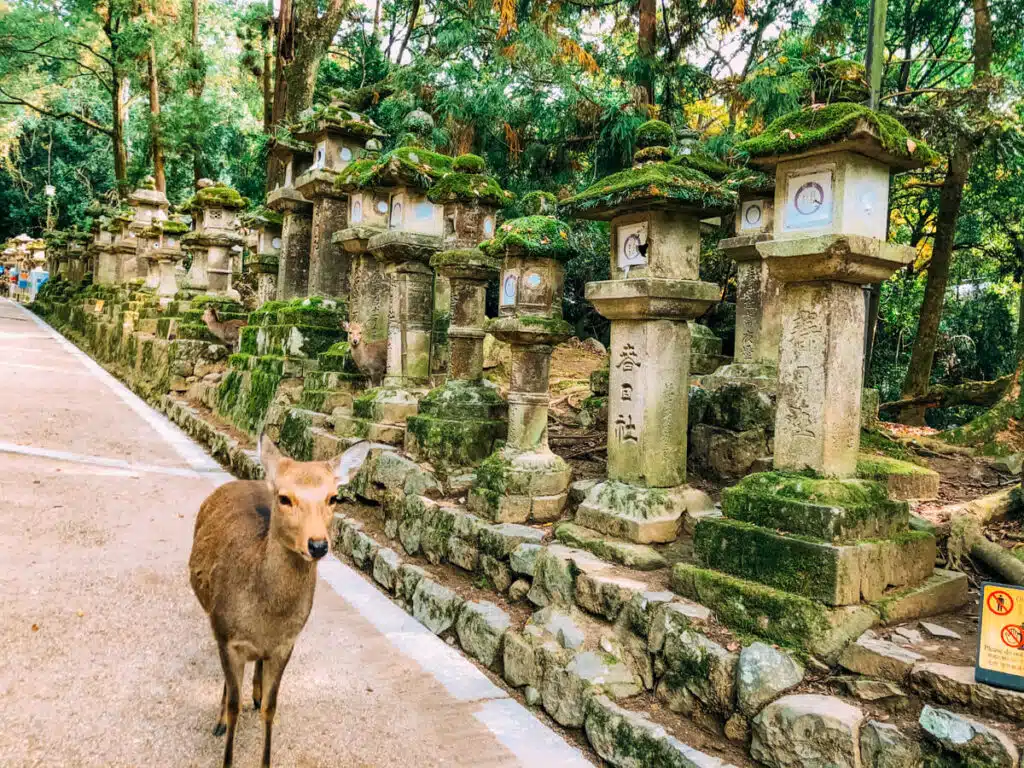
We also loved wandering through Kasuga Taisha Shrine and its surrounding forest paths. The stone lanterns lining the trails give it a completely different atmosphere than anything in Osaka. It felt like a quieter version of Fushimi Inari in Kyoto.
Nara is a great addition to any Osaka itinerary and is the perfect balance if you need a break from chaotic cities.
If you don’t want to navigate the trains yourself, booking a guided day tour from Osaka makes the logistics really simple and ensures you hit all the highlights!
Or consider doing this combo tour that includes both Nara and Uji, a town famous for its matcha!

Kobe
Kobe is another easy and very underrated day trip from Osaka! And it’s only about 30 minutes away by train from Umeda.
Of course, most people go for Kobe beef! This is why I visited with a group of coworkers after work one day to grab dinner.
If you’ve ever wanted to try authentic Kobe beef, this is the place to do it! It can be pricey (around $100 per person for a multi-course meal), but it’s an experience, and the beef was the most incredible I’ve ever had.
Beyond the food, Kobe has a beautiful waterfront area, a scenic cable car up Mount Rokko for city views, and the Kitano district, where you can see preserved Western-style houses from the 19th century.
It’s a great option if you want something slightly less temple-focused than Nara, but still different from Osaka!

Final Thoughts
Osaka might not always get the same hype as Tokyo or Kyoto, but in my opinion, that’s exactly what makes it special! It balance historic castles, glowing neon streets, tiny back-alley bars, and world-class theme parks all in one city.
Living here for six weeks gave me a completely different perspective than just visiting for a few days. I got to experience the everyday rhythm of Osaka and discover spots I never would have found on a traditional itinerary.
If you’re building your Japan itinerary, I hope I’ve shown you all Osaka has to offer and given you some ideas to add to your itinerary!
Read more blog posts about Osaka, Japan below! ⬇️🏯
Detailed 3 Day Osaka, Japan Itinerary For First-Timers!
How To Spend One Day In Osaka: An Action-Packed Itinerary
How To Get From Osaka Airport (KIX) To The City Center
Where to Stay in Osaka, Japan: Umeda vs Namba Breakdown!
20 Incredible Things To Do In Osaka, Japan!
Visiting Universal Studios Japan: Your Ultimate Guide
Don’t forget to pin this post for future planning!