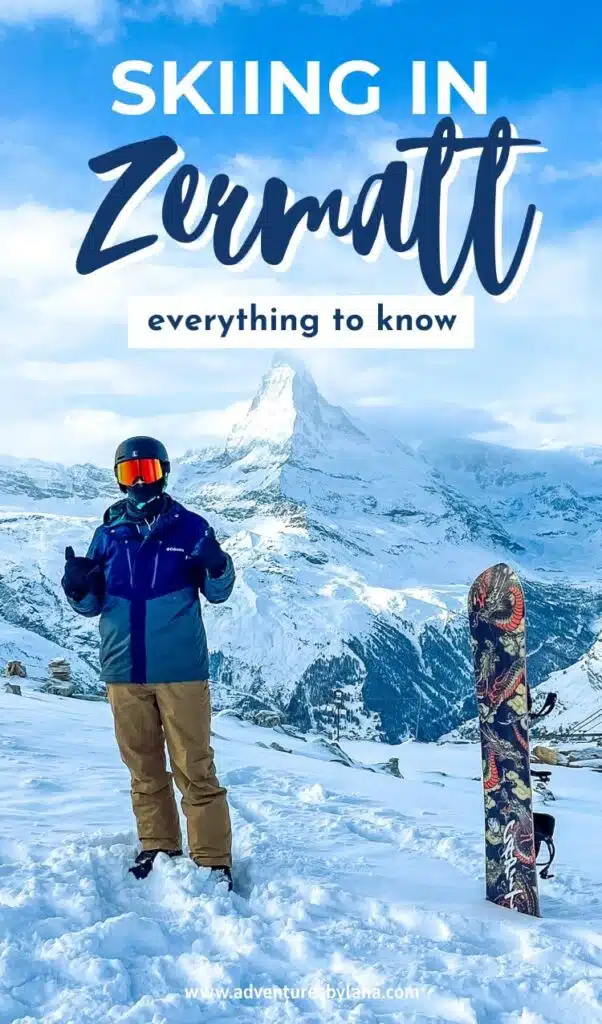
A Beginner’s Guide to Skiing in Zermatt, Switzerland
Are you planning a winter trip to Zermatt, Switzerland and trying to make sense of the ski areas before your trip?
You’re in the right place! When I was planning our December trip to Zermatt for my 30th birthday, I really struggled to understand the layout of Zermatt’s lifts and runs, how to access them, where to buy lift tickets, etc!
After much research and spending a few days in Zermatt visiting all 3 main ski areas, it’s now a lot clearer. So, I decided to write a whole guide about skiing in Zermatt to help you avoid this same problem!
In this post, I’ll break down everything you need to know about skiing in Zermatt, including how to access the 3 main areas (Matterhorn Glacier Paradise, Sunnegga-Rothorn, and Gornergrat) and which I recommend!
Plus, all the smaller details like where to stay, how to buy lift tickets, where to rent gear, where to grab lunch on the mountain, and more!
With this guide, you’ll feel confident tackling your ski trip to Zermatt!
❄️Zermatt in Winter Mini Guide❄️

Best Time to Visit: Mid-December through March for winter activities
Where to Stay:
– Hotel Jägerhof ($$)
– Hotel Zermama ($$$)
– Tradition Hotel Julen ($$$)
– BEAUSiTE Zermatt ($$$$)
How to Get There: Car-free town! Take the train from nearby Swiss towns like Basel, Zurich, or Geneva
Things to Do:
– Skiing, snowboarding, ice skating, sledding
– Matterhorn Glacier Paradise Cable Car
– Gornergrat Railway for epic views
Before You Go: Download the free Matterhorn app!
Can You Ski in Zermatt as a Beginner?
Visiting Zermatt and not hitting the mountain feels somewhat illegal. But if you’re a beginner, you might feel super overwhelmed with the thought of skiing in a new place, and in a foreign country no less!
I’m here to tell you that you can do it!!!
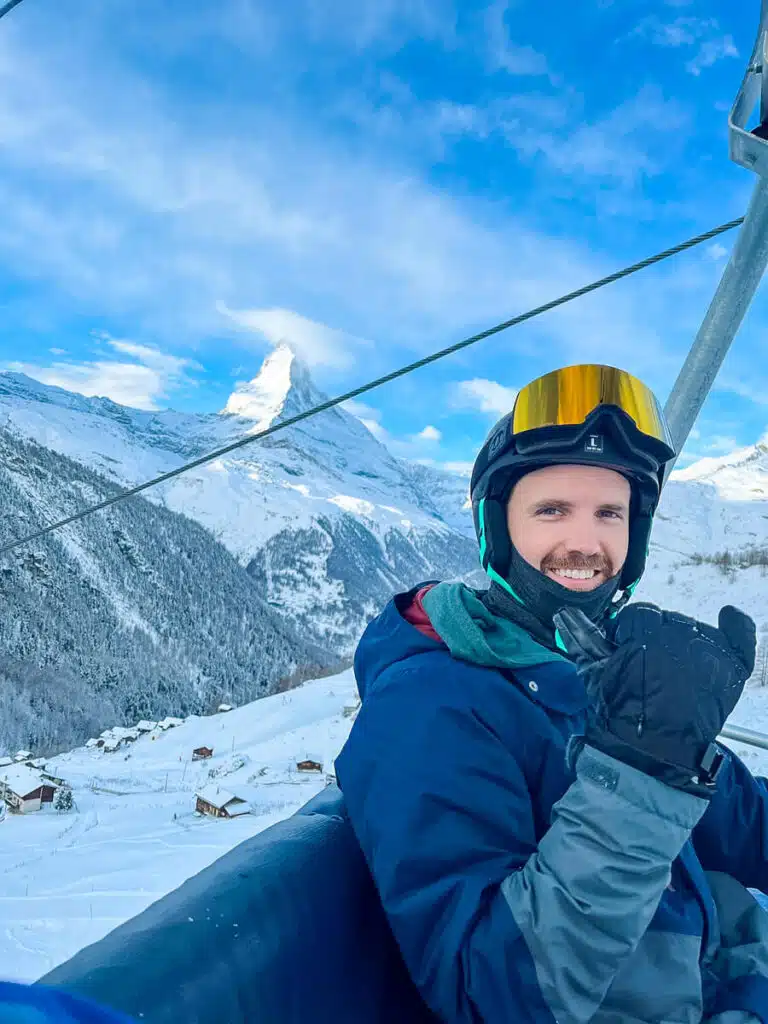
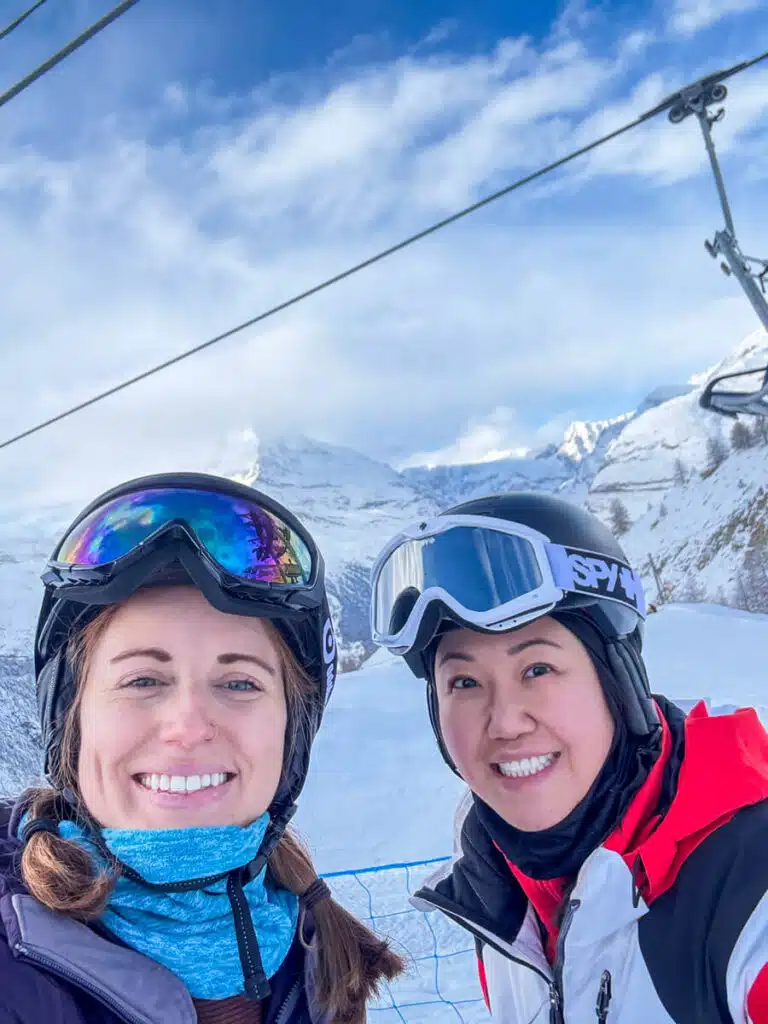
We visited Zermatt for four nights in mid-December with two experienced snowboarders and four beginner skiers.
But I wasn’t let being a beginner stop me! We decided to take a lesson first but hitting the slopes ourselves (which was definitely a good idea).
Overall, we had an amazing time skiing in Zermatt (even though we fell a lot), so yes, I absolutely think you can ski in Zermatt as a beginner!
Getting to Zermatt
Before you can ski in Zermatt, you first need to worry about getting to Zermatt!
The most important thing to know is that Zermatt is a car-free village. This makes the town extremely charming, but it also means you can’t just drive up and park at the gondola base station like you might expect in America.
For this reason, most people arrive to Zermatt via Switzerland’s extremely efficient train system. If you’re flying into Switzerland, the most common routes leave from Zurich, Geneva, or Basel, and all take around 3.5 to 4 hours by train.

And if you’re planning to drive to Zermatt, you’ll have to park your car in the town of Täsch and then take the 12-minute train shuttle or a taxi to reach Zermatt!
We personally flew into Zurich and used the Saver Day Pass for our train tickets, which I highly recommend! This pass allows you to take any train on a specific day. So, if you’re flying in and miss your planned train, you can just hop on the next one!
If you’re going to be in Switzerland for a while and are visiting several different cities, you can also look into the Swiss Travel Pass or the Half Fare Card. (Read my full Zurich to Zermatt guide for more details on which is right for you).
Because we only visited Zermatt and Basel on our one week Switzerland trip, it wasn’t worth the cost for us!
P.S. Book your Saver Day Pass tickets a few months in advance for the best rate! 🚆🎟️
Where to Stay in Zermatt for Skiiers
Once you arrive in Zermatt, you’ll need to make your way to your hotel, which is again impacted by the whole “car-free village” situation!
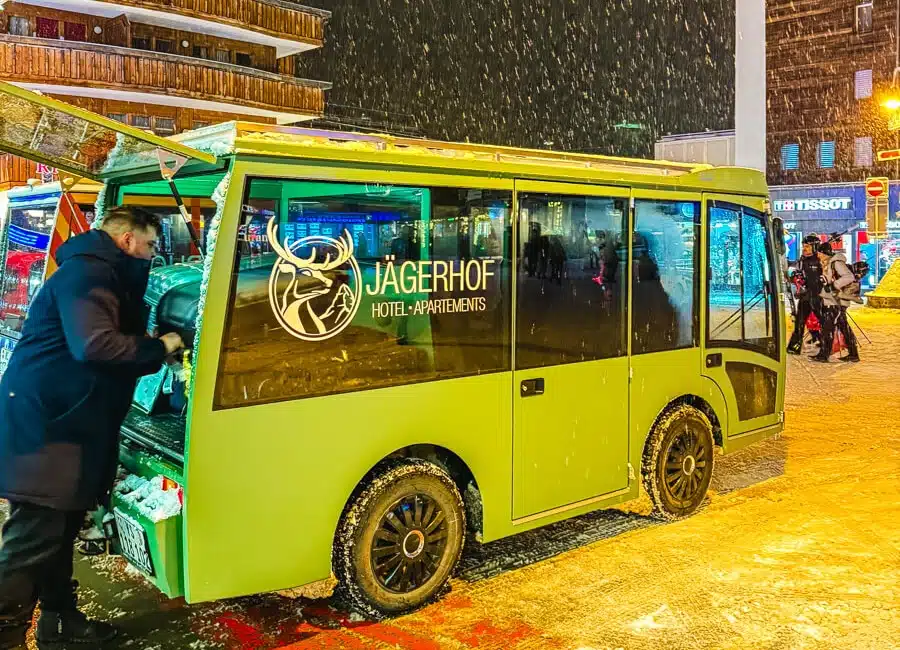
Some hotels offer a private electric shuttle that will meet you at the station and transport you to the hotel. Our hotel had this, which we were extremely grateful for since we arrived after dark, it was snowing, and we had hugeee suitcases!
If your hotel doesn’t have an organized shuttle, you can easily grab one of Zermatt’s e-taxis. These are small, boxy-looking electric cars that buzz around the village!
They are a bit pricey, but better than walking with your suitcases through the snow, unless you are staying close to the train station (more on that next).
If you’re visiting Zermatt in the winter primarily to ski, the location of your hotel will definitely impact your trip!
I am going to break down the 3 main ski areas in more detail below, but for now, it’s important to understand that each of these 3 areas are accessed from 3 different points in Zermatt.
Below is a map of Zermatt that shows these 3 spots, along with some hotel recommendations and popular landmarks. This will help you get a feel for the town’s layout! In short:
- Schwarzsee–Matterhorn Glacier Paradise (purple pin) is accessed by a gondola system just south of town
- Sunnegga-Rothorn (green pin) is accessed by a funicular on the northeast side of town
- Gornergrat (orange pin) is accessed by a cogwheel train on the northwest side of town next to the main train station (red pin)
Here are some hotel recommendations near each of these 3 access points!
Matterhorn Glacier Paradise Area: This is Zermatt’s highest and most iconic ski area, accessed via the Matterhorn Express gondola from the far end of town (purple pin). Staying near here gives you early access to the glacier runs, but as you can see on the map, you’ll be a bit further from the town center, shops, and most dining options.
- 🏨 Hotel Matthiol – A boutique hotel near the Furi lift station with spa access and a quiet, alpine vibe. Great if you want to ski Glacier Paradise early and don’t mind being on the mountain.
- 🏨 Hotel Berghof – A cozy, family-run hotel right next to the Matterhorn Glacier Paradise gondola. Traditional alpine vibe with a nice spa and Matterhorn views. Great if you want to be close to the slopes and don’t mind being a bit outside the main town center.
Sunnegga-Rothorn: If you plan to ski in the Sunnegga-Rothorn area (especially good for beginners and families), staying near the Sunnegga funicular station (green pin) is the move. It’s just up the hill from the center of town, but still super walkable to everything.
- 🏨 Cervo Mountain Resort – This is a luxury hotel with ski-in/ski-out access to Sunnegga. It’s built into the hill above the station with stunning views and multiple dining spots. A bit of a splurge, but gorgeous.
- 🏨 Hotel ZERMAMA – A fun, modern boutique hotel right across from the Sunnegga station. Super convenient for skiing and exploring the main town, and it’s got personality without the crazy price tag.
Gornergrat Area: Gornergrat is accessed by the Gornergrat Bahn (train), which leaves from right next to the main train station in Zermatt (red and orange pins). This area is great for first-timers, and super central to the town’s shops, restaurants, and apres-ski spots.
- 🏨 Hotel Schweizerhof – Newly renovated and right in the heart of town. It’s a short walk to the Gornergrat train and close to everything else, too.
- 🏨 Hotel Continental – Affordable, clean, and walkable to both the train and Gornergrat station. Not fancy, but well-located and good value.
We personally stayed at Hotel Jägerhof and loved it! However, it was about a 15-minute walk from all 3 of the ski lift access points mentioned above. This doesn’t sound terrible, but it wasn’t fun to do in ski boots!
Because we were only skiing one day, this wasn’t a huge deal for us. Luckily, we also found out there is a free Zermatt bus that runs 2 routes around town and takes you to all 3 ski access points.

If you do decide to stay a little outside of town like us, I would check to make sure there is a bus stop nearby!
➡️ P.S. You can read my full guide on Where to Stay in Zermatt in Winter for more hotel recommendations and insights!
Breakdown of the Zermatt Matterhorn Area
Zermatt isn’t like a typical ski resort with one giant base area. Instead, it’s made up of the three main mountain zones listed below, while the entire mountain resort area is confusingly called Matterhorn Paradise:
- Matterhorn Glacier Paradise-Schwarzsee (purple)
- Sunnegga-Rothorn (green)
- Gornergrat (red)
Note: Also part of the Matterhorn Paradise resort are the Breuil-Cervinia and the Valtournenche ski areas on the Italy side. Skiing in Italy can be accessed from the Matterhorn Glacier Paradise; however, it does require an international ski pass and is not covered in this guide!
Below is a color-coded map showing these three areas, along with the different runs, lifts, etc. Check out the interactive version of this map here to explore further!
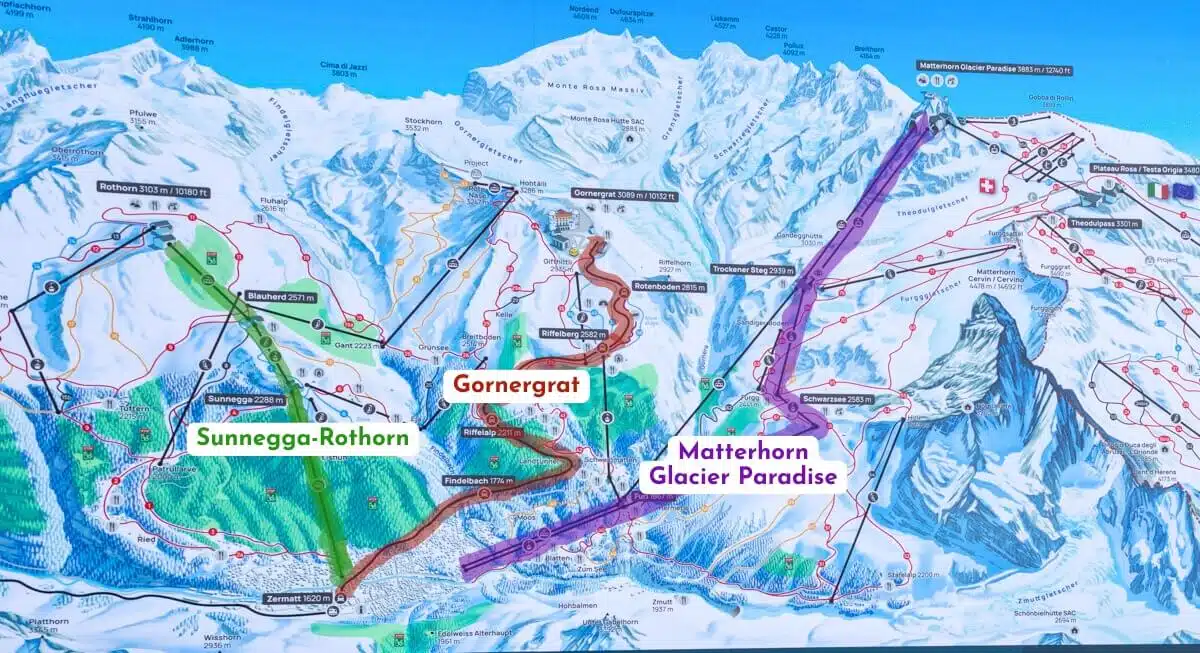
As mentioned above in the Where to Stay section, you’ll access each area from different points in the town of Zermatt, though Matterhorn Glacier Paradise is a bit further outside of town than the other two.
Once you’re up on the mountain, you can access different areas of the mountain depending on which lifts and runs you take! Some runs and lifts connect these 3 areas together, but not many.
Important Note: Your standard lift ticket (ski pass) gets you access to all 3 of these areas, so feel free to hop around and explore different runs in the same day⛷️🎟️
Below, I’ll break down each of these areas in more detail to help you decide which to visit if you have to pick just one!
Matterhorn Glacier Paradise-Schwarzsee
How to Get There
The base station for Matterhorn Glacier Paradise is located at the southern end of Zermatt, in a quieter, more residential part of town. It’s about a 15–20 minute walk from the train station or the town center.
This can be a bit of a trek in ski boots, so if you’re staying closer to the main village, I recommend taking the free Zermatt bus or grab an e-taxi to get here!
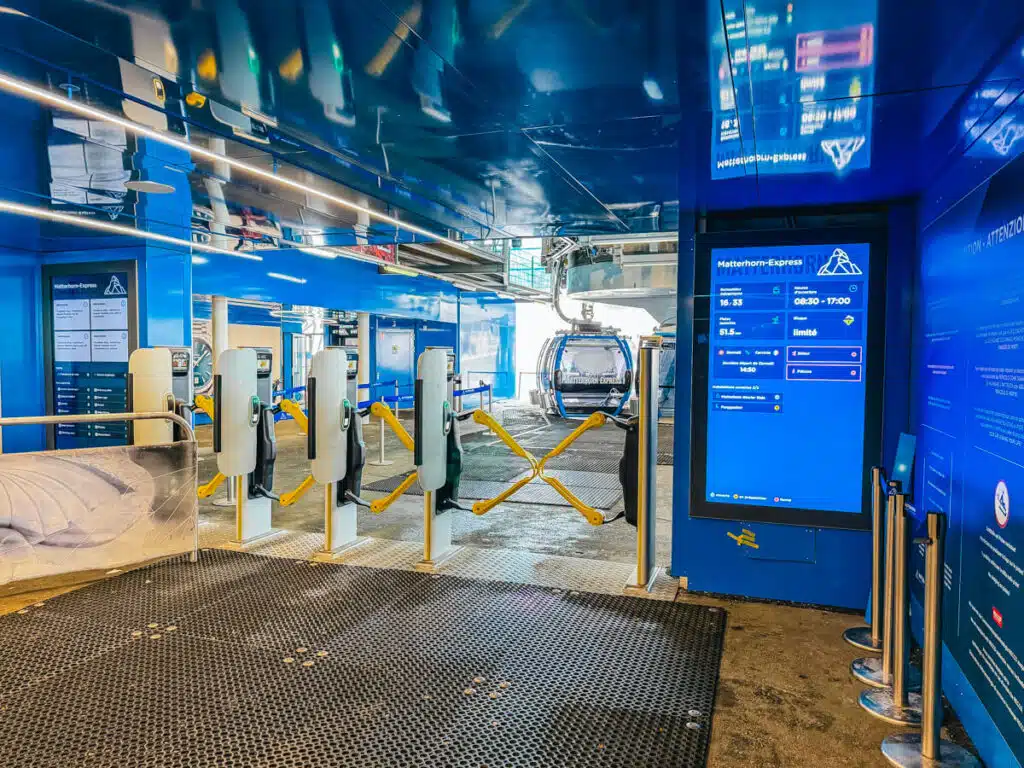
From the base, you’ll ride a series of gondolas that take you up in stages: first to Furi, then to Schwarzsee, then to Trockener Steg, and finally to the summit at Matterhorn Glacier Paradise.
It takes about 45 minutes to get all the way to the top station, but of course you can get off at any of the other stops to hit the slopes!
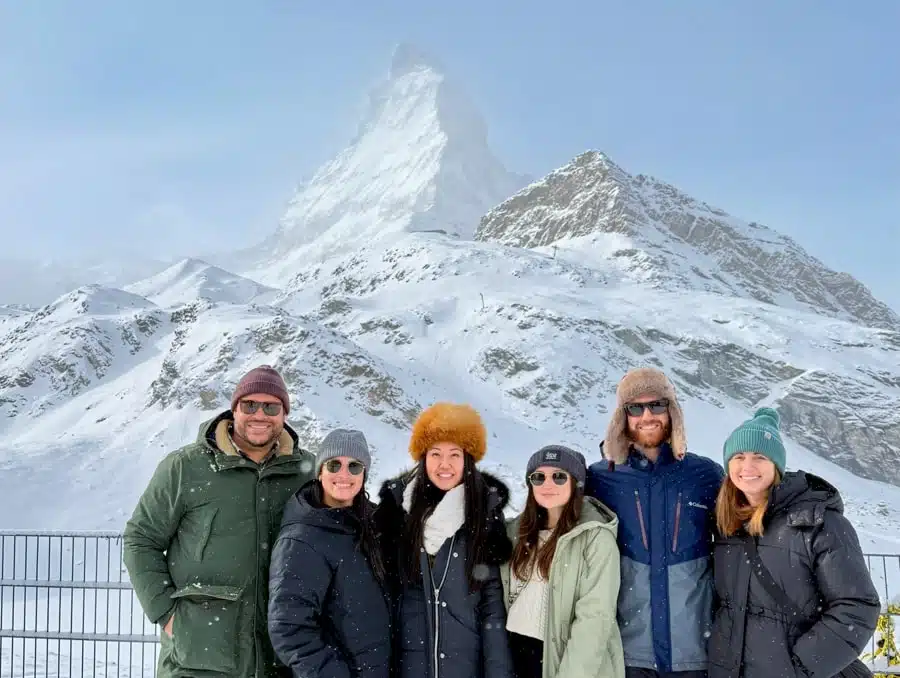
Lana’s Tip: Whether or not you’re skiing, make sure to get off at the Schwarzsee station for an iconic view of the Matterhorn and the Zermatt sign.


Ski Terrain and Notable Runs
We actually didn’t ski in this area, but explored it on foot instead, which is a really underrated way to do it because there is so much to do at the summit! (Read my full guide to visiting here!).
That said, this is the highest and most advanced ski terrain in Zermatt, with long red glacier runs and a direct connection to the Italian resort of Cervinia (if you’ve got the international pass).
There are two blue runs from the Schwarzsee stop, but that’s about it in this area! The rest are red and black.
Also, most of the runs in this area are actually above the Matterhorn, so you won’t get those picture-perfect views with the Matterhorn towering above you in most places here.
⛷️ Planning a ski trip abroad involves more than just booking the slopes! International flights, travel insurance that covers sports, what to pack for the mountains, money abroad… my Passport to Confidence guide covers all of it for $7. Download it instantly!
Other Things to Do (Besides Skiing)
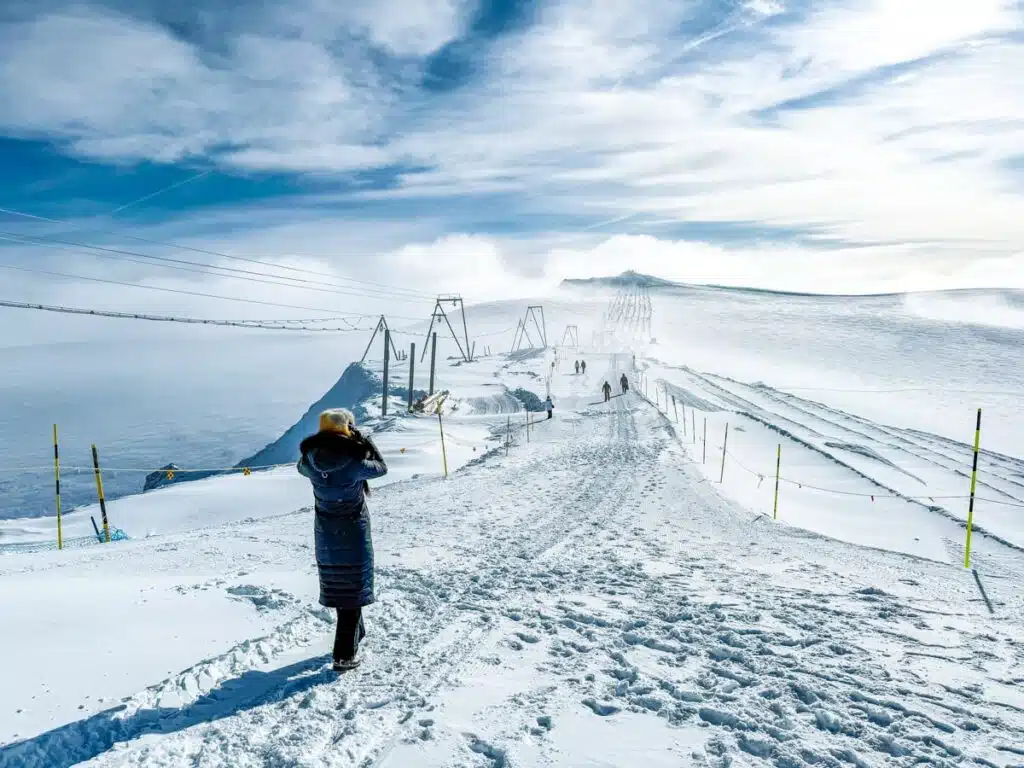
This ski area is also home to one of the top winter activities in Zermatt, the Matterhorn Glacier Paradise viewing platform, which is why we opted to skip skiing here and explore on foot instead!
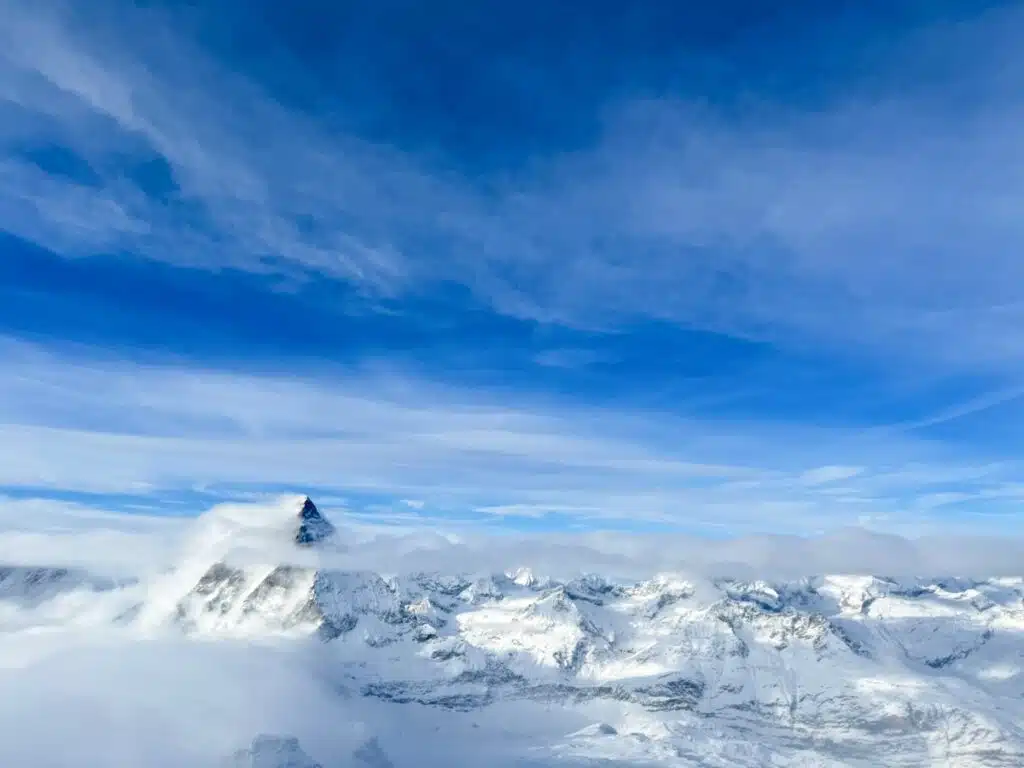
Located at 3,883 meters above sea-level, the Matterhorn Glacier Paradise is the highest cable car station in Europe and offers jaw-dropping views of the surrounding Alps, including the Italian and French borders.
On a clear day, you can see Breithorn, Mont Blanc, and of course, the Matterhorn towering behind you! To get to the top, you’ll take an elevator and then climb some outdoor metal stairs (so wear boots with good traction!).
Besides the insane outdoor viewing platform, we also loved the Glacier Palace, a series of ice tunnels through the glacier with ice sculptures, ice slides, and fun photo ops!
There’s also a cinema, restaurant, and a gift shop here, so we ended up spending several hours exploring the summit.
If you decide not to ski here, I highly recommend exploring this area on foot like we did! And try to visit on a day that has good visibility, as clouds can ruin the views!
Buy your Matterhorn Glacier Paradise tickets in advance for the best prices! 🧊

Sunnegga-Rothorn
How to Get There
The Sunnegga funicular station is located just northeast and across the river from Zermatt’s main town center.
If you’re staying near the center of town, it’s an easy walk, but if not, there is also a bus stop nearby!
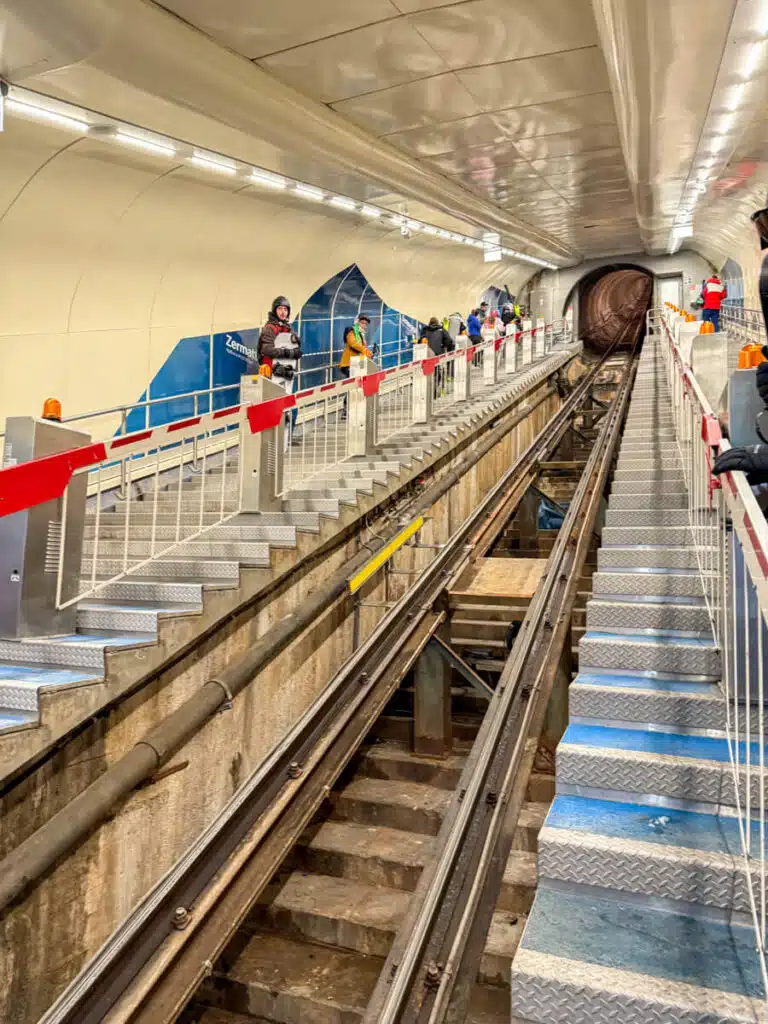
To get up the mountain, you’ll take the underground funicular from the base station in Zermatt to Sunnegga station, which takes less than 5 minutes! The first funicular typically leaves at 8:30am.
From Sunnegga station, you can start skiing or transfer to other gondolas and chairlifts that connect you to Blauherd and Rothorn, which open up way more terrain as you go higher.
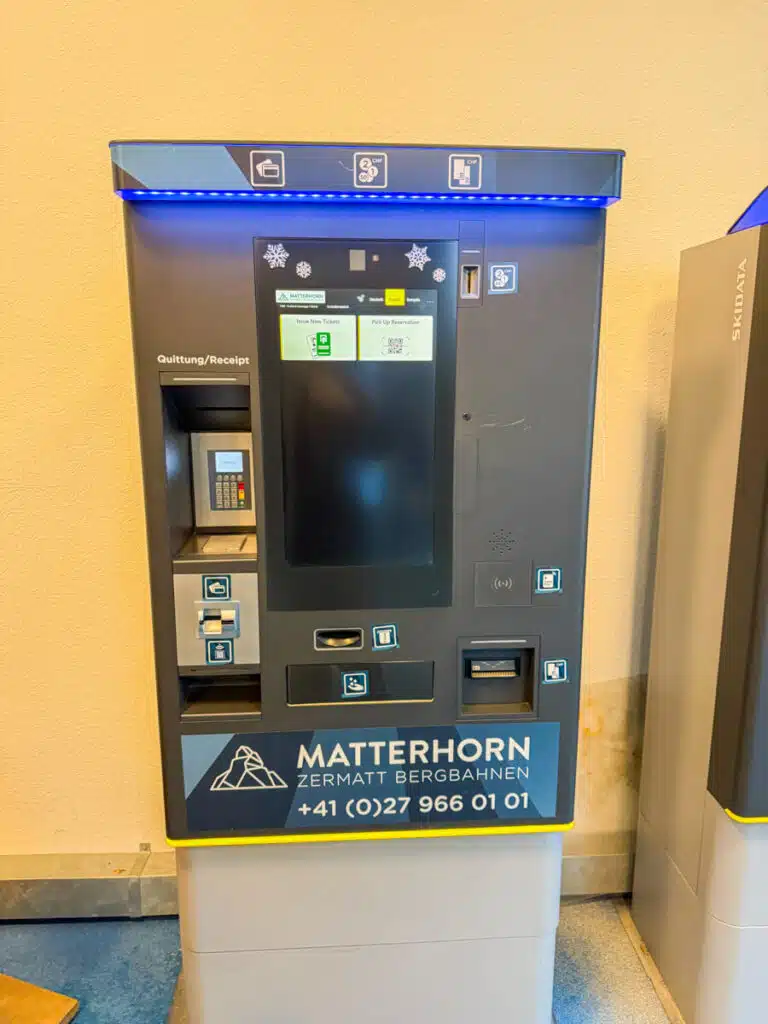
This is where we personally spent the most time on our ski day. We picked up our ski passes at the kiosks inside the station before boarding the funicular up!
Ski Terrain and Notable Runs
This area is the most beginner-friendly zone in Zermatt. The runs from Sunnegga and Blauherd are mostly wide blue slopes that are perfect for building confidence. If it’s your first day skiing in Zermatt, this is a great place to start!
In fact, we actually picked this area of Zermatt for our ski day because we were beginners. The 4 of us took a private ski lesson with Altitude Ski School at Wolli Park!
Wooli Park is definitely a kid-area (cue the magic carpets), but as total ski beginners, it was perfect for us. And we weren’t the only adults there taking a lesson!
It was also well-protected from the wind, beautifully sunny, and had insane views of the Matterhorn! I couldn’t have imagined a better spot to take a ski lesson.
While we took our lesson, the boys went off and snowboarded on the more difficult red runs around the Sunnegga area, especially between Rothorn and Blauherd. My husband’s favorite was Run 11, which had great views of the Matterhorn!


Other Things to Do (Besides Skiing)
Beside visiting the viewing platform at the top of Rothorn, this area doesn’t have too much else to offer in the winter besides skiing.
While there are a few incredible restaurants in the Sunnegga area, you won’t find unique activities like sledding or movie theaters as you would in the other two areas.
So, my advice is to only visit this area if you are actually skiing! If not, Glacier Paradise and Gornergrat are much better options.
In terms of restaurants and apres-ski, this is definitely the place to be!
We personally had lunch at the incredible Chez Vrony restaurant. Located on the slopes between Sunnegga and Findeln, Chez Vrony is a cozy, family-owned restaurant with an incredible outdoor terrace.

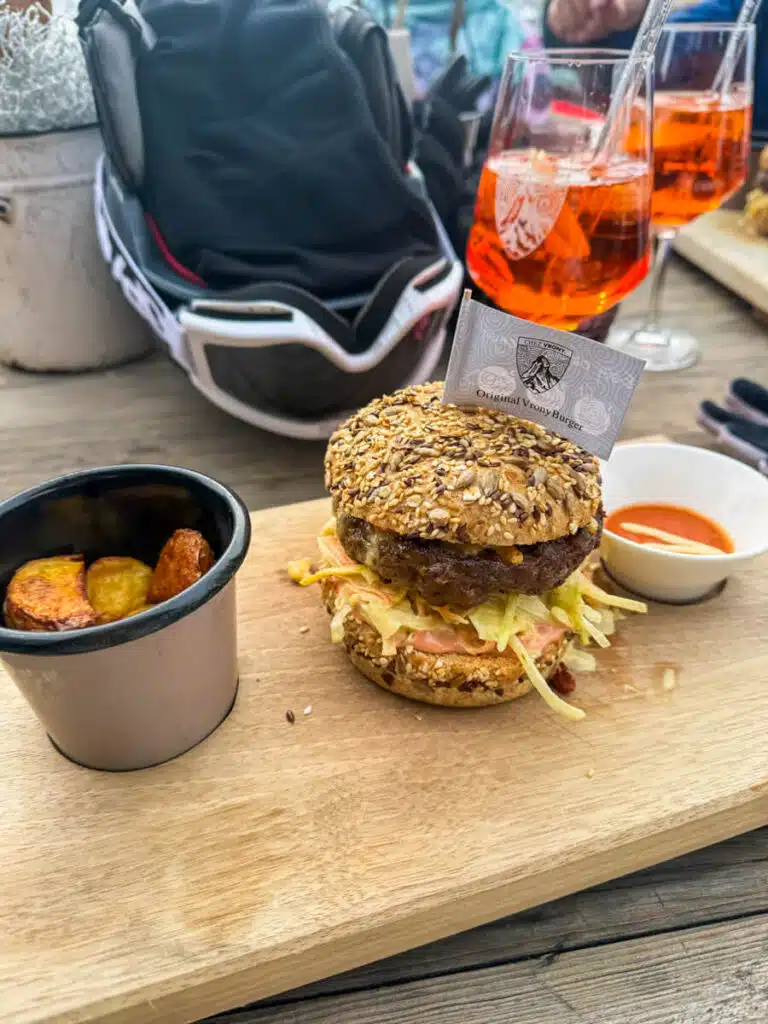
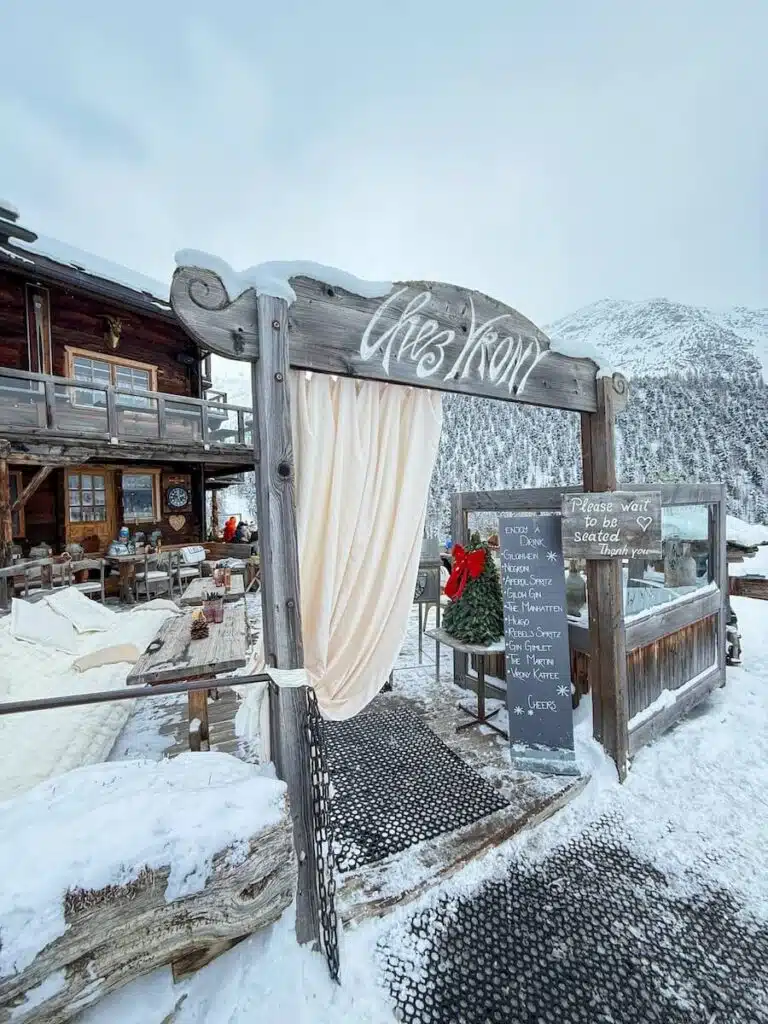
Here, you can soak in views of the Matterhorn while you have the best burger of your life, plus a hot chocolate or maybe an Aperol Spritz. Or, just come for a drink and lounge on their sunny and cozy terrace beds.
Other hot spots to check out in this area for food and drinks are Adler Hitta and Findlerhof!
Gornergrat
How to Get There
To reach the Gornergrat area of the mountain, you’ll board the Gornergrat Bahn, an adorable red cogwheel train that leaves from right next to the main train station in Zermatt.
The train slowly winds its way up the mountain with insane views of the Matterhorn the whole way.
The ride takes about 30 minutes to reach the summit at 3,089 meters, with the option to stop along the way at Riffelalp, Riffelberg, and Rotenboden.
During the winter, the train normally runs every 35 minutes from 7:00am to 6:30pm. Check the latest Gornergrat timetable here for the most up to date info!
Tip: Make sure to sit on the right side going up for the best views of the Matterhorn! 🚇🏔️
Save this post for later!
Ski Terrain and Notable Runs
We didn’t get to ski this area because it got dark before we could make it over, but it’s definitely on the list for next time.
Gornergrat’s terrain is mostly suited for intermediate skiers, with wide red runs that flow down from the summit. There are also a few blue runs between Gornergrat and Riffelberg, which makes it a good option for beginners too!
In terms of layout, Gornergrat sits between Sunnegga and Glacier Paradise, but there aren’t a ton of lift connections between the zones, so if you’re planning to ski here, it’s best to start your day on the Gornergrat Bahn and stay in the area for a few hours.
Other Things to Do (Besides Skiing)
Gornergrat is extremely popular with non-skiers, and for good reason! The 360° panoramic viewing platform at the top is one of the best places to see the Matterhorn and the surrounding peaks.
Even just riding the Gornergrat Bahn is a bucket list activity in itself, especially in winter when everything is blanketed in snow.
This area also has some of the most unique winter activities in Zermatt, especially if you’re visiting from late December on when the snow is consistent. (Unfortunately, we visited in early December and missed these).
You can go sledding from Rotenboden to Riffelberg, do winter hikes between several stops, or grab a drink and fondue at the outdoor sun terrace bar at Iglu-Dorf, an actual hotel made of ice!
If you’re skiing with friends but don’t plan to ski yourself, this is one of the best areas to tag along because there is so much to do besides skiing.


Buying Lift Tickets (Ski Passes)
Lift tickets in Zermatt are referred to as ski passes. There are a few different options depending on how many days you plan to ski and whether you want to commit to exact dates in advance.
The most common option is the standard winter ski pass, which gives you access to all 3 main areas: Matterhorn Glacier Paradise–Schwarzsee, Sunnegga–Rothorn, and Gornergrat.
If you’re planning to ski over into Italy (Cervinia or Valtournenche), you’ll need to buy the international ski pass. This includes everything in Zermatt plus the Italian side.
Make sure the weather and lifts are cooperating before upgrading, since cross-border skiing is only possible when conditions are good and the connecting lifts are open.
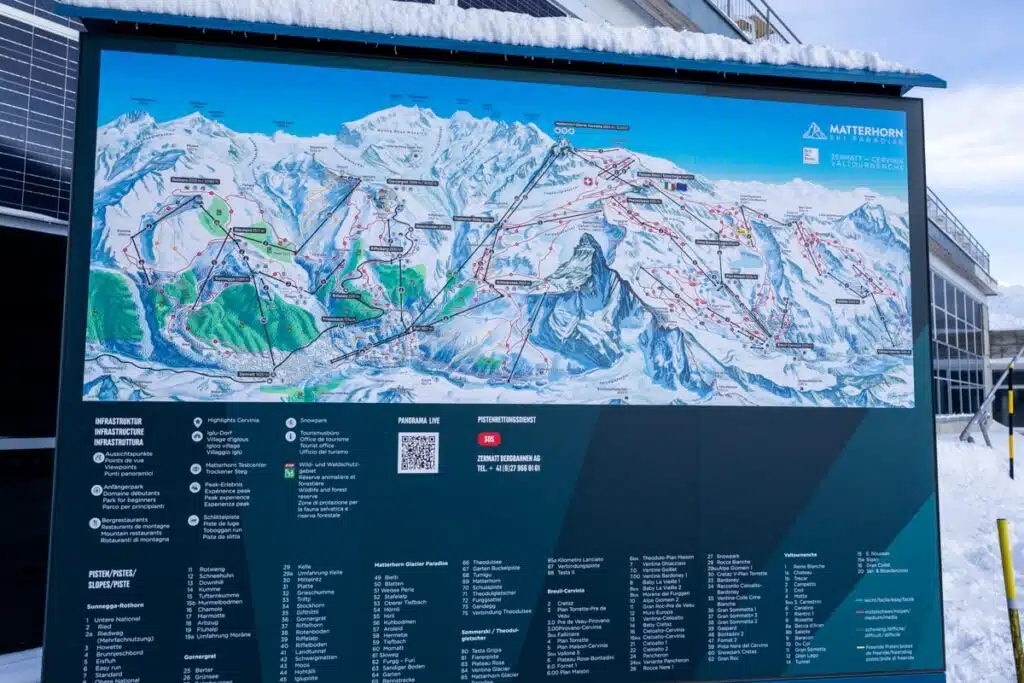
Zermatt uses dynamic pricing for ski passes, so the price of a 1-day or multi-day pass depends on the date and current demand. Prices start at:
- CHF 88 during pre-season (November) and basic season (early December, mid-January, mid to late March)
- CHF 97 during peak season (late December to early January, and all of February through early March)
The booking calendar on the Matterhorn Paradise website shows expected pricing and demand using a color-coded system, ranging from “low” to “high.” The site also recommends booking early to lock in the best rate, since prices tend to rise closer to the ski day as availability shrinks!
Note: A ski pass gets you access to all 3 of the main areas we talked about, at a significantly cheaper rate than if you were to visit these spots on your own. Matterhorn Glacier Paradise tickets start at 114 CHF and Gornergrat tickets start at 96 CHF. If you plan to ski (even a little), I recommend buying a ski pass.
If you’re not sure which days you want to ski, you can opt for a flexible pass instead, like a 2-in-4 day or 3-in-5 day pass. These allow you to ski a set number of days within a longer date window, which gives you flexibility to adjust based on weather.
No matter which pass you choose, the per-day rate gets slightly cheaper the more days you ski. If you’re planning to ski 2+ days, this starts to make a difference!
Ski passes aren’t covered under the Swiss Travel Pass or Half Fare Card, but individual tickets (like just riding the Gornergrat Bahn or Matterhorn Glacier gondola for sightseeing) do qualify for discounts with those cards, so keep that in mind if you’re not skiing every day!
We bought our ski passes online the night before and picked them up at the kiosk in the Sunnegga station with zero issues. I highly recommend buying tickets in advance when possible, especially during peak weeks!
What to Pack for Skiing in Zermatt
When it comes to what to pack, skiing in Zermatt isn’t much different than skiing in other places around the world!
In general, you’ll want to focus on dressing in layers, since different elevations can affect the temperature. Plus, your body will warm up quickly once you start skiing, so you want to be able to shed layers if needed.
Our trip to Zermatt was paired with 2 days in Basel, so I had to find clothes that I could wear on the slopes and at the Christmas markets!
Here’s what I recommend bringing for Zermatt based on our experience:
- Base layers (thermal top + bottoms) — Go for moisture-wicking and breathable. I use merino wool to stayed warm, even when I’m sweating!
- Mid layer — Fleece jacket to keep in the warmth. It was sunny when we skied so I ended up taking this layer off!
- Snowproof ski jacket + pants — Waterproof is non-negotiable! This layer keeps you dry when you’re rolling around int he snow.
- Neck warmer or buff — Very underrated! Protects your neck and lower face from both sun and cold wind.
- Waterproof ski gloves — Again, these need to be 100% waterproof. You can also wear a second, knit pair underneath if needed.
- Helmet + goggles — Optional to bring on your own, you may be able to rent them!
- Ski socks — Make sure they are padded on your shins for protection! Ski boots are very uncomfortable.


Where to Rent Ski Gear
Besides the packing essentials listed above, you’ll of course need other ski gear for Zermatt that you probably don’t want to bring along with you.
Luckily, Zermatt is a ski-town, so there are plenty of rental shops where you can rent skis, poles, helmets, and anything else you might need on the mountain.
We personally rented from Julen Sport, which is located right in the center of town across from the ice skating rink. This is also where we rented our ice skates from and had a great experience both times we visited!
You can reserve your ski gear through Julen Sport in advance on their website and secure 10% off! Their online portal will ask you things like your height, weight, and shoe size. However, you still need to visit the shop in advance for a fitting to ensure all of the sizing is right for you.
I recommend doing this the day before you ski so that you don’t waste time in the morning getting fitted. Julen Sport allows you to pick up your gear as early as 3pm the day before your rental starts!
The cost per person for ski rentals at Julen Sport is typically CHF 77. You can view their full price list here.
In case you are not able to use Julen Sport, some other highly-rated ski rental shops in Zermatt are Matterhorn Sport, Flexrent Snow Sports Rental, and Bayard Zermatt.
Apres-Ski in Zermatt
You know almost everything about skiing in Zermatt at this point, but we have to talk about après-ski before we wrap up!
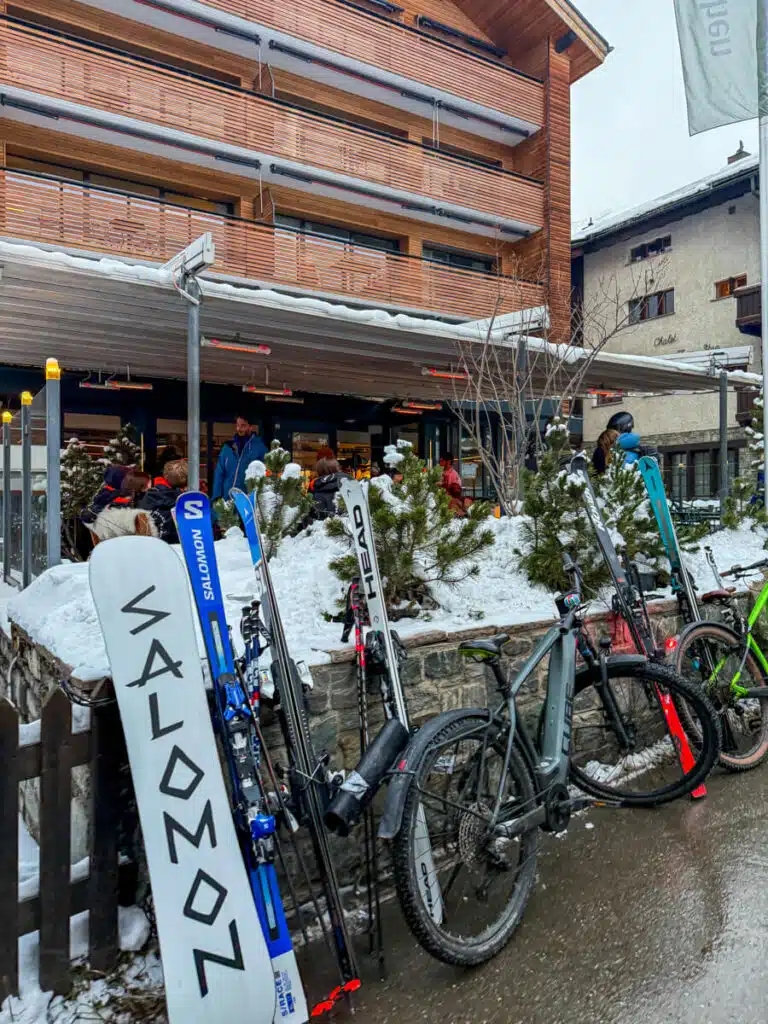
Whether you’re the first one on the lift or you barely made it down one run, you can still take part in après-ski! Every day around 3pm, the entire town of Zermatt was full of skiers in full gear at outdoor bars, drinking and partying.
If you want to start the party before you get back to town, there are a few spots on the mountain worth hitting on your last run.
- Blue Lounge (Sunnegga–Blauherd) — A chilled-out deck with bean bags, live DJs on sunny days, and jaw-dropping views of the Matterhorn.
- Hennu Stall (near Furi) — Probably the liveliest on-mountain après scene in Zermatt. It’s at the bottom of the Schwarzsee–Furi run, so you can ski straight into it.
Once you’re off the mountain, Zermatt’s village has plenty of places to warm up, grab a drink, and unwind. The vibe ranges from chill lounges to full-on party spots, depending on what you’re in the mood for.
- Harry’s Ski Bar — Right near the train station, this is a lively, classic après bar with beers on tap and plenty of people outside enjoying the vibes. Probably the most popular – we passed it every day!
- Zermama Bar — Attached to Hotel ZERMAMA, this was one of our favorite spots for a casual post-ski drink. It’s got a cozy vibe, great cocktails, and sometimes live music. Right across from Sunnegga station!
- Snowboat — A stylish bar and restaurant in a literal boat-shaped building. It’s pretty small and was packed when we visited, so we weren’t able to stay!
- Cervo Mountain Resort — Ski straight into this stylish après spot at the base of the Sunnegga run. With Matterhorn views, DJs or live music, and a buzzy terrace, it’s the perfect place to end your ski day. We got here right as the party was ending at 6:00pm, so come early!


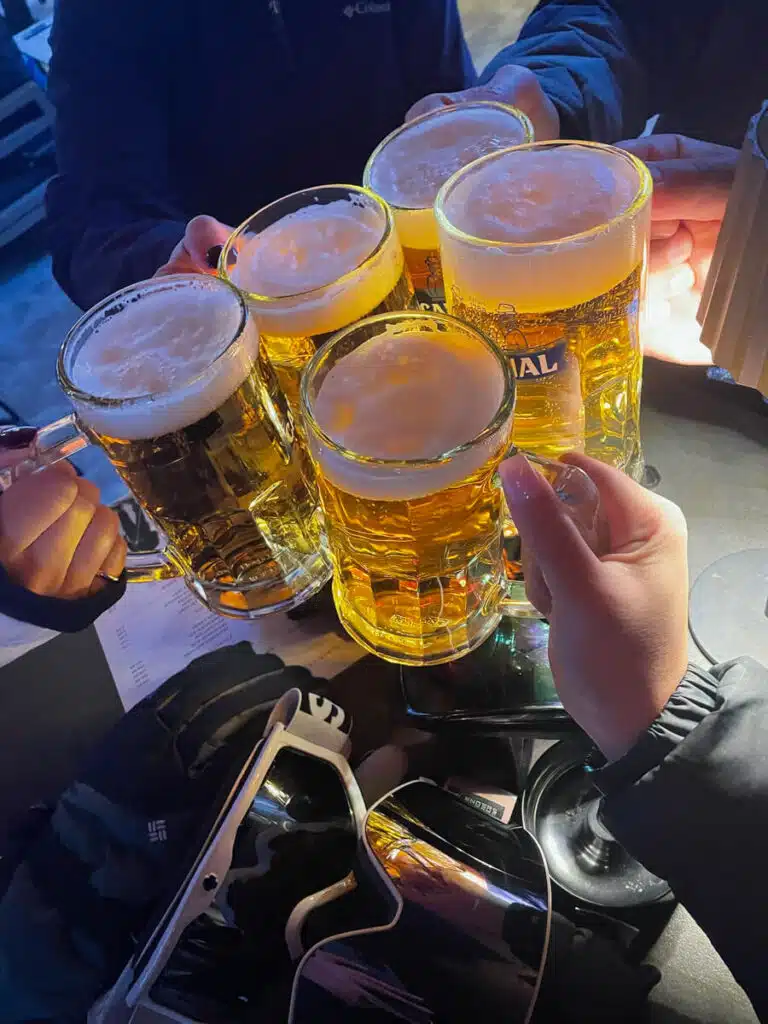
The outdoor bar at Hotel Zermama Post-ski beers at Hotel Zermama bar
Final Thoughts
Skiing in Zermatt can feel overwhelming at first, between the multiple ski areas, logistics, tickets, and more! But once you arrive, you’ll be so glad you made the decision to ski in Zermatt!
The views on the mountain are out of this world, and the village of Zermatt feels like a real-life snow globe.
I hope this guide helped make things a little clearer and easier to plan your ski day (or days) in Zermatt!
Next, don’t miss my full guide on What to Wear in Zermatt in the Winter to help you feel even more prepared, and more importantly, warm!
Check out all of my Switzerland blog posts below! 🇨🇭❄️🫕
A Magical One Week Switzerland Winter Itinerary!
Visiting Zermatt in the Winter: Everything to Know Before You Go
3 Perfect Days In Zermatt, Switzerland In The Winter!
Where to Stay in Zermatt, Switzerland in Winter (with Map!)
15 Bucket List Things to Do in Zermatt in the Winter!
A Complete Guide to Skiing in Zermatt, Switzerland
What To Wear In Zermatt In Winter: Detailed Packing Guide!
Visiting Basel In December: Christmas Markets & Beyond
Basel Christmas Itinerary: 2 Days In Basel In December
Christmas Market Trip To Colmar & Strasbourg From Basel!
What To Wear To European Christmas Markets (Packing Guide)
Don’t forget to pin this post for future planning!