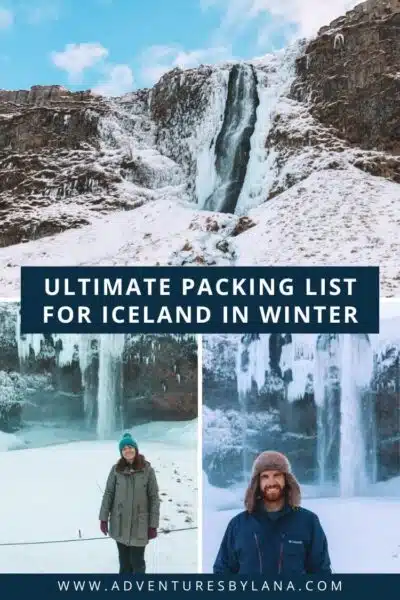
The Only Iceland Winter Packing List You Need!
Are you planning a trip to Iceland in winter and trying to figure out what you need to pack?
Enter: my ultimate Iceland winter packing list!
As a Florida girl, I was stressed when trying to figure out what to wear for our February trip to Iceland. I read so much about how the temperatures plus wind chill in Iceland are no joke, and they weren’t wrong!
But I am happy to say I was plenty warm enough during our 5 days in Iceland, and now I’m sharing my winter Iceland packing list with you!
In this post, I’ll provide a complete breakdown of all the winter clothing and accessories I packed for our trip to Iceland. Plus, I’ve thrown in some examples and specific recommendations!
With this Iceland winter packing list, you’ll be able to comfortably explore frozen waterfalls, hike to glistening ice caves, and hunt for the Northern Lights!
Iceland Trip Planning at a Glance
Don’t have a lot of time? Here’s a quick mini guide to Iceland to help plan your epic adventure!

Where to Stay:
– Hotel Von (Budget/Moderate)
– Canopy by Hilton (Moderate)
– Tower Suites Reykjavik (Luxury)
– Igloo Hotel (ICONIC!!)
Places to Eat & Drink:
– Messinn for seafood
– Fjallkonan for cocktails
– Kol for a gourmet meal
– Bæjarins Beztu Pylsur for the famous Icelandic hot dogs!
Things to Do:
– Chase the Northern Lights
– Visit the South Coast waterfalls
– Drive the Golden Circle
– Hike to an ice cave
– Go on a food tour in Reykjavik
The Ultimate Iceland Winter Packing List: Everything You Need to Pack with Examples
Below, I will cover all the details for what to include on your Iceland winter packing list. But here’s a quick list you can screenshot for later! This is an example for a 5 day trip, but feel free to adjust as needed!
Or, you can download a printable version below!
Quick Tips for Staying Warm in Iceland
Pack Extra Warmers: Hand and foot warmers are easy to carry and provide instant warmth. They’re particularly useful if you’re outdoors for extended periods.
Layer Up: Layering allows you to adjust your outfit based on the weather. Start with a base layer, 1-2 mid-layers, and an outer layer. Then, you can remove mid-layers as needed depending on the day and activity levels.
Stay Dry: Iceland’s winter weather is wet and windy, so keeping your clothing dry is essential. Waterproof outer layers are a must, and having extra socks or gloves on hand can be a lifesaver if things get damp.
Cover Exposed Skin: The cold wind can make any exposed skin uncomfortable, so keep your neck, face, and hands covered. Use scarves, neck guards, and gloves or mittens to reduce the impact of cold air on your skin.
Here are some examples of my Iceland must-have items – shop them here!


Winter Clothing You’ll Need for Iceland
First let’s cover the basic clothing items you’ll need during your winter trip to Iceland. It’s a bit more complicated than “warm clothing”.
Winter temperatures in Iceland range from about -1°C to 4°C (30°F to 39°F), but the wind and dampness can make it feel much colder.
For this reason, proper layering is essential. If you’ve never worn layers for extreme winter weather, I’ll provide a full breakdown below!
Base Layers
Your base layer is crucial for staying warm in Iceland’s cold winter temps. A base layer is the first layer that touches your skin, so it needs to wick away moisture while keeping heat close to your body.
Wool or synthetic materials work best, as they’re both insulating and quick-drying.
For tops, merino wool is a top choice due to its superior insulation and moisture-wicking properties. Merino wool tops are lightweight, comfortable, and do an excellent job of regulating body temperature, keeping you warm without overheating.
In general, look for tops with long sleeves and, if possible, a mock neck or high collar for extra warmth around the neck.
In terms of bottoms, opt for a pair of thermal leggings or long johns made from merino wool or synthetic fabrics. Don’t worry about these being super thick, as this is what the mid layer is for!

Merino.tech Merino Wool Base Layer Women Set
- Super soft and comfortable
- Moisture wicking and odor-resistant
- Breathable
- Variety of colors
- Lightweight, mid weight and heavy weight options
Mid Layers
Once you’ve got your base layer covered, it’s time to move onto your mid layer! The mid layer provides additional warmth by trapping body heat. It should be flexible enough to add or remove, depending on the temperature.
For example, if you are doing a hike, you might want to remove your fleece jacket as your body warms up, while still keeping your outer, windproof layer on!
For your upper body, I highly recommend a warm Columbia fleece jacket! Fleece is a great choice for a mid layer because it is soft, lightweight, and highly insulating.
Look for fleece jackets with zip-up fronts, so you can easily adjust ventilation. (Leaving your jacket open allows your body heat to escape out the front!).

Another good option is to buy a combination jacket that includes both a fleece layer and an outer shell! These are very common at stores like North Face and Columbia. They have dual-zippers so you can separate the jackets or wear them together!
In terms of the bottoms, you may or may not need a mid layer, depending on how cold it is and how warm your outer layer is!
For example, walking around during the day in Reykjavik, I was fine with just my base layer and ski pants (outer layer). However, at night when we were chasing the Northern Lights, I ended up wearing a pair of sweatpants as my mid-layer to make sure I was extra warm!!
This was definitely needed since we were standing outside for several hours in the freezing cold getting whipped around by wind!! My sweatpants kept my legs nice and warm, and my outer layer protected them from the wind.
However, if sweatpants feel like too much, you can also opt for fleece-lined leggings. Fleece-lined leggings are great because they provide warmth without adding too much bulk, so you can layer them easily under waterproof pants.

BALEAF Women’s Fleece Lined Leggings Thermal Warm Winter Tights
- Breathable and moisture-wicking fabric
- Two pockets on thighs + hidden pocket in waistband
- Wide elastic waistband
- Variety of colors
Outer Layers
Last up is the outer layer. Your outer layer is your main defense against the elements! Iceland’s winter weather includes everything from snow and rain to heavy winds, so this layer should be waterproof, windproof, and durable.
When we were visiting Iceland in February, the wind was particularly brutal and made it feel way colder than the temperatures read!
In fact, the wind was so strong at some points it felt like it was going to blow us over! We even heard horror stories of car doors blowing off on the side of highways. So yeah.. Iceland wind is no joke.
Luckily, we were dressed appropriately and stayed warm, even in the crazy winds! So, here is what I recommend.
When it comes to outer layer jackets, you’ll want to choose one that’s both waterproof and windproof. Many people opt for a down-insulated jacket, which offers excellent warmth without too much bulk.
If you have been skiing before, a ski jacket is the perfect option for your Iceland winter packing list!
Make sure your jacket has a hood and adjustable cuffs, as these features help block out the wind and keep warmth in. Look for brands that offer jackets specifically designed for cold and wet weather to ensure the best protection.

For your bottom half, your outer layer pants should be waterproof, windproof, and roomy enough to wear over your base and mid-layers.
Snow pants or waterproof shell pants are ideal, as they’re designed to repel moisture and allow freedom of movement. Look for pants with an adjustable waistband or zippers at the ankles so you can easily slip them over your boots.
Some people also opt for overalls, also known as bibs. I personally wore both ski pants and bibs during our winter trip to Iceland.
While I love the extra warm on my belly that the bibs provide, they can be annoying when it comes to layering and having to remove the straps to go to the bathroom!

A Bathing Suit
You might be thinking… a bathing suit?!?! YOU’RE CRAZY! But hear me out!
One of the best parts about visiting Iceland are the incredible hot springs!! The most famous is of course the Blue Lagoon, located about an hour outside of Reykjavík and only 20 minutes away from Keflavík International Airport.
However, there is also the Sky Lagoon, which is only 15 minutes outside of Reykjavík, adults-only, and includes a famous 7 step ritual!
We LOVED visiting the Sky Lagoon (even though it was 30 degrees outside). I promise it’s worth it, so add a bathing suit to your packing list!
Note: I recommend buying tickets to the Sky Lagoon in advance, as it does sell out!


Accessories for Winter in Iceland
Now that we’ve covered the main clothing for winter, it’s time to move onto accessories!
Accessories are essential in Iceland’s winter because exposed skin loses heat rapidly in cold and windy conditions. The right accessories can make all the difference in keeping you warm and comfortable.
You could be dressed super warmly, but without a hat or gloves, you will be miserable!
Winter hats
A good beanie or winter hat is essential, as heat escapes quickly from your head! Choose one made from wool or a wool blend, which provides better insulation than cotton.
If possible, go for a fleece-lined beanie for extra warmth and comfort, especially if you’re sensitive to wool’s texture. Also, consider bringing an extra beanie in case one gets wet or dirty! This can happen if you drop your beanie in the snow or it falls onto the wet floor of your car.
Another great option is a trapper hat like this one, which provides even more warmth than a beanie. My husband wore his almost every day while in Iceland!! And I also stole it a few times.. hah. You can even get one with a removable face flap like this one!
While I tried to wear my cute earmuffs one night in Iceland, they just weren’t warm enough unfortunately!


Gloves or Mittens
Gloves or mittens are necessary for protecting your hands from the cold, especially when the wind picks up.
Waterproof and insulated gloves are ideal, but if you tend to get cold easily, mittens might be a better choice. Since mittens keep your fingers together, they provide more warmth than gloves!
Some travelers even bring glove liners, allowing for extra insulation when needed.
I personally used both gloves and mittens during our trip depending on the day. While I love my ski gloves, they are super bulky and made it hard to operate my camera, phone, etc.
If it was warm enough, I wore my simple fleece mittens!


Neck Guards and Scarves
My neck gaiter was the most critical clothing item on my Iceland winter packing list!!! The difference in warmth I felt when I was wearing my neck guard vs when I wasn’t was unreal!
While scarves are great, I loved my neck gaiters because I could pull them up over my nose and mouth when it was really cold. With a beanie on, this means the majority of your face is covered, which is huge!
A scarf, on the other hand, can be wrapped and layered to create an additional barrier against the cold, mostly on your chest and neck. I wore both a lot of the time!
🧣 Protecting every inch of skin from Iceland’s wind matters — and so does covering every detail of your trip before you go. Flights, travel insurance, money abroad, and accommodation all need sorting before the packing begins. My Passport to Confidence guide is a $7 step-by-step planning roadmap covering every international trip decision. Download it instantly!


Socks
Another extremely important addition to your Iceland packing list is warm socks!!!
Cold feet can ruin any winter adventure, so make sure to pack several pairs of high-quality, thermal socks.
Wool socks, especially merino wool, are the best choice since they wick away moisture, regulate temperature, and stay warm even when wet. I highly recommend packing several pairs of socks, as they will likely get wet and stinky after each day!!
On our nights out chasing the Northern Lights, I actually ended up wearing two pairs of socks to stay extra warm!
Grab this 4 pack of Merino Wool hiking socks! 🧦
Waterproof Boots
A good pair of waterproof, insulated boots is a must. Winter boots with thick, non-slip soles provide grip on Iceland’s icy paths.
For example, when we visited Thingvellir National Park, a lot of the hiking trails were iced over, and we were glad to have the appropriate winter boots.
Waterproof and snow proof boots are essential for keeping your feet dry in the snow and rain in Iceland! When we visited the Katla Ice Cave outside Vik, we had to hike through fresh snow to get there, and our feet stayed dry the entire time!
In addition to being waterproof and snow proof with good soles, boots with a warm lining, such as fleece or faux fur, can provide extra insulation to keep your feet warm!

Crampons
If you’re visiting Iceland in the winter, you may or may not need crampons at some point during your trip.
For those who don’t know, crampons are basically little metal cleats you put on the bottom of your shoes to make it easier to walk in the snow! The metal spikes are attached to a slip that goes over your shoes and provide traction on snow and ice.
As a Floridian, I don’t own crampons and didn’t want to buy them just for this trip. We ended up being fine without them, but they would’ve come in handy in certain areas like Thingvellir National Park on our Golden Circle day trip and in front of Skógafoss waterfall, where the ground was particularly icy!
When we hiked to the Katla Ice Cave, our tour company provided everyone with crampons once we got out to the glacier because we absolutely needed them!
So, if you do not own your own crampons, it really is up to you on whether or not you want to purchase them before your trip, depending on the different winter activities you are doing in Iceland! However, there are places in Reykjavik where you can rent them!


Hand Warmers
The last items to add to your Iceland winter packing list are hand warmers!! I was literally addicted to these hand warmers during our trip to Iceland in February. I put them in my jacket pockets and even in my shoes!!
You can purchase a bulk pack of hand warmers for super cheap. Plus, they’re easy to pack and can be activated whenever you need some extra heat. They also lasted way longer than I expected them to!
Winter Weather in Iceland: Breakdown by Month
Iceland’s winter weather varies depending on the month, but you can likely expect chilly temperatures, snow, rain, and strong winds. Here’s a quick month-by-month breakdown of what to expect!
Weather in Iceland in November
In November, winter weather really starts to set in, with temperatures averaging between 30°F to 38°F. November also sees a drastic change in the amount of daylight as the month goes on.
At the beginning of the month, you will typically see around 8 hours of daylight. However, by November 30th, that number has typically dropped to between 4 and 5 hours.
Snow is common, particularly in the northern and higher-altitude areas, while rain is more likely in the southern regions.
November is a great time to see the Northern Lights due to the longer nights, but prepare for chilly, damp weather. This is the beginning of low season in Iceland.
Save this post for later!
Weather in Iceland in December
December brings even colder temperatures, averaging 28°F to 36°F. December is also the month with the shortest days, offering only 4-5 hours of daylight.
While this may limit daytime sightseeing, it’s perfect for Northern Lights viewing!! Aside from the Christmas and New Years holiday, this is considered low season in Iceland.
Snow is prevalent, especially in northern Iceland, and wind can make it feel even colder.
Weather in Iceland in January
January is typically Iceland’s coldest month, with temperatures ranging from 17°F to 26°F. Snow, ice, and frequent storms are common, making it a particularly challenging time to visit.
The days start to lengthen slightly, but still average around 5 hours of daylight. Waterproof and insulated clothing is essential in January to combat the extreme cold.
Weather in Iceland in February
February sees a slight increase in temperatures, with averages around 29°F to 37°F. However, the weather remains unpredictable, with snowfall, rain, and storms likely throughout the month.
This is when we personally decided to visit Iceland, since the days are a bit longer than the heart of winter. At the beginning of the month, Iceland sees around 7 hours of daylight. However, by the end of February, it is common to have up to 10 hours of daylight!
The Northern Lights are still very visible at this time, with February often seeing the best results! Plus, with slightly warmer weather and longer days, you’ll be able to adventure more around the country.
Frequently Asked Questions
Is Iceland worth visiting in winter?
Yes! Iceland in winter offers a unique and magical experience. With fewer tourists, the winter landscapes are serene, and activities like ice caving, glacier hiking, and Northern Lights tours are at their best. Just prepare for cold weather and shorter days!
what kind of socks to wear in iceland in winter?
Thick, thermal wool socks, especially those made from merino wool, are ideal. Wool socks are breathable, moisture-wicking, and provide excellent insulation, even if they get wet. Bring multiple pairs to keep your feet warm and dry.
what pants to wear in iceland in winter?
The best approach is layering. Start with thermals or long johns as a base layer, add sweatpants or fleece-lined leggings as a mid-layer (if needed), and finish with waterproof outer pants for protection from snow and rain (like ski pants).
do you need a winter jacket in iceland?
Absolutely you do!! Choose a jacket that is windproof, waterproof, and snow proof if you are visiting Iceland in winter. A ski jacket is perfect.
Final Thoughts
That wraps up my Ultimate Iceland Winter Packing List!!
I hope you feel prepared to conquer the (somewhat unpredictable) winter weather in Iceland! Speaking of winter weather, make sure to read my guide on Renting a Car in Iceland During Winter next!
While it might feel intimidating, I promise visiting Iceland in winter is totally worth it.
We had the time of our lives exploring the snowy landscapes, chasing waterfalls, and hunting for the Northern Lights and stayed warm while doing it!
Have an (icy) blast!!
Read More Iceland Blog Posts Below! ⬇️🇮🇸❄️
Visiting Iceland In February: Everything To Know!
13 Incredible Things to Do in Iceland in the Winter!
Ultimate 5 Day Iceland Winter Itinerary
Renting A Car In Iceland In Winter: Is It Worth It?
The Only Iceland Winter Packing List You Need!
How To Spend One Epic Day In Reykjavik
A Guide To Exploring Iceland’s Golden Circle In Winter
Is an Iceland Northern Lights Tour Worth It? Things to Know!
The Most Magical Stay at an Iceland Igloo Hotel!
An Epic Glacier Hike To The Katla Ice Cave In Iceland
Don’t forget to pin this post for future planning!